


A New Neighbor Asked a Woman to Stop Sunbathing by Her Own Pool, Then the Woman Revealed What Kind of Neighborhood It Was
"I pay mortgage here, too."
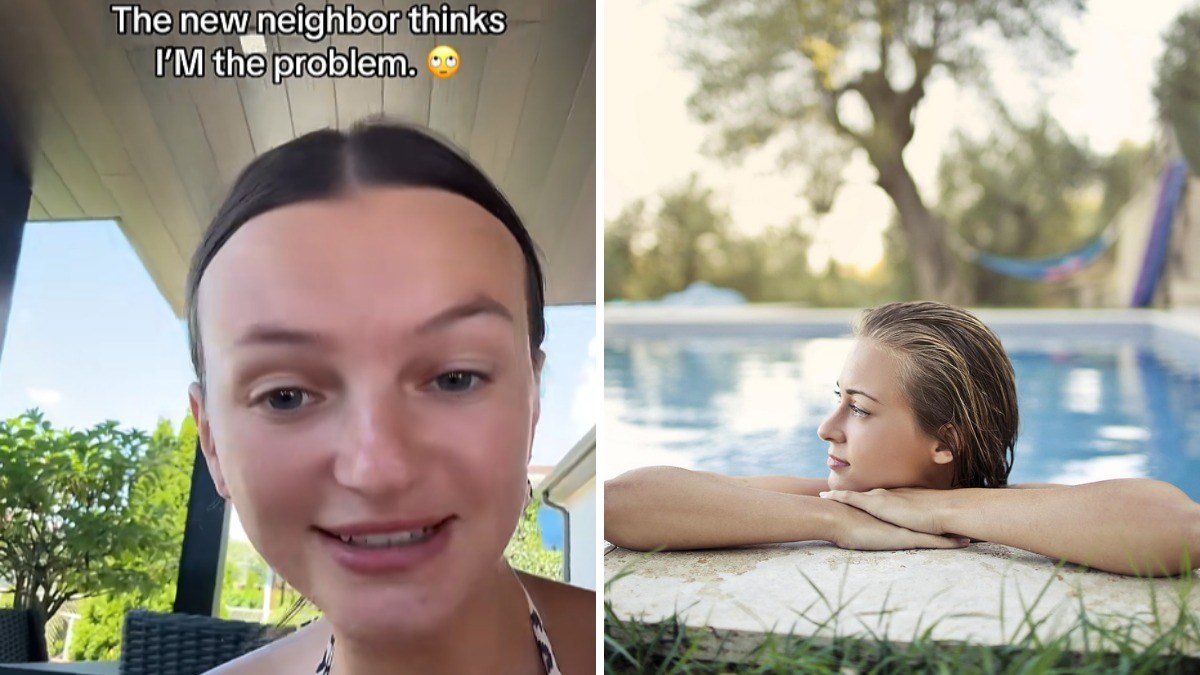
A woman named Tink shared a TikTok video describing what happened after her new neighbor objected to her sunbathing by her own pool. According to Daily Dot, the neighbor had moved in three days earlier. She texted Tink asking her not to sunbathe while her husband was home, explaining he had a direct view of the backyard and pool from the kitchen window. “It’s called common courtesy,” the neighbor wrote.
Tink instead replied, “Like, ma’am, respectfully, I pay mortgage here, too.” She suggested the couple could just cover their own window instead. Tink said her neighborhood is known informally as an “upside-down pineapple community.” That’s a reference to consensual non-monogamy, and the community holds an adults-only gathering every Wednesday.
After receiving the text, she shared it in the community group chat. Members reportedly joked about inviting the new neighbor to the next gathering. She said the neighbor’s husband had never complained before and added that the couple would get “a proper welcome” at the next Wednesday event. The outlet said it could not independently verify whether the new neighbor knew about the community’s reputation before moving in.
What The Law Actually Says About This
Setting the neighborhood’s particular culture aside, the underlying legal question is a familiar one in property law. In most states, homeowners have no legal right to privacy from a neighbor’s own backyard. The reverse is equally true: a homeowner has no obligation to change how they use their own property just because a neighbor doesn’t like what’s visible from their window.
According to FindLaw, a neighbor dispute only rises to actionable nuisance when the interference is substantial and unreasonable. Something simply visible from someone’s own window, lacking special effort, generally doesn’t meet that bar. If the new neighbor wants more privacy, courts have consistently held that installing blinds, curtains, or landscaping is the affected party’s own responsibility, not something they can require someone else to do.
There’s also a real estate concept that fits this situation surprisingly well. A property with an unusual reputation, like a neighborhood known for a particular lifestyle, can fall under what’s legally called a “stigmatized property.” Whether a seller has to disclose that reputation to a buyer varies significantly by state.
Some states require disclosure of specific stigmas, like a death or crime on the property. Most, however, don’t require sellers to volunteer information about a neighborhood’s social culture. Real estate agents can also run into fair housing concerns if they proactively describe a community in terms of the lifestyle or demographics of the people who live there.
Have a tip we should know? [email protected]
Follow The Mary Sue:
