


A Michigan Couple Confronted a Pregnant Woman Over Parking, Then Dismissed Her Racism Claim as ‘Playing the Race Card’
"Get away from me. Please, leave me alone."
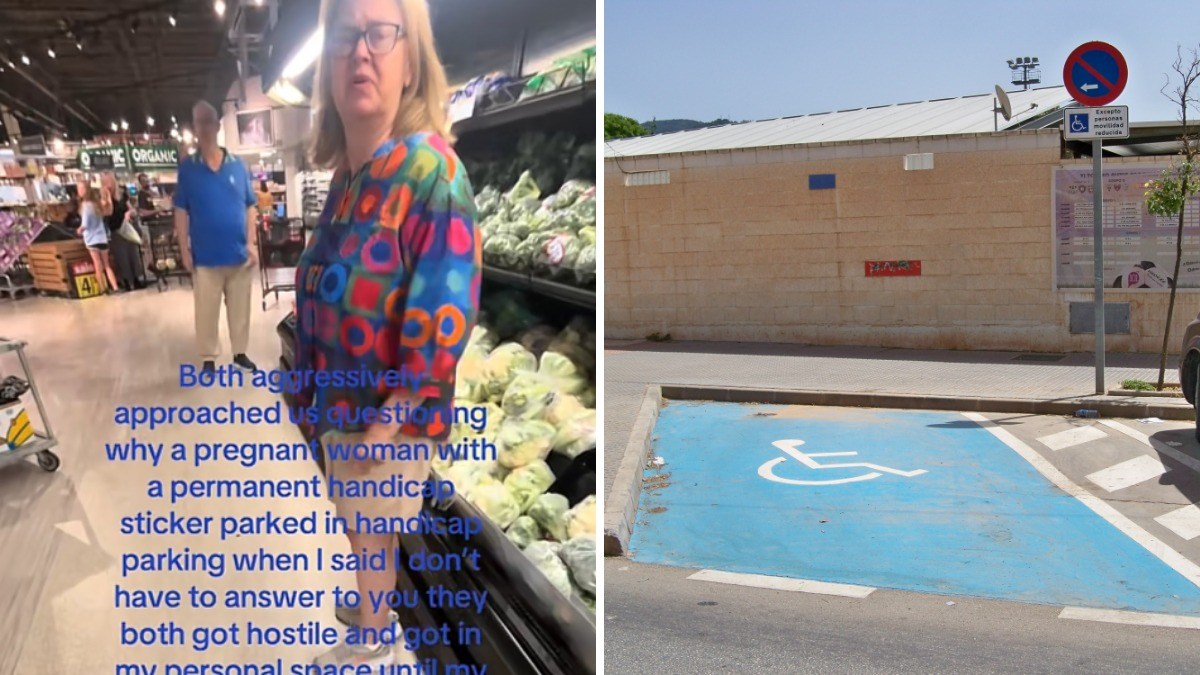
A pregnant Michigan woman says a dispute over a handicap parking spot escalated into a confrontation with another couple. The creator, who posts on TikTok as @synnamonho, alleges the couple approached her and her boyfriend over the space despite her holding a permanent handicap placard registered to her vehicle.
The video, posted to TikTok, captures the confrontation’s final moments. In it, the creator can be heard repeatedly telling the other woman to step away, and her boyfriend can be seen telling the couple to keep their distance. According to the creator’s account, the other woman’s husband allegedly told her to “go back to the hood.”
Her boyfriend responded by repeatedly saying “racism,” a characterization the woman dismissed as “playing the race card.” Neither the other couple nor the outlet has indicated that they were contacted for comment, and their account of the confrontation beyond what’s shown in the video remains unknown.
The Confrontation Raises Several Separate Legal Questions
The first concerns the parking space itself. Most states, including Michigan, allow a disability parking placard to be issued for pregnancy-related conditions that significantly limit mobility, but eligibility requires certification from a physician, and pregnancy alone does not automatically qualify someone for one. Whether the creator’s specific placard was properly issued cannot be determined from the video alone, though misusing a placard is itself a separate offense in Michigan, carrying its own fines if a person is found using one they aren’t entitled to.
The second concerns the alleged confrontation itself, independent of what prompted it. Under Michigan law, MCL 750.167, a person found jostling or roughly crowding another person unnecessarily in a public place can be charged with disorderly conduct, a misdemeanor punishable by up to 90 days in jail and a $500 fine. That provision applies to the physical conduct described, regardless of which party allegedly initiated the exchange or what was said.
Because the confrontation took place in a parking lot, filming it did not require anyone’s permission. Michigan is a one-party consent state, and its eavesdropping protections only apply to what the law defines as private places, a category that specifically excludes spaces the public has access to.
Racial remarks allegedly exchanged between two private individuals in a parking lot generally fall outside Michigan’s civil rights statutes, which primarily govern discrimination by businesses, employers, and other institutions rather than disputes between members of the public. A comment made during a private confrontation would not typically be covered under the Elliott-Larsen Civil Rights Act for that reason, though either party could still pursue a harassment complaint or a personal protection order through local law enforcement or the courts.
Have a tip we should know? [email protected]
Follow The Mary Sue:
