


China’s Mission To Harvest Lunar Water Is Ignoring Traditional Rovers in Favor of a Specialized Machine Built for the Moon’s Eternal Darkness
A bold gamble.
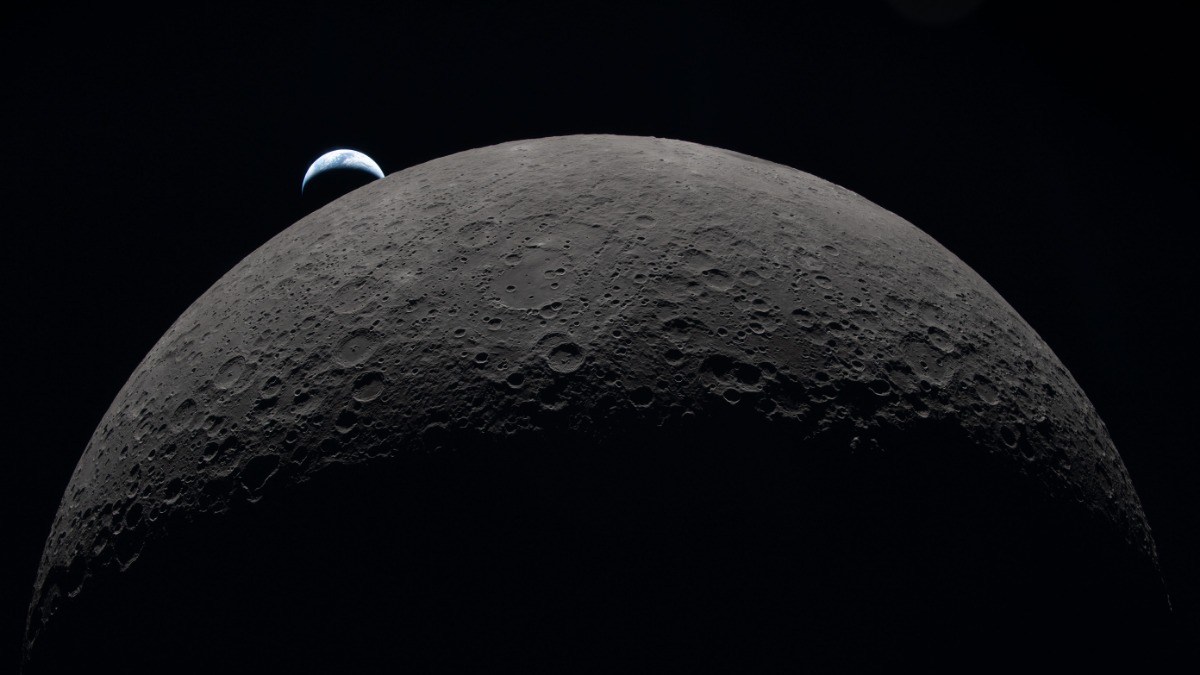
China’s latest moon mission is about to rewrite the rules of lunar exploration by ditching traditional rovers in favor of a hopping robot built to survive the moon’s eternal darkness. The Chang’e-7 mission, set to launch later this month, will target the moon’s south pole with a suite of high-tech tools, including a lander, rover, and a small but mighty hopper designed to leap into permanently shadowed craters where temperatures plummet below -200°C.
According to Reuters, if successful, this could be the first mission to directly analyze water ice in one of the solar system’s coldest, most inaccessible places. The mission’s centerpiece is the hopper, a specialized machine that skips the limitations of wheeled rovers. Unlike its predecessors, which struggle with steep crater walls and uneven terrain, the hopper will use thrusters to jump into shadowed craters, land on articulated legs, and then hop back out to recharge in sunlight.
Chinese officials say it’s expected to perform at least three hops during the mission, though details about its weight, flight range, or engine specs remain under wraps. It’s a bold gamble, but if it works, it could unlock the secrets of lunar water ice – resources that future astronauts might one day convert into drinking water, oxygen, or even rocket fuel.
Chang’e-7 is part of a much bigger plan
The mission will carry an array of scientific instruments, including water analyzers, cameras, and radars, to map out where water ice is hiding, how much exists, and whether it’s accessible. This isn’t just academic curiosity. Water ice could be the key to making long-term lunar bases viable, reducing the need to haul supplies from Earth.
The mission’s landing site is still unconfirmed, but the rim of Shackleton crater – a deep, permanently shadowed depression near the south pole – is a top contender. The area’s jagged terrain is bathed in near-constant sunlight, making it an ideal spot for solar power while still being close to the dark, icy craters where water might be trapped.
According to The Conversation, China’s approach stands in sharp contrast to NASA’s strategy. While Chang’e-7 is a tightly coordinated state mission with a single objective, NASA is betting on a marketplace of commercial partners through its Commercial Lunar Payload Services (CLPS) program. Instead of building its own spacecraft, NASA buys rides and services from companies like Intuitive Machines, which attempted a similar mission earlier this year.
That lander, IM-2, carried a drill, a hopping vehicle, and a mobile communications network, but it toppled over during landing and lasted just one day. The failure underscored the risks of lunar exploration, but it also proved that the basic idea—a hopper for dark craters—is worth pursuing.
The race to the Moon’s south pole is heating up
China isn’t the only player here. India’s Chandrayaan-3 mission successfully landed near the region in 2023, while NASA’s VIPER rover, the European Space Agency’s PROSPECT drill, and the Japan-India LUPEX rover are all slated to arrive in the coming years. The U.S. is also pushing ahead with its Artemis program, which aims to return humans to the moon by 2028 and establish a sustained presence.
In April, Artemis II completed a crewed flyby, sending four astronauts a record 252,756 miles from Earth – the farthest humans have ever traveled into space. The crew consisted of Commander Reid Wiseman, Pilot Victor Glover, and Mission Specialists Christina Koch and Jeremy Hansen. Wiseman, Glover, and Koch are all NASA astronauts, while Jeremy Hansen is from the Canadian Space Agency (CSA).
Meanwhile, China and Russia are collaborating on the International Lunar Research Station. This planned outpost near the south pole that could rival Artemis.
The south pole’s appeal goes beyond the water ice
The region’s unique lighting conditions – near-constant sunlight on high peaks and eternal darkness in craters – create a Goldilocks zone for lunar bases. Solar panels could run almost nonstop, while the stable temperatures would make it easier to manage equipment. But getting there is only half the battle.
The real challenge is learning how to live and work in a place where the sun never shines, the cold is unforgiving, and the terrain is treacherous. Chang’e-7’s hopper is a step toward solving that problem, but it’s just the beginning.
The mission’s successor, Chang’e-8, is already in the works for a potential 2028 launch. That mission will focus on demonstrating how lunar resources could actually be used, paving the way for crewed landings and the construction of a permanent research station.
China’s long-term goal is to put astronauts on the moon by 2030, and if Chang’e-7 succeeds, it’ll be a major milestone toward that ambition. For now, though, all eyes are on the hopper – a small machine with a big job, tasked with proving that even the darkest corners of the moon can be explored. If it works, it won’t just be a win for China. It’ll be a leap forward for everyone dreaming of a future beyond Earth.
(Featured image: NASA)
Have a tip we should know? [email protected]
Follow The Mary Sue:
