


Woman with disability asks Red Lobster to cut her food for her. She didn’t expect their response and now people are wondering if it’s a red flag
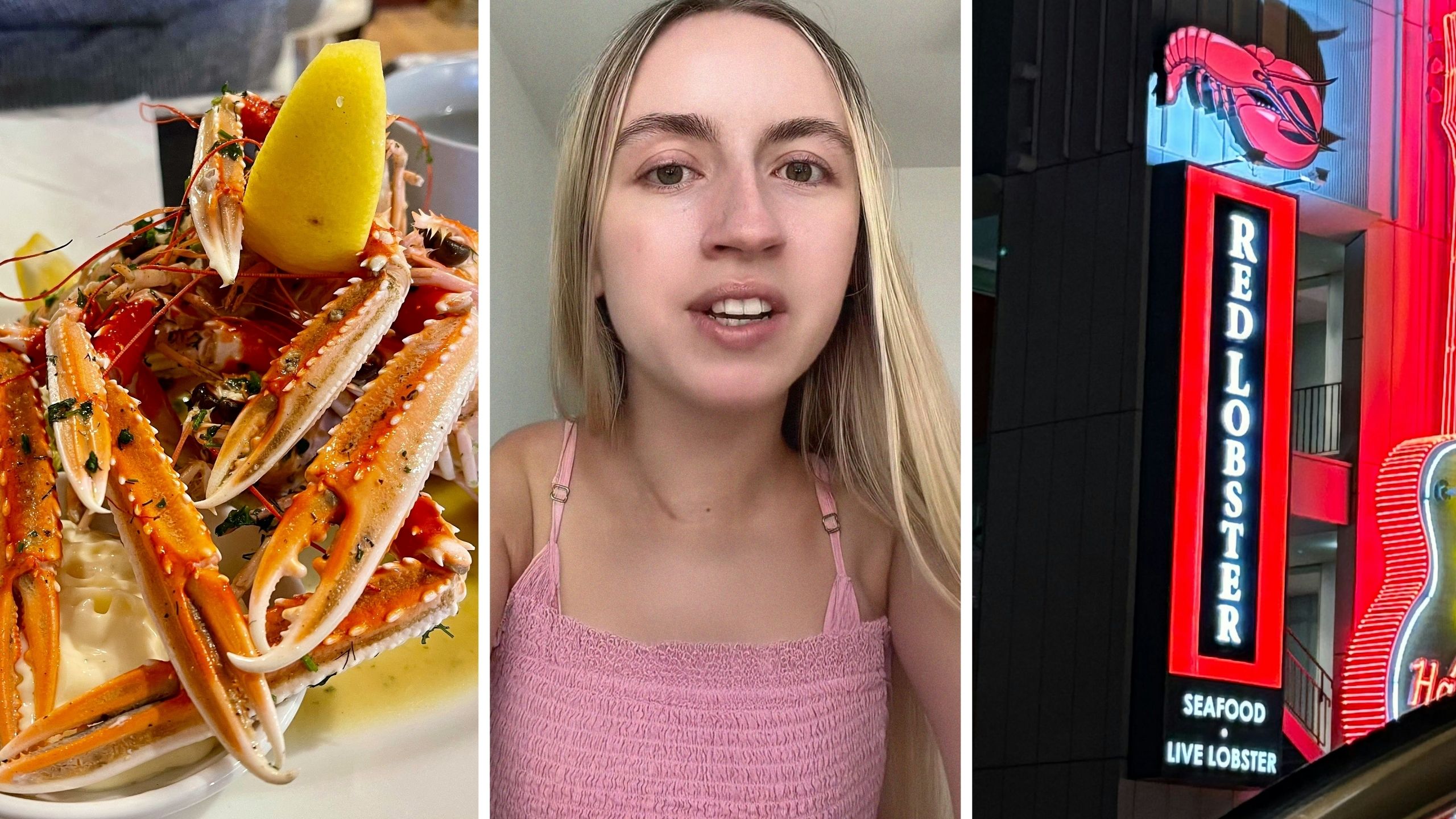
A Red Lobster customer highlighted what happens when people with disabilities ask restaurants for accommodations. She shared the very different responses she has received when requesting that her food be prepared in a more accessible way.
Sarah Todd Hammer (@sarahtoddhammer) posted a viral video viewed over 170,900 times. She explained that she has a physical disability and described her experience requesting accommodations at restaurants. Sarah claimed to encounter everything from enthusiastic accommodation to outright refusal when asking restaurants to cut up or prepare her food differently.
What Happened At Red Lobster?
She recalled ordering crab legs at Red Lobster and asking if the kitchen could crack them for her before bringing them to the table.
During one visit, the server happily agreed without hesitation.
The next time she made the exact same request at another visit. However, a different server refused. According to the creator, a manager later told her the accommodation should have been provided without any questions.
For Sarah, the experience illustrated just how inconsistent accessibility can be, even within the same restaurant.
Should people have to disclose a disability to receive an accommodation?
The creator said she generally does not disclose she has a disability when making the request. Because of that, she is unsure whether revealing her disability would change the outcome.
However, she also pointed out that many people with disabilities do not feel comfortable disclosing personal medical information simply to receive an accommodation.
Sarah explained that having someone at her table cut up or prepare her food is not always an ideal alternative either. Reaching across plates, glasses, and other table settings can be cumbersome and often draws unwanted attention to something she would rather remain routine.
Instead, she said it is much easier when the kitchen handles the request before the meal reaches the table.
The video closes with the creator encouraging others to ask if they need the accommodation. She noted that many people may not even realize restaurants can often do this upon request.
What did restaurant workers have to say?
The comments quickly filled with restaurant workers who said the answer should always be yes.
“Former server and line cook, the answer is always YES and I don’t need to know why. it’s truly such a simple request and the job is to SERVE, that means accommodating guests however they need :) it is no different than ‘no onions’ or ‘extra dressing,” stated one user.
Others said accommodations like this happen regularly, including at fast-food restaurants.
“Even at McDonald’s we’d accommodate when ppl asked for their food cut, stated another,” added another.
Some servers acknowledged they had occasionally received pushback from kitchen staff but said they simply prepared the food themselves before serving it.
Several viewers also argued that accessibility should not depend on someone revealing a disability.
“Accessibility should not be reliant on mandatory disclosure. You don’t have to disclose to the elevator every time you use it instead of the stairs,” demanded @Cassie.
Another commenter questioned why restaurants would hesitate at all.
“I truly couldn’t see why a restaurant would have policies. There are so many situations where it could be deemed necessary to help patrons find the restaurant accessible.”
What does the law say about disability accommodations?
Disability accommodation laws vary depending on the country. The United States requires businesses that serve the public to provide reasonable accommodations to customers with disabilities. This should be done unless doing so would create an undue hardship or fundamentally alter the service being provided.
In many cases, simple requests such as cutting food, cracking shellfish, or modifying how a meal is served may fall within the type of accommodations restaurants can often provide with little additional effort.
Importantly, disability rights advocates have long argued that accessibility should not require people to repeatedly justify or disclose private medical information. Not every disability is visible, and many people choose not to discuss their health with strangers. A request for a simple accommodation should not automatically require an explanation.
@sarahtoddhammer Replying to @smeggers922 My experience asking for my food to be brought out cut! [Video Description: ST, a young white woman with long blonde hair, is speaking on screen. The comment she is replying to is on screen at the beginning of the video and reads “Do restaurants actually refuse to cut things up? If I were a server and got asked this, I would be very eager to help. I’d be asking how many pieces and what shapes you want for the sandwich ?” Text on screen reads “Some restaurants do refuse to bring food out cut” and “NO ADVICE PLEASE”] #DisabilityTikTok #DisabilityAwareness ♬ original sound – ST Hammer
Can accessibility become the norm instead of the exception?
Ultimately, the discussion resonated because it highlighted how small acts of accessibility can have a meaningful impact. Whether it is cracking crab legs, cutting up a meal, or making another simple adjustment, accommodating reasonable requests allows more people to enjoy the same dining experience as everyone else.
For many viewers, that is what an inclusive society looks like. People should not have to prove they deserve accessibility. Accessibility should be a normal part of serving the public.
The Mary Sue reached out to Red Lobster and Sarah via email for comment.
Update:
In an email to The Mary Sue, Red Lobster shared the following statement:
“Red Lobster is committed to providing a welcoming experience for all guests. We do not agree with the assertion that Red Lobster lacks a consistent approach to accommodation requests. Our restaurants are expected to make reasonable efforts to assist guests with disabilities and to address accommodation requests in accordance with company policies and applicable law.
We first became aware of this guest’s concerns when contacted by your publication. While we do not discuss specific guest matters publicly, we take concerns regarding accommodations seriously.
We have not yet had the opportunity to speak directly with this guest, but we would welcome the opportunity. We intend to reach out to her to better understand her concerns.”
Sarah declined to comment for this article.
Have a tip we should know? [email protected]
Follow The Mary Sue:
