


A Routine Flight From Newark to Halifax Turned Into a Nightmare When Passengers Had to Drag the Captain From the Cockpit and Tie Him Down
Nothing short of traumatic.
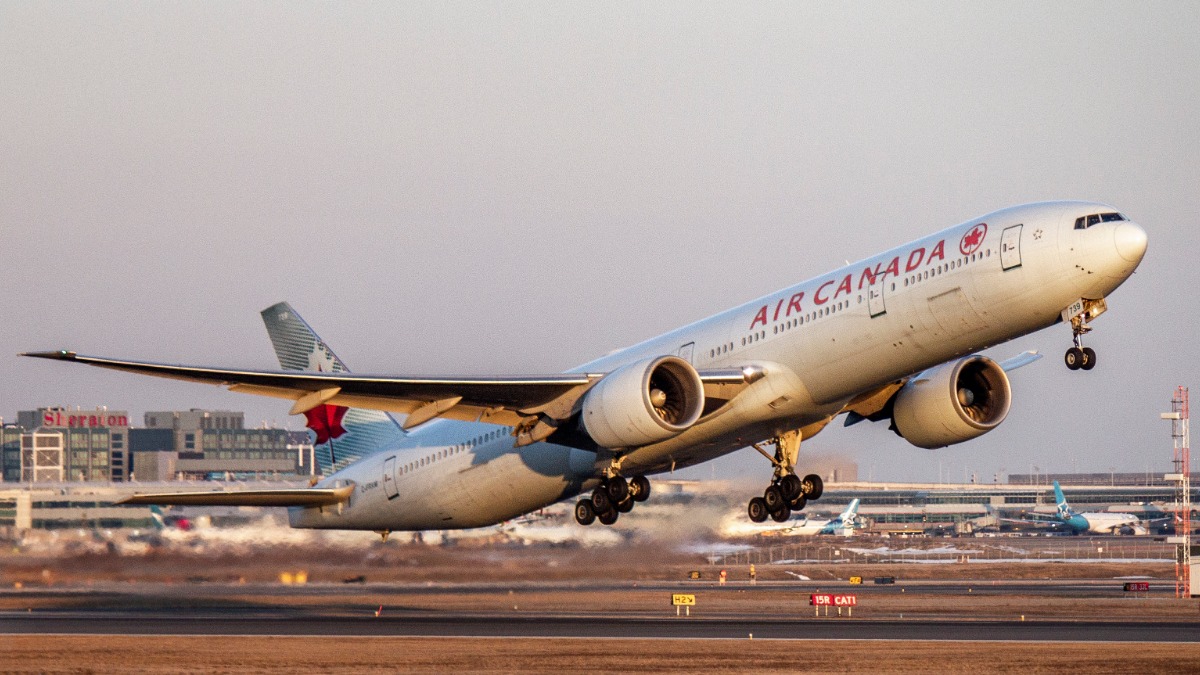
A routine flight from Newark to Halifax took a terrifying turn this week when passengers had to drag the captain from the cockpit and restrain him mid-flight. According to PEOPLE, the Air Canada regional flight, operated by PAL Airlines, was cruising at altitude on Wednesday, June 24, 2026, when the captain reportedly suffered a medical emergency that left him incapacitated.
The situation escalated so quickly that passengers, including a registered nurse, had to step in to physically subdue the pilot while the co-pilot took over and diverted the plane to Boston. The flight, AC7664, was carrying 61 passengers when the incident unfolded. According to accounts from those on board, the aircraft began swerving erratically, a sign that something was seriously wrong.
Rodney McDonald, a passenger traveling with his wife and two sons, told ABC News that the plane’s movements were unmistakable. “The moment the plane swerved, I knew something was wrong because it was not turbulence,” he recalled. “It really felt like someone had jilted the controls and then it happened over and over again.” The sudden, violent shifts sent passengers into a panic, with McDonald saying his sons immediately started praying.
The situation became clear when a flight attendant dragged the captain into the aisle
McDonald described the scene as horrifying, explaining that the pilot appeared to be having a seizure. “It was clear that he was not in control of his faculties and needed to be restrained,” he said. Along with four other passengers, McDonald helped hold the captain down, using seatbelts to secure his arms, legs, and chest.
The ordeal lasted about 40 minutes, a physically demanding effort to keep the pilot from harming himself or others while the co-pilot worked to stabilize the aircraft. What makes this incident particularly alarming is that the Centers for Disease Control and Prevention (CDC) explicitly advises against restraining someone during a seizure.
The agency warns that holding a person down or trying to stop their movements can cause injuries, both to the individual and those attempting to help. Instead, the CDC recommends staying calm, removing nearby objects that could cause harm, and waiting for the seizure to pass. In this case, however, passengers felt they had no choice but to intervene, given the high-stakes environment of a midair emergency.
The flight was diverted to Boston’s Logan International Airport
It landed safely at 1:40 PM local time. Massachusetts State Police confirmed that a crew member had reported a medical emergency, and the Massachusetts Port Authority (Massport) stated that the aircraft touched down without incident. Massport Fire Rescue and Boston EMS responded to the scene, though the captain’s condition was not disclosed. Air Canada later confirmed that the pilot had been taken to a hospital for treatment.
Air Canada issued a statement acknowledging the incident, saying, “During the flight, the captain experienced a medical issue and was removed from the flight deck as per safety protocols. The first officer took control of the aircraft and diverted the flight to Boston, where it landed safely.”
The airline also noted that it was working to rebook passengers so they could complete their journeys to Halifax as soon as possible. The De Havilland Q400 turboprop, the aircraft involved, is designed to be flown by a single pilot if necessary, and Air Canada emphasized that its pilots are fully trained to handle such scenarios.
This isn’t the first time a medical emergency has forced a midair diversion, but the level of passenger involvement in this case is rare. Most incidents are handled internally by the flight crew, with medical professionals on board sometimes assisting if available.
In this situation, however, the severity of the captain’s condition left passengers with little choice but to act. McDonald praised the flight attendants for remaining calm throughout the ordeal, and a registered nurse on board helped direct the effort to restrain the pilot.
The incident raises questions about how airlines prepare for medical emergencies at altitude
While pilots undergo regular medical evaluations, sudden health issues can still occur. Air Canada’s protocols for removing an incapacitated pilot from the flight deck worked as intended, but the passengers’ role in this case highlights just how unpredictable these situations can be. The fact that the co-pilot was able to safely land the plane in Boston is a testament to the training pilots receive, but the passengers’ quick thinking also played a critical role.
For those on board, the experience was nothing short of traumatic. McDonald described the 40 minutes of restraining the pilot as “strenuous,” and the fear of what could have happened if the co-pilot hadn’t been able to regain control is something no passenger should have to endure. The airline’s swift response in rebooking passengers and ensuring they reached their destination is a small comfort.
Air Canada has not provided additional details about the captain’s condition or what caused the medical emergency. The airline’s focus remains on supporting the passengers and crew involved, but the incident is likely to prompt discussions about how to better handle similar situations in the future. For now, the passengers of Flight AC7664 can count themselves lucky that the outcome wasn’t worse.
(Featured image: Aaron Davis)
Have a tip we should know? [email protected]
Follow The Mary Sue:
