


Woman reveals how she manipulated algorithms in the 2000s to become a MySpace emo queen with 48,000 followers: ‘The birth of a marketing genius’
She did it for the plot.
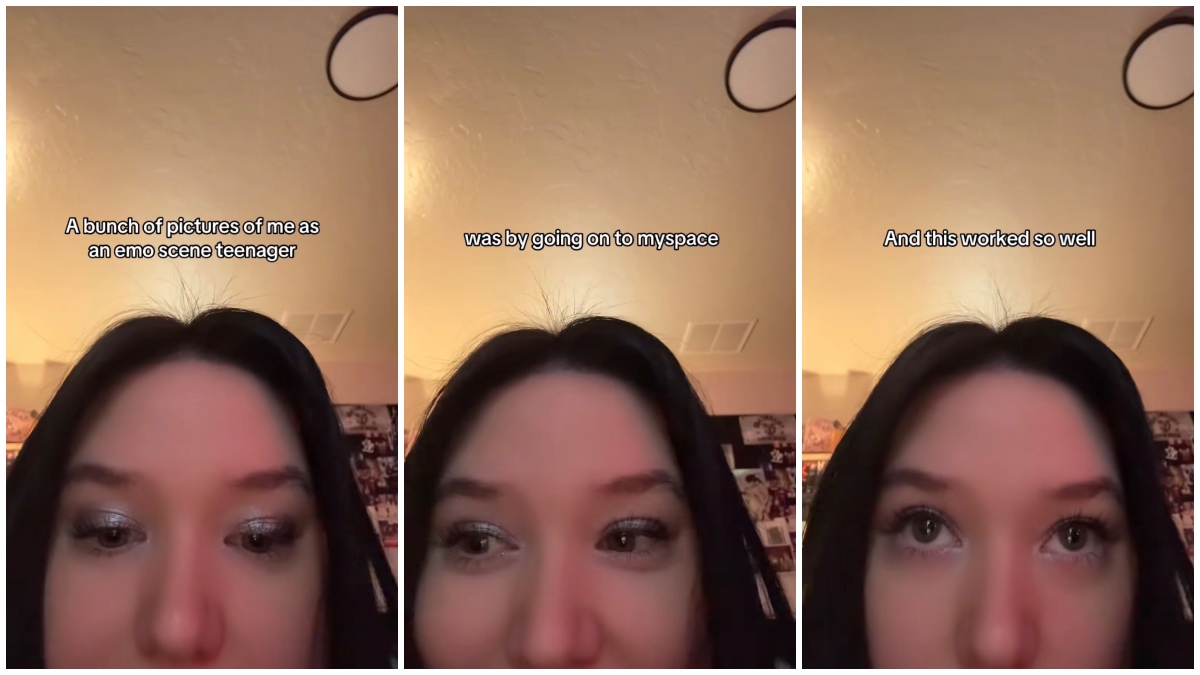
If you grew up during the peak of the 2000s internet, you probably remember “Emo Queens” with neon hair and dramatic side-swept bangs. They seemed to dominate every corner of Myspace even when calling yourself emo was a no-no.
While most people assumed these girls just happened to be popular, TikTok creator @cassdamm is going viral for revealing how it was all a calculated marketing plan. Her video, which has amassed nearly 650,000 views, pulls back the curtain on how she manufactured her own internet fame before “influencer” was even a job title.
The story serves as a nostalgic counter to the idea that viral fame was accidental. It shows that even in the days of dial-up, the “main character” energy was a full-time job.
‘The devil works hard, but cassycutthroat worked harder’
To build her digital empire, the creator started with a clever technical loophole. She would save her own photos from her Myspace profile back onto her computer to change the image metadata. As she tells, doing so changed the JPEG metadata to look like a “saved” image rather than an original upload.
This subtle change made the photos appear more popular and widely circulated to anyone who stumbled across the file info. This simple move laid the groundwork for her “Scene Queen” persona.
Strategic emo mix uploads to Photobucket boosted her reach
The real growth happened when she moved beyond Myspace to platforms like Photobucket and TinyPic. She curated a mix of her own photos alongside images of other people who matched her specific “emo” aesthetic.
By flooding these sites with a blend of content and using hashtags like #emogirl, #scenehair, #scenegirl, and #hairinspo, she ensured her face appeared whenever users searched for “hair inspo” or “emo girl.”
The creator gained forty-eight thousand Myspace friends
The strategy worked almost too well. Her photos began appearing in global compilation videos and. They were also stolen for thousands of “ catfish” and roleplay accounts, particularly in Brazil.
This led a massive wave of people back to her actual Myspace profile to verify her identity. The result? A staggering 48,000 friends. Users have noted that these numbers were “impressive” even by celebrity standards at the time.
She pretended to be annoyed by her emo queen fame
The funniest part of the story was her public-facing reaction. When followers would message her to “warn” her that her photos were being used by strangers online, she would act completely mortified.
Despite being the one who uploaded them to Photobucket in the first place, she would play the part of the cool, detached teenager who was “above” the labels people were giving her. The creator also noted that back then, you could not call yourself emo or scene. So, the nonchalance was actually not a choice.
Why could you not call yourself emo or scene in the 2000s?
In the mid-2000s, there was a strict social code regarding subcultures. The moment you “claimed” a label, you were immediately branded a “poser.” The goal was to look perfectly curated, complete with the studded belt and teased hair, while insisting you were “just being you.”
Admitting you were trying to be “scene” or “emo” would have ruined the carefully manufactured illusion of organic, angsty authenticity that was required for “Scene Queen” status.
The internet is impressed with the emo queen strategy
Users under @cassdamm’s video has hailed the creator as a pioneer of modern digital strategy. “So do you work in marketing now or…?” one viewer asked, recognizing the tactical genius behind her teenage manifestation.
“That’s literally old school SEO work,” another added, pointing out that she was using search engine optimization before it was a mainstream term. One also praised her “tactical growth marketing skills,” writing, “You were working the algorithms before people knew what they were.” One even hailed the whole hustle as “the birth of marketing genius.”
Genius is often born in the bedroom
@cassdamm’s story is a reminder that the tools of the internet have always been there for those willing to “do it for the plot.” Whether it was 2006 on Photobucket or 2026 on TikTok, the “main character” remains the one who knows exactly how to work the keywords.
So, if you want to “accidentally” make it big on social media, keep an eye on your hashtags. Because you never know if you’re the next emo queen in Brazil.
Have a tip we should know? [email protected]
Follow The Mary Sue:
