


Why Are Trader Joe’s Items Always Labeled ‘Limited Edition’?
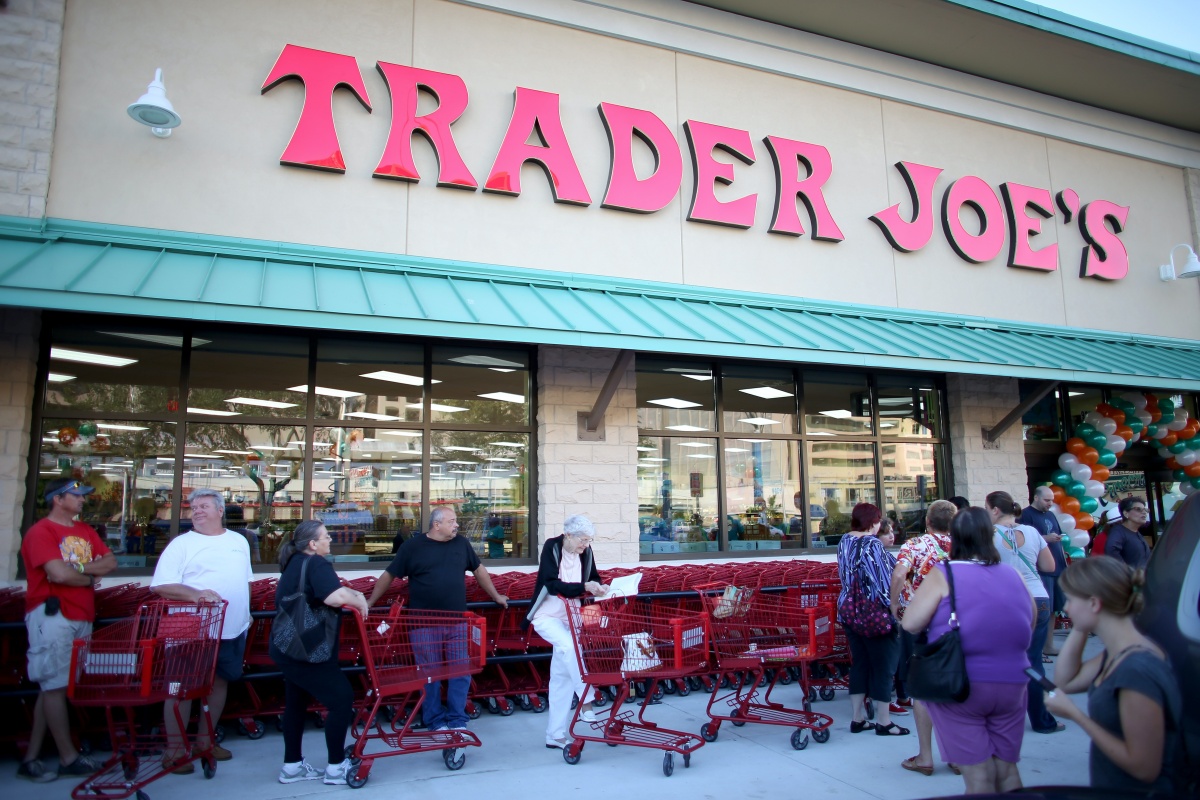
Trader Joe’s is an enigma in the retail space. As the comments on a recent viral TikTok put it, the store is “like if a real grocery store had a gift stop,” the place for “pretend groceries” and “food for my wooden play kitchen.”
Part of that energy is due to the array of products they offer: seasonal takes on ingredients, incredibly-specific variations of basic meals, and the like. If you shop at Trader Joe’s often enough, you begin to notice something: these products don’t stay in stock for very long. Even the chain’s official tote bags have become a bizarre phenomenon and status symbol online, because they go out of stock so quickly.
More often than not, if you happen to find a Trader Joe’s item in stock, you’ll notice that it is labeled with some variation of a phrase: “limited edition.” Sure, it’s accurate to how erratically an often might be available… but why exactly is it part of the company’s business model?
For one thing, it’s worth mentioning that Trader Joe’s isn’t the only popular grocery chain to have this business model. Aldi is also known for having limited edition products, although it does usually have more consistent staples in its stores. This makes sense, given the fact that both Aldi and Trader Joe’s originated from the same German family: the Albrechts, who broke up the two stores into independent companies decades ago. While the two stores technically have no current ties to each other, they both have enacted their own approaches to a similar sort of business model.
What Does “Limited Edition” Mean at Trader Joe’s?
But back to Trader Joe’s itself: why does it purposely label its products as “limited edition”? The best answer appears to be found in a Reddit thread from a few years back, citing information provided by Trader Joe’s employees.
“I was told by a Crew Member that “limited” can also sometimes mean that that product might be a one-time offer and might not come back, as opposed to seasonal products that usually come back around the same time every year,” writes user @CookieButterLovers. “Seasonal = they order enough during a certain time of year to try to last a certain time frame, and it can be re-ordered from the warehouse until the warehouse is out of stock. Limited = they bought x amount and when it’s gone, it’s gone. There’s usually less product so it doesn’t last as long. Sometimes they only get one shipment and it can’t be reordered at all. Like the first time when the Speculoos Cookie Butter Beer was released. Limited can also be a good deal/price on a certain product – like produce or alcohol.”
As they go on to point out: “sometimes “limited” products end up doing really well so they’ll try to bring them back,” but that is not always a guarantee. So, the answer appears to be a textbook example of supply and demand: Trader Joe’s only orders a certain amount of a certain product, instead of letting extra stock languish in a warehouse somewhere.
In a way, the “limited edition” moniker lets Trader Joe’s communicate this to the customer upfront, and provides an easy answer for team members to point to once the item disappears from shelves. In the process, it might motivate a customer to buy something once they happen upon it at a Trader Joe’s store, if the threat of it disappearing from shelves at any moment is in the back of their minds. It makes sense… but it can make the hunt for Chili Onion Crunch or a random seasonal snack a little more frustrating.
(featured image: Joe Raedle/Getty Images)
Have a tip we should know? [email protected]
Follow The Mary Sue:
