


10 best sci-fi fantasy books, ranked
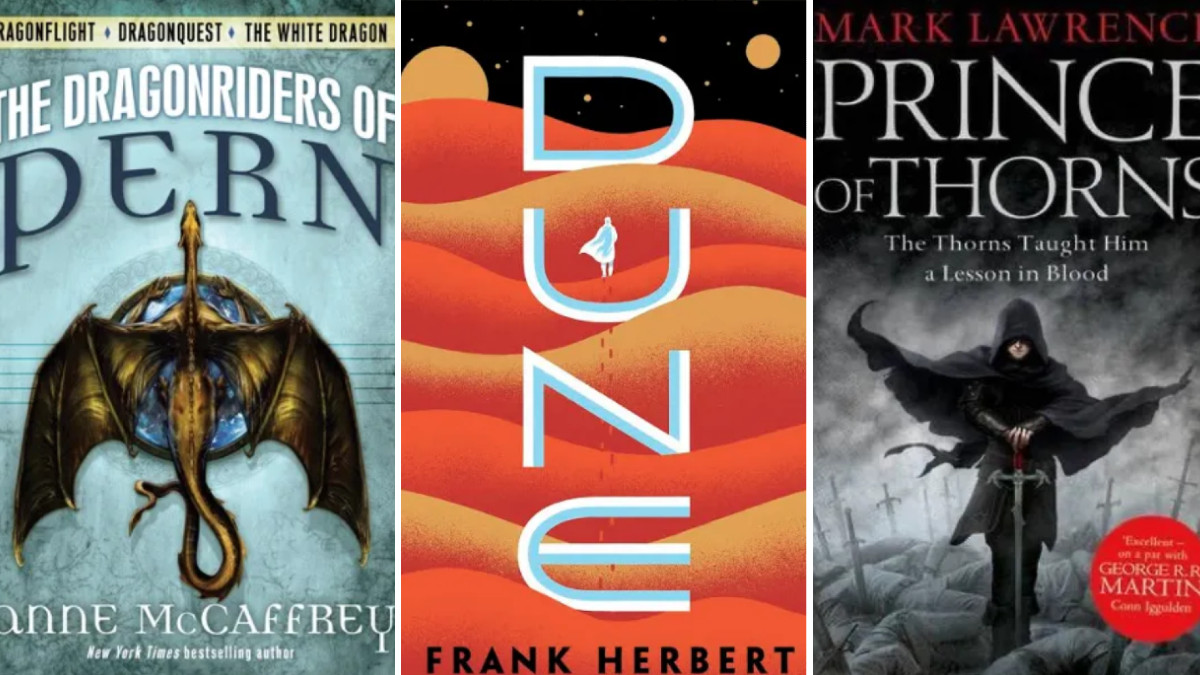
Much like gender, the space between fantasy and sci-fi is a spectrum. While books like The Lord of the Rings and The Three-Body Problem sit at opposite ends of said spectrum, plenty of books sit somewhere in the middle. If you’re looking for stories that blur the lines between these two beloved genres entirely, then here they are: the 10 best sci-fi fantasy books, ranked.
10. The God Engines by John Scalzi
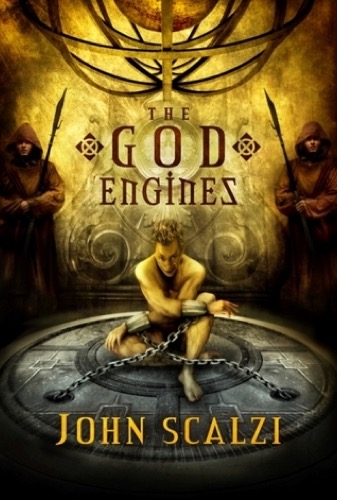
Looking for a powerful sci-fi fantasy story but don’t have the time to dive into a tome? John Scalzi’s The God Engines is fantasy horror in a bite-sized package! In this universe, gods exist, but rather than being worshipped and adored, they are captured and enslaved by humanity, their power harnessed to serve as the engines of starships. Ean Tephe is a captain of one such vessel and is sent out on a quest across the stars by The Bishopry, the sprawling religious organization that rules the galaxy. Tephe discovers that his ship’s usually ambivalent engine god has a curious interest in completing the mission, threatening to change Tephe’s perspective of the deity enslaving status quo.
9. Eisenhorn by Dan Abnett
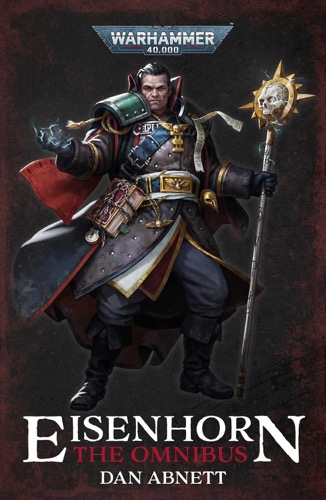
Set in the grimdark universe of Warhammer 40,000, Dan Abnett’s Eisenhorn series centers around the titular futuristic witch hunter and his quest to rid the stars of heresy. Serving the galaxy-spanning totalitarian theocracy that is the Imperium of Man, Inquisitor Gregor Eisenhorn travels from planet to planet hunting down daemons—and making the odd deal with the devil in the process. A heady blend of fantasy and sci-fi, the Eisenhorn series is set in a world where the forces of mankind utilize futuristic technology and arcane arts to fight a never-ending war against existential horrors that seek to bring the universe under the control of the dark gods of Chaos. Gregor Einsenhorn ain’t gonna let that happen.
8. The Book of the New Sun by Gene Wolfe
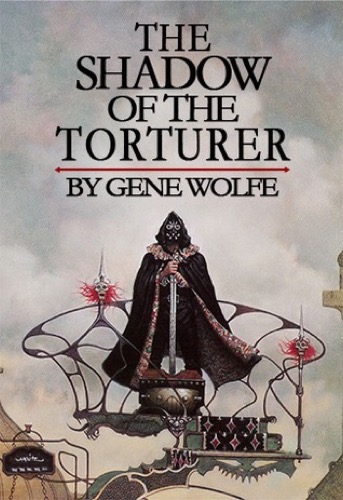
Gene Wolf’s The Book of the New Sun series follows the exploits of a former torturer-in-training on the hunt for a new line of work. After secretly providing aid to a prisoner, former Torturer’s Guild apprentice Severian is exiled by his employers, and sets out to wander a futuristic Earth to find his place in a dystopian and dying world. The sci-fi element comes courtesy of the advanced technology scattered about the land, now fallen into ruin and forgotten. The fantasy part comes with Severian’s quest to revive the planet’s sun, which is slowly decaying. Considering that all stars are eventually fated to burn out, the only option for this world is to use the arcane arts of resurrection magic—and a little time travel for good measure.
7. The Broken Empire by Mark Lawrence
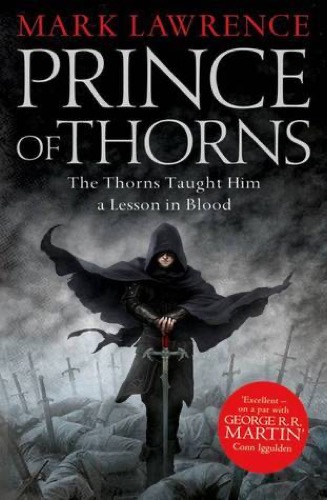
Like The Book of the New Sun, Mark Lawrence’s The Broken Empire trilogy takes place in a medieval world built upon the ruins of a technologically advanced past. Ancient pieces of technology are seen as magical relics, and the remnants of archaic AI are worshipped as divine gods. The dying world could certainly use a hero to unite it, and a hero is exactly what this novel’s protagonist is NOT. The ruthless prince Jorg Ancrat seeks to harness both ancient technology and a necromantic sword to rule the world, which is going to be especially difficult considering he has to fight against a crazed religious cult in possession of nuclear weapons.
6. The Dragonriders of Pern by Anne McCaffrey

Dragons are a hallmark of the fantasy genre, but The Dragonriders of Pern author Anne McCaffrey gives the famous fire-breathers a sci-fi spin. In the distant future, humanity has colonized the stars, with some of us settling on a distant planet known as Pern. Sadly for the denizens of Pern, the planet was cut off from the rest of the universe with the coming of an alien fungus known as Thread, which erodes all organic matter it touches. Using their last surviving bits of technology, the settlers of Pern genetically engineered telepathic dragons capable of burning away Thread, and established a lineage of dragon riders duty-bound to destroy the killer fungus. It’s basically The Last of Us in space—with dragons. If that doesn’t convince you to read it, I don’t know what will.
5. The Dark Tower by Stephen King

While Stephen King is known to the masses as the King of Horror, the man has made an indelible stamp on the fantasy world with his gloriously whacky The Dark Tower series. The titular tower serves as the central spoke around which King’s multiverse revolves, and serves as the central quest of the gunslinger/knight Roland Deschain. A banished prince from a kingdom long dead, Roland seeks to protect the spooky piece of architecture from the machinations of an ancient evil force known as The Crimson King. Traveling through wastelands, ruined cities, and alternate dimensions, Roland’s quest for the tower is a sci-fi fantasy blend that pits him against ancient demons, evil AI-controlled trains, and a group of robotic lightsaber-wielding horsemen who all look like Dr. Doom (yes, really).
4. His Dark Materials by Philip Pullman

Inspired by John Milton’s Paradise Lost, Philip Pullman’s His Dark Materials trilogy is a subversion of humanity’s relationship to the Christian concept of Original Sin, which means that all humans are innately doomed to commit evil. Set in a world almost but not quite like Edwardian England, the story centers around a young girl named Lyra Belaqcua, who discovers a hidden theological truth of the universe that a world-ruling church would rather keep secret. Accompanied by the talking ferret that serves as a living embodiment of her soul (yes, really), Lyra befriends ancient witches, gay angels, and a talking polar bear king on her multiverse hopping quest to find God and then kill him. Going against millennia of religious thought, Pullman’s novel teaches that humanity’s inevitable loss of innocence is not the source of all evil, but the source of our divinity.
3. The Inheritance Trilogy by N.K. Jemisin
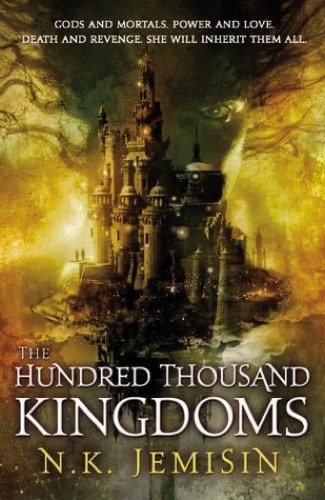
Like The God Engines, N.K. Jemisin’s The Inheritance Trilogy is set in a world where divinities are enslaved to do the bidding of mortals. Hailing from the rustic north, a young woman named Yeine is summoned by her grandfather to the floating city of Sky, where she is informed that she will inherit his title as ruler of the hundred thousand kingdoms of the world. Unlucky for Yeine, the royals of Sky aren’t willing to bow to an outsider, and the two other prospective heirs crop up to engage in a three-way struggle for power. To survive the perils of nobility, Yeine will need to court the favor of the gods themselves, which are really transcendental aliens that defy human understanding and are capable of granting magic to humans that bend the laws of physics.
2. Dune by Frank Herbert

The granddaddy of sci-fi stories, Frank Herbert’s Dune is one of the most influential epics of all time, inspiring Star Wars, Warhammer 40,000, and hundreds of other space opera narratives. The story begins on the desert planet of Arrakis, where House Atreides established a tenuous rule over the world’s native population to harvest a local substance called spice integral to intergalactic trade. After House Atreides is betrayed and toppled by rivals, the young Paul Atreides becomes a messiah-like figure to the desert-dwelling Fremin and unites them in a revolution for the planet’s freedom. While Paul begins as a hero, the subsequent books of the series serve as an example of how the path to hell is littered with good intentions. Possessed by a megalomania spurred on by an ancient prophecy, Paul eventually becomes the very sort of galaxy-controlling tyrant he once opposed. It’s a subversion of the traditional “Chosen One” fantasy trope, warning readers to be careful of young men with messiah complexes.
1. The Hyperion Cantos by Dan Simmons
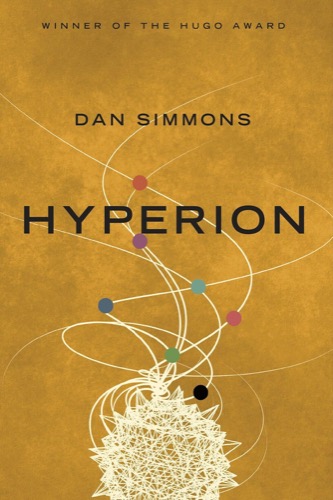
Dan Simmons’ The Hyperion Cantos is a four-part space opera inspired by Geoffrey Chaucer’s The Canterbury Tales. It tells the story of seven pilgrims chosen to travel to the distant planet of Hyperion and enter The Time Tombs, which are guarded by a metaphysical mechanical monster known as The Shrike. Each character has a particular reason for visiting the Tombs, and their motivations range from noble, to romantic, to utterly selfish. The series is a seamless blend of science fiction and fantasy, where godlike AIs, star-faring human federations, and alien beings contend with one another in an intergalactic power struggle—a battle that the latent power within the Time Tombs may decide once and for all.
Have a tip we should know? [email protected]
Follow The Mary Sue:
