


Woman goes with boyfriend to the bar. Then she realizes who the bartender is: ‘I feel bad for the boyfriend’

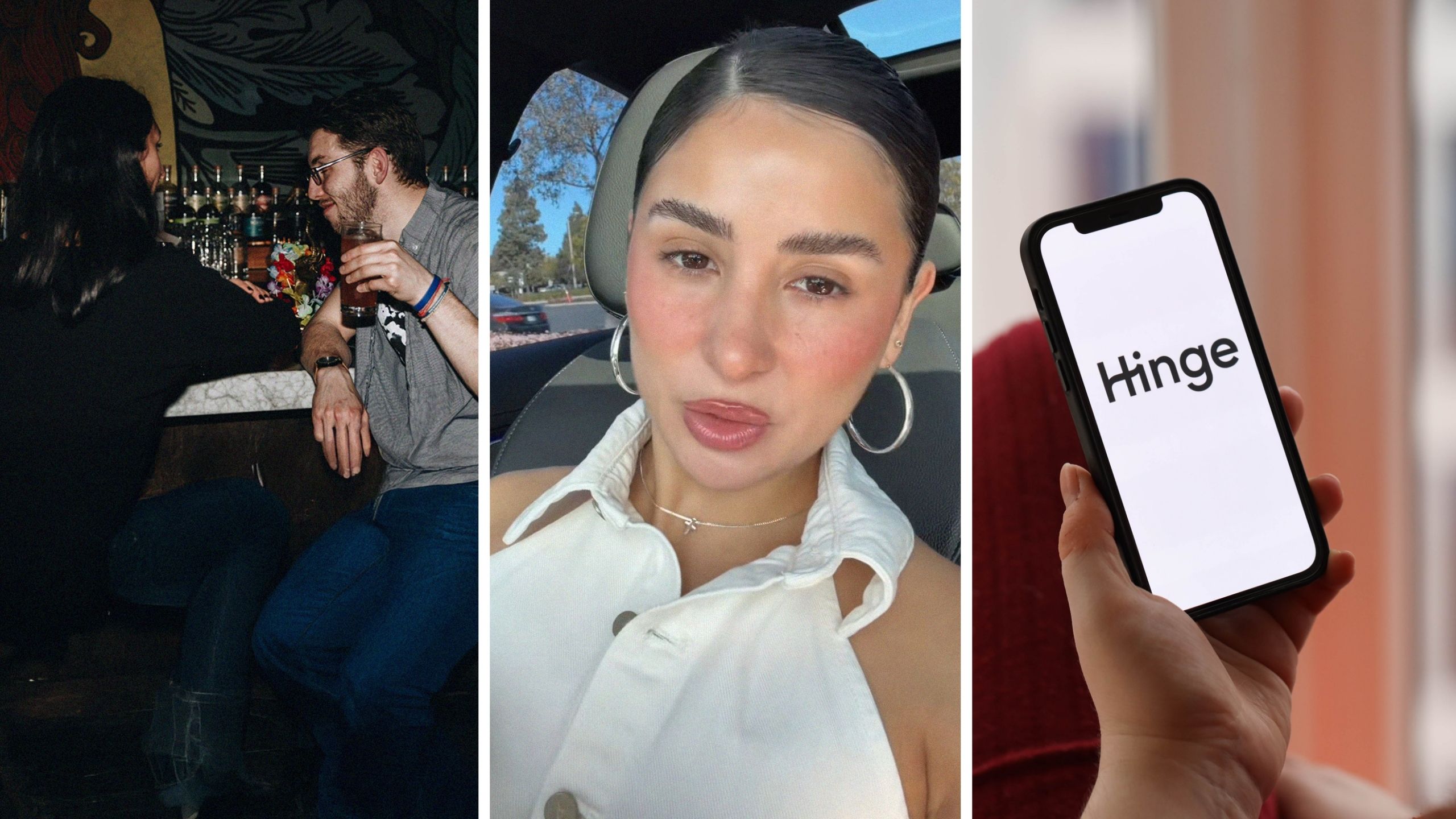
This woman was just trying to grab a drink before dinner, then the bartender turned around and things got awkward.
What would you do if you suddenly ran into your ex or an old situationship while out with your current partner? Would you try to hide it and make it seem like nothing was wrong, or make a casual introduction?
Awkward Encounter
In a TikTok with more than 260,000 views, content creator Ani (@anibaaaby) recounts an awkward situation she was in involving her boyfriend, a situationship, and her favorite cocktail.
Ani and her boyfriend arrived early for a dinner reservation at a smaller spot in their new neighborhood and decided to kill time at the bar. The bartender had his back to them when they sat down. Then he turned around.
“Him and I make eye contact,” Ani says. “And it was a guy that I used to go on dates with from Hinge.”
The recognition was mutual and immediate. He greeted her, she introduced her boyfriend, and the three of them settled into what she describes as “the most awkward weird interaction.” What she couldn’t do, at least not right there at the bar, was explain exactly who this guy was to her boyfriend.
Here’s where it gets worse. During their Hinge era, this particular guy had introduced Ani to a drink: an espresso martini with mezcal. She thought it was so good that she’d shared it with her now-boyfriend. It had since become their thing.
So when her boyfriend leaned over to order, he looked at the bartender and said, “I’m gonna get an espresso martini with mezcal.”
The bartender said that was a great drink. Her boyfriend, unprompted, added that it was basically their drink as a couple.
“And I’m sitting there like this,” Ani says in shock. “If only my boyfriend knew that this was the man that showed me this drink and I showed it to you and now you’re telling him that this is our drink.”
She held it together at the bar, then came clean once they got to their table. She reminded her boyfriend she’d told him some stories about her Hinge dates, and that this bartender was the one who’d introduced her to the espresso martini with mezcal he’d just proudly claimed as theirs.
“Peak embarrassment,” she says in the caption.
What Is A Situationship, Exactly?
According to the Cleveland Clinic, a situationship is a romantic or sexual relationship that hasn’t been formalized, characterized by a lack of labels, obligation, or exclusivity.
You have many of the benefits of a relationship without any of the commitment. The real hallmark, as psychologist Susan Albers puts it, is that “there are elements of friendship and romance, but they exist without defining the relationship.”
The term first appeared in a 2017 Cosmopolitan piece to describe a “hookup with emotional benefits,” and it’s been in wide circulation ever since. Research published in Psychology Today found that situationships don’t actually differ from relationships when it comes to affection, communication, or even physical intimacy, which is exactly what makes them so confusing.
The one thing that sets them apart is commitment, or the lack of it. Where a real relationship deepens over time, a situationship stagnates. And the ambiguity, as researchers put it, consumes a lot of energy, because our brains are wired to want clarity, and a gray area is genuinely hard to process.
Why Awkward Situations Feel So Physically Awful
There’s a reason watching this story unfold makes your stomach drop a little, even when it’s not happening to you. That’s vicarious embarrassment, sometimes called secondhand embarrassment, and it’s a fully documented psychological phenomenon. According to Mental Floss, researchers believe we feel embarrassed on other people’s behalf as an expression of empathy, a way of mentally stepping into someone else’s shoes and experiencing their discomfort as if it were our own.
Crucially, the other person doesn’t even have to be embarrassed themselves for this to kick in. You can cringe on someone’s behalf while they’re completely oblivious to what’s happening.
The physical symptoms are real too: flushing, cringing, the urge to look away. Psychologists have found that the same brain regions involved in processing physical pain also activate during vicarious embarrassment. It’s the same mechanism that makes cringe comedy so hard to watch for some people.
@anibaaaby peak embarrassment
♬ original sound – Ani B
Commenters React
“If my girl posted this no lie we would be done,” a top comment read.
“I wouldn’t wish this on my worst enemy,” a person said.
“Some things gotta be kept in the drafttssssss,” another wrote.
The Mary Sue reached out to Ani for comment via email and TikTok direct message.
Have a tip we should know? [email protected]
