



‘I CAN NOT do polyester’: Woman goes to T.J. Maxx. Then she notices something strange about the socks

It feels like everything that’s high quality—or otherwise good for us—is getting rarer and pricer. And organic fabrics are no different.
Fabrics like linen, wool, and cotton are getting crazy steep for the average consumer. And while these “premium fibers” are admittedly harder to create en masse, thanks to needing specific environments to grow in, everyday folks are starting to bemoan their lack of accessibility.
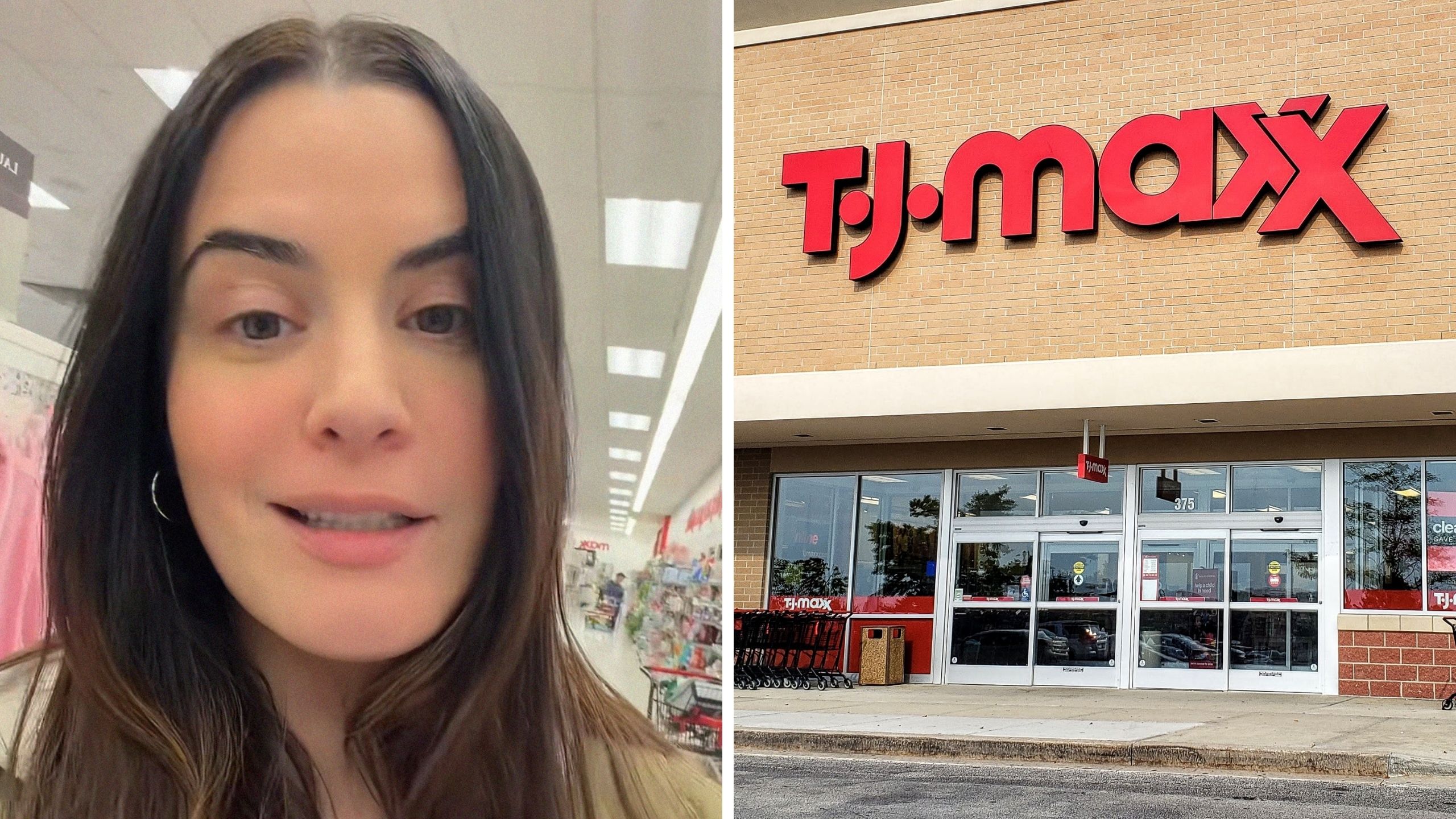
One woman has gone viral for drawing attention to this growing problem. In a TikTok video that’s now making the rounds, she called out how the rising dominance of synthetic fibers plagues popular retail chains like T.J. Maxx.
‘Why are they using less cotton?’
In a video first posted on Apr. 3, Jennifer Tripucka (@thejennifertrip) posted a video that has since accumulated nearly 400,000 views. In it, she documents a frustrating search for a specific kind of socks.
“So I’m at T.J. Maxx right now and I’m trying to find 100% cotton socks ’cause I don’t want to wear polyester,” Tripucka begins in her video. “Polyester equals plastic … and let’s see if I can find some.”
Tripucka proceeds to pick up black socks that are labeled “cotton.” She examines them closely.
“Let’s see, should be 100% cotton,” Tripucka says, but no dice. “64%. 32% polyester.”
She then picks up another pair. It’s “97% plastic.” A pair of Gap socks labeled as Cotton ends up being “72% polyester and 24% cotton.” Some Nike socks are 39% polyester, a pair of Adidas socks are are 87%… You get the picture. To the horror of viewers, Tripucka notes that one pair of socks is “20% plastic, but they’re allowed to say organic cotton.”
“America is so cheap,” mourned one viewer in Tripucka’s comment section.
“The fact that we have to look at the ingredients of our clothes is so insane,” agreed another viewer.
“Trying to find 100% cotton underwear is like searching for a needle in a haystack as well,” added another. Tripucka clearly shares her viewers’ frustration.
“That’s wild,” Tripucka says, ending her video. “I have literally looked through this entire area and there is nothing that is 100% cotton. That is actually crazy.”
Is polyester bad for you?
Tripucka’s video obviously struck a chord, but how bad is it actually that so many clothing items are made of polyester? After all, polyester literally is a type of plastic. And according to the Guardian, plastics “account for 69% of all the materials used in clothing globally and that number is expected to increase to 75% by 2030.” So… what does that mean for our health?
It’s well-documented that synthetic fabrics like polyester shed oodles of microplastics. According to NPR, “the polyester clothes people keep can leach microplastics into the environment when they’re washed,” leading those microplastics to “end up in local water supplies.” And even though polyester can technically be recycled, it’s still unfortunately true that “recycled materials end up in landfills.”
The BBC reports that “microplastics have become ubiquitous,” with them being found everywhere from our bloodstreams to the inside of our bones. The jury’s still somewhat out on what all these microplastics are actually doing to us, because studying their effects on the human body requires, well, human trials.
But preliminary findings suggest microplastics could be a contributing factor to dementia, cardiovascular disease, and cancer–among other things.
What can it do?
Microplastics aside, polyester can—in more extreme cases—irritate the skin due to a lack of fabric breathability and trace chemicals. For all these reasons and more, growing numbers of people are turning to non-polyester alternatives. In an email to The Mary Sue, Tripucka herself expressed a calling to help others find clothes made of natural fibers.
“I grew up in a family where cotton was always the go-to fabric,” Tripucka wrote. “It’s become such a chore to find quality materials in so many stores these days, so as a journalist/editor, I’ve recently made it my mission to continue the search while sharing my findings…and apparently I’m not alone in the hunt!”
The Mary Sue has also reached out to T.J. Maxx via email.
Have a tip we should know? [email protected]
