


Florida mom experienced her ‘worst nightmare’ at a Goodwill. Now people are accusing her of hurting families with young children. What do they mean?
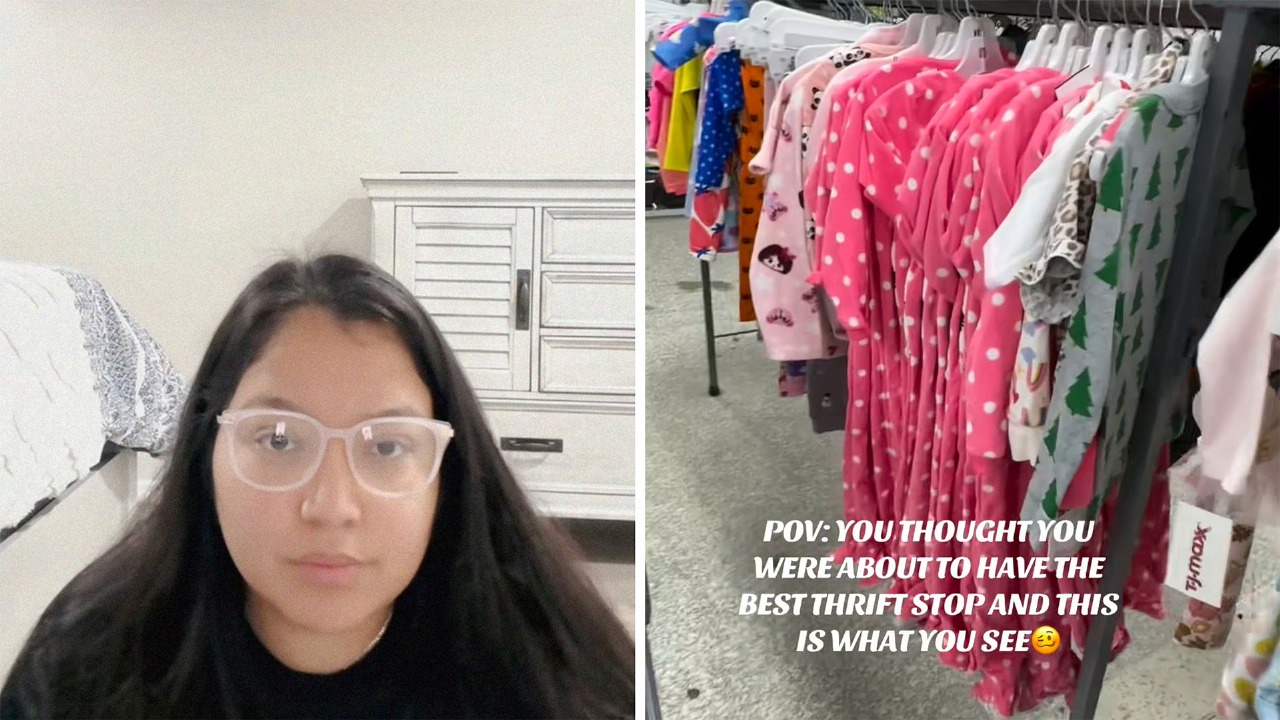
A TikToker is in hot water after posting thrifting complaints online. The problem? She is reselling the clothing she buys, not purchasing it for herself or her children.
Yani (@yanii.iii), a 22-year-old reseller who primarily purchases clothing for young girls, had a reseller’s worst nightmare when heading into her local shop. She said she found nothing she could sell online, making it a bad day overall for her business. Many commenters, however, were not focused on her difficulty finding “good selections.” Instead, they took issue with her buying up higher-quality clothing and inflating the items’ prices tenfold.
Why are resellers such an issue to begin with?
Even though there are thousands of articles of clothing that end up in landfills, many people still feel that thrift shops are “picked clean.”
Corporations like Goodwill will usually “pick through” items for their online shopping platform, shopgoodwill.com, before allowing them to head to the floor. Similarly, resellers track individual stores to see when they’ll put new items out. They then go in-store and find whatever high-quality items they can on a daily basis, leaving little for other customers.
That creates a problem, as it is difficult to fit in or feel comfortable without access to clothing that other people have. The lack of opportunity to find these items before corporations and resellers do creates, for many commenters and online viewers, an unfair advantage.
It’s also harder to find clothes for young children, considering how fast they grow. Parents are usually looking for 20-25 different sets for their children based on parenting guides. That means, every time their child grows out of one size, they have to replace upward of 50 pieces of clothing.
Commenters weigh in on the reseller’s habits
Commenters pointed out these issues, saying Yani contributed to a longstanding issue in resale spaces. “Hey, so thrift stores are for people that can’t afford to buy resold clothes online for [three times] the thrift price. Your ‘hobby’ [affects] struggling families,” said one commenter.
Another added, “Mind y’all, she resells BABY clothes for 10x the price when mothers in need could actually buy it for [their] children.”
Another commenter clarified exactly how much she was reselling the items for.
“She sold a $1.99 t-shirt for $10,” they said. “[Why is that] okay when we literally had snap cut benefits this month and kids clothes are expensive as is? Sure these donation places are getting a lot and not actually helping like they should but why are the answer resellers and not pushing these companies to be better????”
@yanii.iii Resellers worst nightmare ? Def should’ve slept in ? #thrifting #thrift #thrifttok ♬ female rage – bel6va
The reseller replies with her thoughts
Yani replied to multiple comments, expressing her frustration at the video not reaching the audience she intended it to. She directly stated that she wasn’t necessarily responsible for increasing prices in thrift stores; corporations were.
Yani added to the apparent controversy, stating, “I’m not taking anything from moms who need it. Big companies and overproduction are the real problem, not someone reselling a few baby vintage pieces. Thrift stores sell donations, and tons of clothes still end up in landfills. Thrifting makes me happy, and it’s something I love doing with my girls. Not replying to anymore comments.”
Despite this, she later replied to other comments, saying she wasn’t taking clothing away from mothers either way.
The Mary Sue has reached out to Yani for comment.
Have a tip we should know? [email protected]
Follow The Mary Sue:
