


Thought lost for 7,000 years, scientists are in total shock after two ‘extinct’ species make an unexpected return
Who doesn’t love a good comeback story?

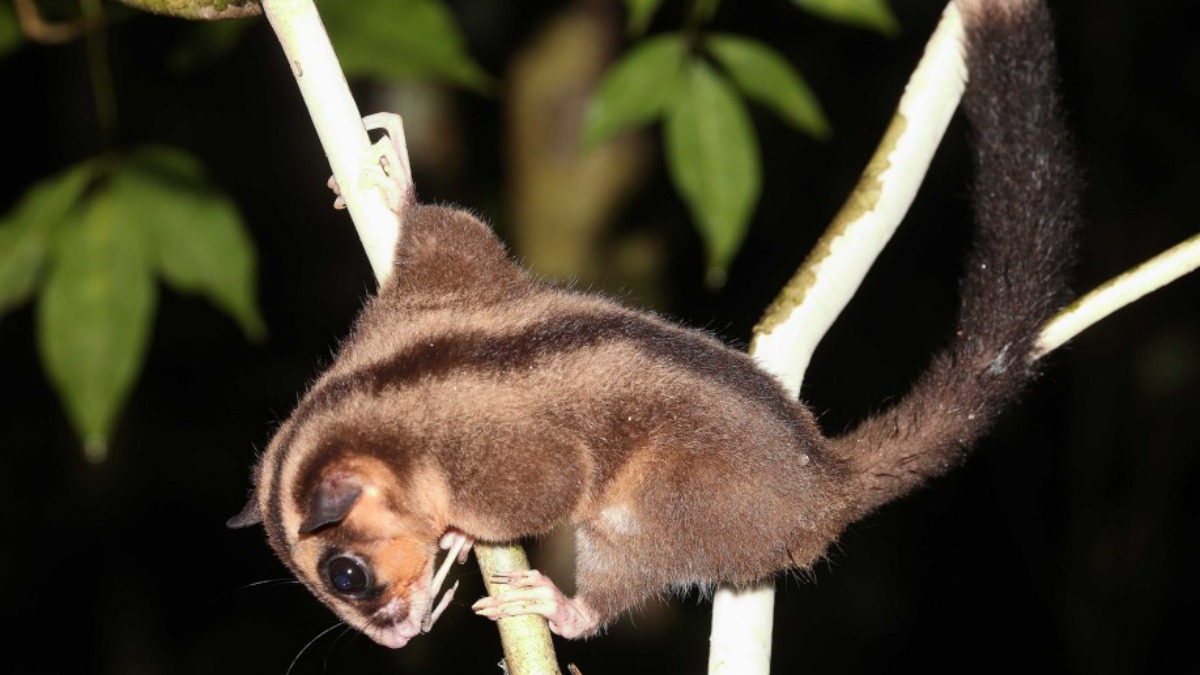
Get ready for some truly wild news from the natural world because scientists have confirmed that two small marsupial species, the pygmy long-fingered possum and the ring-tailed glider, are still alive in New Guinea, even though they were thought to have vanished from Earth over 7,000 years ago.
According to Us Weekly, the Bishop Museum in Honolulu officially announced this incredible discovery on March 5, 2026, after years of dedicated work. Both of these little creatures were previously known only from ancient fossil evidence, with no confirmed sightings for millennia. It’s like finding a living dinosaur, but, you know, smaller and cuddlier.
These two marsupials are now rightfully classified as ‘Lazarus species’ – a scientific term for organisms that reappear after everyone thought they were extinct, akin to being raised from the dead. It fits these animals, as there wasn’t any confirmed evidence of their existence for thousands of years.
A real “wait, what?” moment for the scientific community
Dr. Tim Flannery of the Australian Museum expressed his excitement, stating that “The discovery of two Lazarus species, thought to be extinct for millennia, is unprecedented.” The journey to this rediscovery actually began decades ago.
Back in the 1990s, Dr. Ken Aplin first identified these animals through fossils. He found teeth belonging to the species during an archaeological dig in western New Guinea. At that time, those fossils were the only proof these creatures ever existed, and everyone naturally assumed they had died out thousands of years prior.
That classification held for years until new, unexpected evidence started to pop up. Dr. Kristofer Helgen of the Bishop Museum was the first to recognize one of the species after he saw a photograph of a gliding ring-tailed possum in the wild. He immediately knew that the animal in the picture matched one of the species Aplin had classified as extinct. That single, pivotal photograph really set a much broader investigation into motion.
Over the past two years, Helgen and Flannery have been hard at work, conducting extensive research to find these species and definitively confirm that they are, in fact, still thriving in New Guinea. Their investigation involved piecing together several different forms of evidence.
One crucial clue came from the University of Papua New Guinea, where researchers found two preserved specimens of the pygmy long-fingered possum stored in a jar. These specimens provided concrete physical proof that the species had survived much more recently than the fossil record had indicated.
Another incredibly cool piece of the puzzle came from an entirely unexpected source: a citizen scientist named Carlos Bocos. He posted photographs of the pygmy long-fingered possum on iNaturalist, a biodiversity platform. These images were so significant that Bocos actually became a co-author on the study documenting the species’ survival.
This whole confirmation effort was a truly unusual collaboration, bringing together museum scientists, Indigenous communities, and even citizen scientists. For the scientists involved, this discovery carries a profound emotional weight that goes way beyond the lab.
Helgen shared his feelings, saying, “To be able to say that they indeed are alive brings me joy as a scientist and conservationist. It feels like a second chance to learn about, and protect, these remarkable animals.” He also highlighted the broader implications, noting that the rediscovery shows that “extinction can be averted.”
Have a tip we should know? [email protected]
