



‘The Testaments’ Should Be Harder To Watch [REVIEW]
4.5/5 b*stards not grinding me down

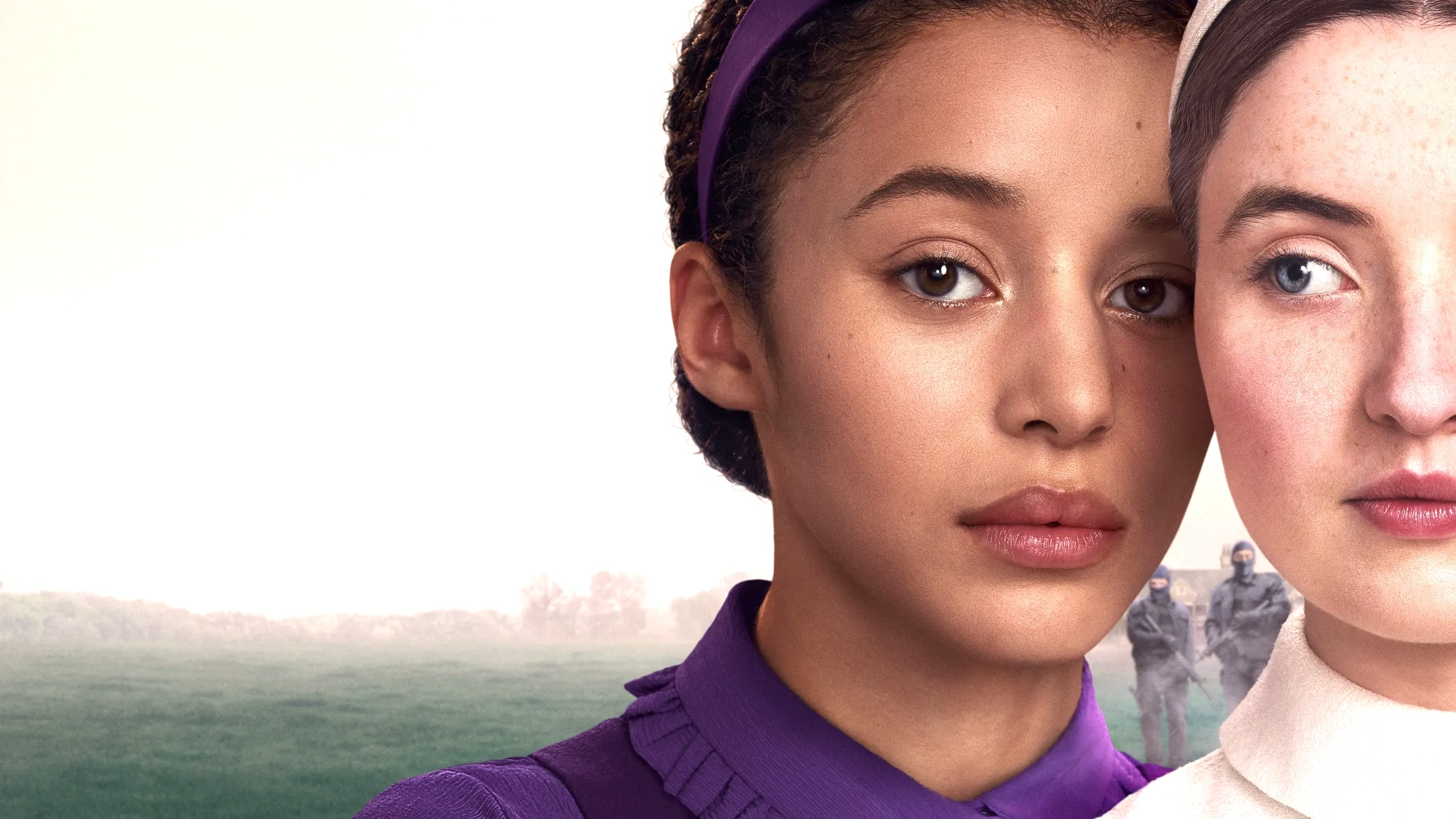
A relentlessly brutal episode of The Handmaid’s Tale season 2, set at the former offices of The Boston Globe, stressed me out so much that I had to walk away, open a window, and breathe fresh air to calm down. Eight very strange years later, I’m shook and shocked to report that the The Testaments, set in the same dystopia and fighting the same battles, has me glued to my screen.
The Testaments is about the generation of “plum girls” raised in Gilead’s oppressive society. These very young women have been desensitized to violence and groomed to want nothing more than serving a husband and raising children. The girls are taught embroidery, flower arrangement, music, and that while rape is a sin punishable by death, they are at fault for tempting otherwise godly men to sin.
On paper, it’s a #tradwife, Project 2025, Epstein list wet dream. The real world is worse and closer to Margaret Atwood’s vision than it was when the show premiered in 2017. Gilead is not an escapist fantasy, a satirical joke, or a lesson via cultural commentary that I need to learn. So why am I hooked?
Am I okay? Am I being lulled into a false sense of security by pastels? Are the few and far between nice aspects of Gilead–women spending days focusing on art instead of taxes, for example–tempting me away from my autonomy? Have I become as numb to female oppression as these characters have? I doubt it. The horrors of The Handmaid’s Tale are ever-present even if the plum girls only experience some of them. The idyllic, cozy school setting actually most reminds me of Kazuo Ishiguro’s novel Never Let Me Go. The pupils at that fictional establishment were being gently prepared for tragedy as well.
The Performances Make It Impossible To Look Away
The series could not have asked for a better lead than Chase Infiniti, the breakout star of One Battle After Another. Her portrayal of Agnes’ errant anger pushing against an inclination to be kind is like, raw girlhood in a way I haven’t seen before. She is perceptive and discerning in ways that women in our world rarely need to be. Agnes and her peers are all full of fascinating contradictions due to their upbringing.
There are too many incredible performances to mention. Early standouts include Rowan Blanchard as the gleefully aggressive plum girl Shunammite and Lucy Halliday as Daisy a.k.a. the new girl in town. She is what Gilead calls a “pearl girl” after immigrating to Gilead from Canada for mysterious reasons. Daisy is also the second lead of the series. By the end of the season, my favorites also included Mattea Conforti’s Becka and Mabel Li’s Aunt Vidala. These two characters are absolutely miserable for totally different and deliciously complicated reasons. I’ve got my eye on Paula (Amy Seimetz), who is seemingly only happy when her position of relative power lets her get away with racist micro-aggressions, as well.
The Premise Promises Some Hope For The Future
If you’ve watched the first three episodes of The Testaments, you might have noticed two things. First, the opening crawl revealed that the teenage girls at the center of the series will change history. Second, the voiceovers are in the past tense. That implies that, at bare minimum, both Agnes and Daisy will survive. They too shall pass. It’s crazy how effective verbiage is at decreasing my anxiety. As we learn in the third episode (spoiler alert) Daisy is a spy. Just knowing that these girls have at least one “normal” person looking out for them lowers the blood pressure as well.
The Handmaid’s Tale protagonist June (Elisabeth Moss) was also a “normal” person in an abnormal world. But Daisy is young and therefore able to learn from some of her mistakes. She can potentially apply their shared values in other ways. Because of that, I don’t even think that The Testaments is appealing to my inner white #girlboss feminist I try not to feed. There are more opportunities for solidarity over savior-ism here than ever before.
It definitely helps that The Testaments peppers in subtle reminders that fundamentalist societies fundamentally do not work. To be fair, that was one of my favorite things about The Handmaid’s Tale as well. The franchise shows how oppression cracks and strains against human nature in little ways that may not seem rebellious. To borrow one of Nemik’s speeches from the series Andor, sorry not sorry, Gilead’s “need for control is so desperate because it is so unnatural. Tyranny requires constant effort.”
Huldah (Isolde Ardies) loves science even though she can’t read. The plum girls think pearls who convert to their faith are weird and untrustworthy but can’t articulate why. Violence and content we deem too “hard to watch” is not the only way to show how wrong things are in this society. It’s details like that that makes The Testaments so engaging. I want to know more about these women. I want to see what happens when their potential is tapped.
Have a tip we should know? [email protected]
