




The 10 Best Sci-Fi Movies of The 21st Century


The seas are rising! AI is taking over! Asteroids are hurtling our way! While the 21st century world can be a confusing and scary place, these sci-fi films prove that, as freaky as the present moment is, things can always get worse! Modern problems require modern solutions, and sometimes the best solution is gluing yourself to your TV set and pretending those problems don’t exist! What better way to distract yourself from today’s woes than with the 10 best sci-fi movies of the 21st century? I don’t think science could come up with a better solution than that.
Ex Machina

Alex Garland’s Ex Machina is Turing-tested, audience-approved. It’s the story of a gifted young software engineer named Caleb, who wins a lottery to visit the luxurious home of his company’s CEO. The final stage of tech-bro evolution, company founder Nathan Bateman is working on a new technology that will change the world. He’s developed a hyper-advanced humanoid robot named Ava, and he’d like Caleb’s help in figuring out if she’s truly conscious. What starts as a human/robot meet-cute soon twists into something sinister when Ava claims that she is being abused by Nathan, and Caleb is the only person who can rescue her. A cerebral sci-fi about the inner workings of the psyche, Ex Machina will have you thinking twice before saying anything disparaging about synthetic intelligence—the robots might take revenge someday.
District 9

Neill Blomkamp’s District 9 is an age-old social parable seen through a sci-fi lens. After a damaged spaceship appears over South Africa, its beleaguered alien passengers ask for asylum on the nation’s soil. Herded into slums, the aliens (derogatorily called “Prawns”) are subject to a form of species-based apartheid. Defense contractor employee Wikus van de Merwe is assigned to lead the forced relocation effort of the aliens, but he is exposed to an extraterrestrial contaminant while on the job. To his horror, he discovers his body is slowly beginning to mirror the aliens’ physiology, and he’s now turning into a member of the species that he once oppressed. District 9 is a cautionary tale, a warning that, as enlightened as humanity claims itself to be, mankind can’t help but establish violent hierarchies. We do it to ourselves, and if we’re not careful, we’ll do it to other intelligent life as well.
Annihilation

Adapted from a biological horror novel by Jeff VanderMeer, Annihilation pits a team of scientists and scholars against cosmic terrors beyond their comprehension. After an environmental anomaly dubbed “The Shimmer” began spreading across a now-classified stretch of wilderness, researchers are scrambling to stop its advance. When the five-woman response team crosses the ephemeral border, they’re faced with an environment that is subtly, utterly alien. The Shimmer splices together lifeforms, mixing animal with vegetable with mineral in a perversion of “20 Questions” norms. A slow-burning sci-fi horror, Annihilation does exactly what its title suggests to the sanity of its characters—leaving them, like the environment, altered beyond recognition.
Arrival
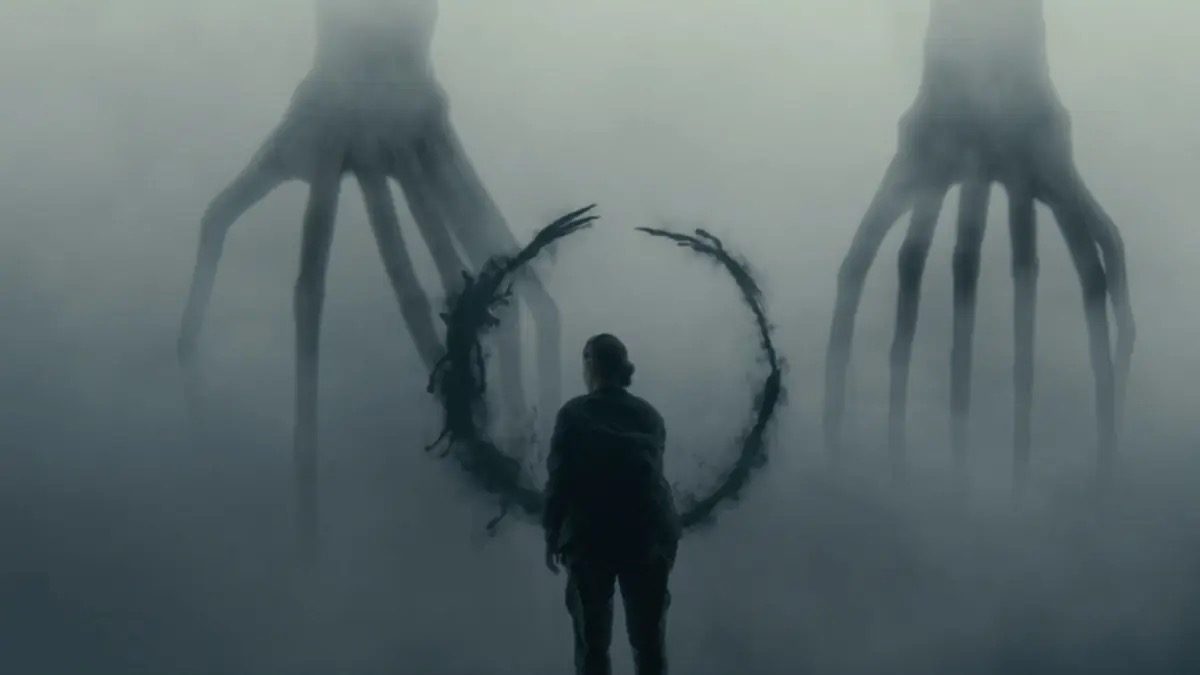
Adapted from Ted Chiang’s short Story of Your Life, Arrival is a film about conversation with aliens. After a fleet of advanced spaceships starts floating above separate points all across the globe, Earth’s nations scramble to suss out the extraterrestrials’ vibe. Are they here to observe? To help? To annihilate? Those are exactly the questions that linguist Louise Banks has been hired to help answer. Contrary to popular belief, learning to communicate with 20-foot-tall squid things whose written language consists entirely of circles is more difficult than one might expect. As Louise learns to converse with her new Lovecraftian friends, she discovers that the aliens have come with a gift—not a different way of communicating, but a different way of thinking. It’s a story of unlikely connection, the bonds that tie together even the most seemingly opposite life forms. Intelligence doesn’t discriminate—anyone, even a seven-limbed space cephalopod, can be an excellent conversationalist.
Under The Skin

Based on a novel of the same name, Jonathan Glazer’s Under The Skin is the story of an alien that walks among us. A beautiful, nameless woman spends her days enticing lonely men into her cabin – where she dissolves them in a liquid pool of inky black horror. While that might not be any sane person’s idea of a romantic time, we get the idea that this woman might not actually be a person at all, but an extraterrestrial intelligence wearing a person’s skin. An unnerving, sometimes repulsive film, Under The Skin is an examination of humanity from the perspective of an unknowable outsider. If she likes what she sees in us, she sure has a funny way of showing it.
Melancholia

Architect of sorrow Lars von Trier returns with Melancholia, another beautiful downer for his sad oeuvre. After falling into a steep depression and calling off her marriage, newly ex-wed Justine learns that the Earth is rotating dangerously Melancholia, a rogue planet that has emerged from behind the sun. As scientists feverishly try to predict whether the planet will collide with our own, the apathetic Justine moves in with her increasingly anxious sister Claire. At its molten, planetary core, Melancholia is an examination of the many ways humanity deals with the inevitability of tragedy and death. Some deny it, some fret over it, and some let it break them, and some meet oblivion with quiet acceptance—I’m sure you can guess which camp Justine belongs to.
Wall-E
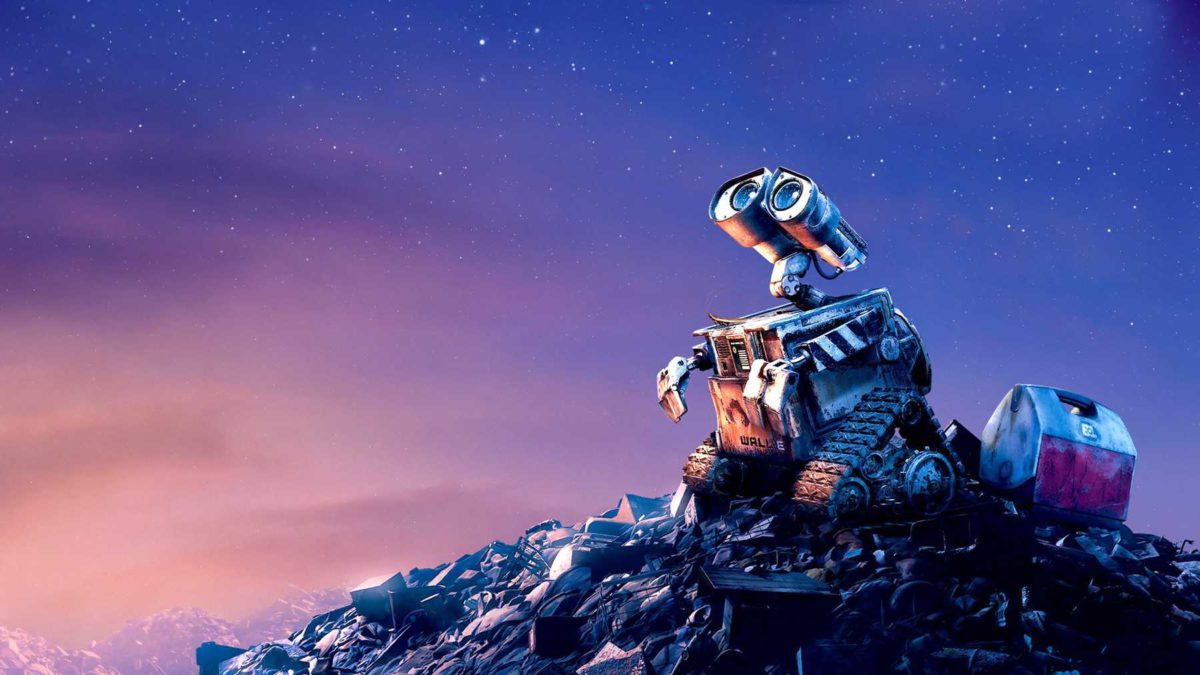
Andrew Stanton’s Wall-E is the story of the world’s most adorable robot, a post-apocalyptic survivor programmed to believe the End Times can be overcome with a little hard work! Wall-E is one of a bajillion robots created to clean up our planet, which was trashed by ever-consuming, ever-polluting human civilization. After a meet-cute with a life-scanning robot named EVE, the smitten Wall-E ends up inadvertently hitching a ride back to the spaceship she came from, a spaceship that houses the technologically dependent vestiges of the human race. Wall-E is a robot romance that doubles as a dire warning: if humanity doesn’t change course, lovestruck automatons will be forced to decide our fate— we’ll be too lazy and helpless to care. As cute as that sounds, I hope for a better future.
Everything, Everywhere All At Once

A sci-fi romp like no other, Everything, Everywhere All At Once is a once-in-a-generation film from the absurdist minds of “The Daniels,” its wacky writer/director pair. Evelyn Quan Wang is a middle-aged Chinese immigrant whose life is falling apart, her marriage is broken, her daughter can’t stand her, and her laundromat is getting audited by the IRS. After being contacted by an alternate-dimension version of her husband, Evelyn learns that an evil doppelgänger of her daughter is attempting to destroy the multiverse with a bagel-shaped black hole. Alongside a group of parallel reality freedom fighters, Evelyn must hop between dimensions to confront her daughter and her greatest fear: emotional vulnerability. It’s a wonderfully weird film about embracing the courage to change reality by changing your mindset. Oh, and people with hot dogs for fingers, it’s about that too.
Coherence

A brilliant example of “where there’s a will, there’s a way” filmmaking, James Ward Byrkit’s Coherence only had the budget for one location—so they milked it for all it was worth. The story revolves around a group of friends gathered together for a dinner party, but the festivities are interrupted by a close passing comet. After a power outage and cellphone signal loss sends them looking next door for answers, they discover that the neighboring house is a carbon copy of the one they’re in, with carbon copies of them inside. It’s a psychological sci-fi thriller that feels like an A+ Twilight Zone episode, a simple idea that is stunningly terrifying in execution.
Interstellar
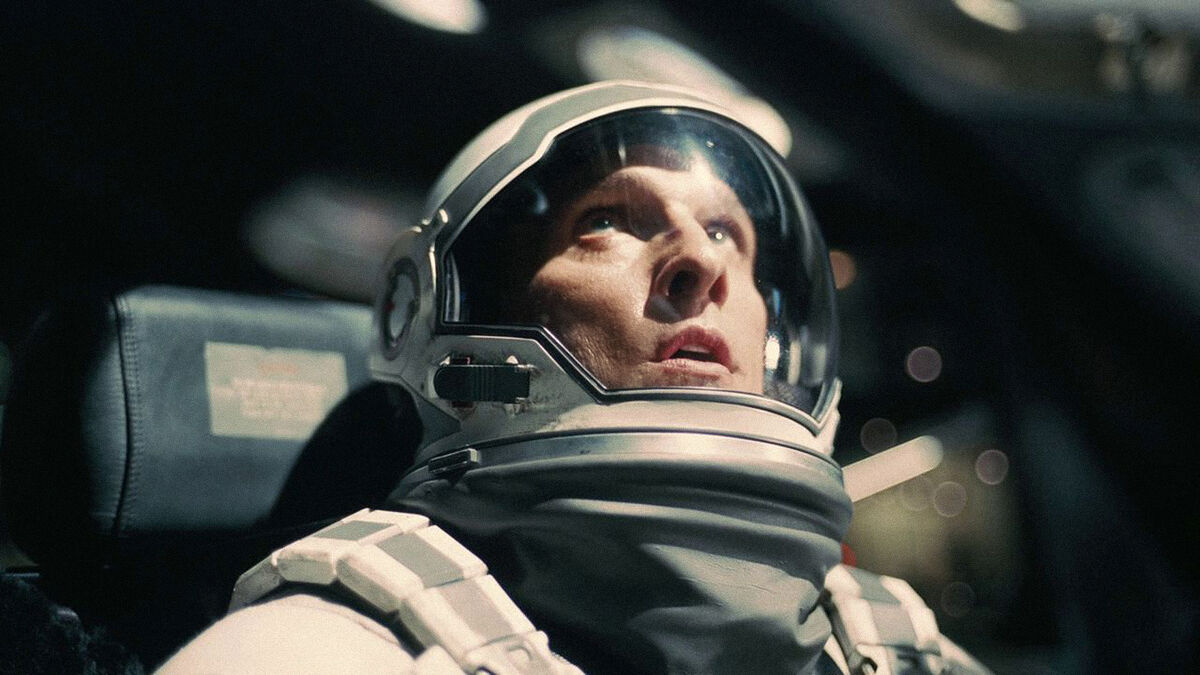
You didn’t think I’d forget Interstellar, did you? One of the 21st century’s biggest sci-fi blockbusters, this Christopher Nolan film was so influential that it actually resulted in real-life scientific discoveries. A team of scientists was called in to advise on this space-journey opus, which ended up leading to breakthroughs in the study of black holes. A team of astronauts leaves a dying Earth behind to look for a new habitable planet, and their search leads them to worlds that orbit a gargantuan black hole. At the mercy of extreme environments and time dilation, the astronauts are helpless in the face of an uncaring universe, until hyper-advanced aliens decide to help out. It’s a stunningly cinematic sci-fi that feels as visually rich as a Hubble telescope image, and equally awe-inspiring.
Have a tip we should know? [email protected]
