


‘Queen of the Ring’ review: Women’s Muscle Mania in the 1930s? Sign me UP!
3/5 belts

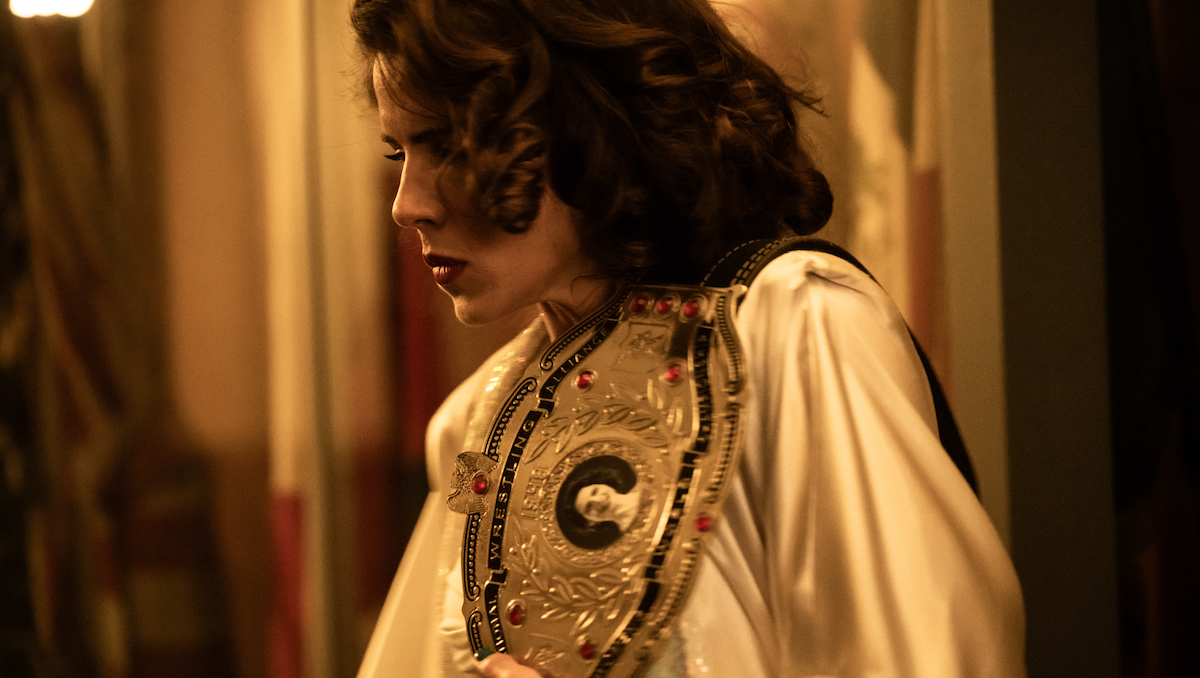
Director and screenwriter Ash Avildsen spearheaded the film adaptation of Pulitzer-Prize-winning journalist Jeff Leen’s book, Queen of the Ring: Sex, Muscles, Diamonds, and the Making of an American Legend.
Queen of the Ring is the story of Mildred Burke, a women’s pro wrestler credited as the first million-dollar female athlete. Born Mildred Bliss in Kansas and a single mother to her son Joe Jr., Burke is one of the outstanding historical figures who pioneered female athleticism from the 1930s through the ’50s when women’s wrestling was illegal in most states.
Queen of the Ring takes audiences through Mildred Burke’s tumultuous life and legacy. We begin where she discovers wrestling and end with her reclamation. Through ups and downs, we meet other historical names of significance in the women’s pro wrestling scene. Queen of the Ring is a dream for history buffs and WWE or AEW superfans.
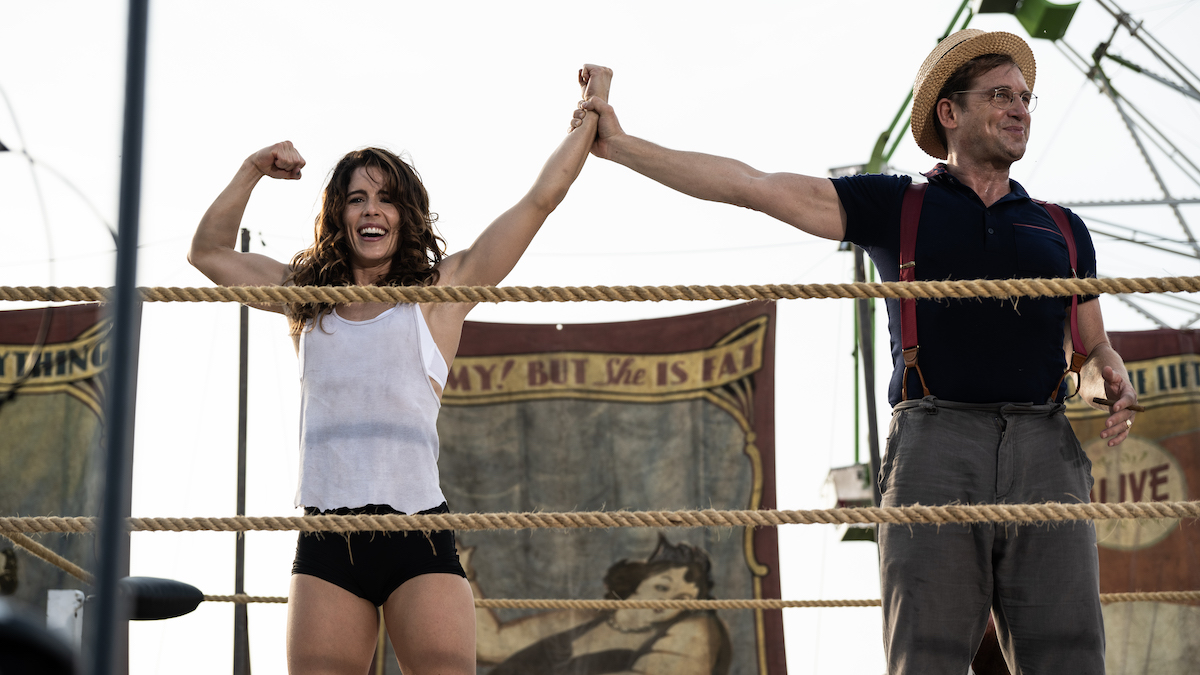
Considering the niche subject matter, Ash Avildsen drew in a marvelous cast to fill the shoes of these historical figures. Emily Bett Rickards from CW’s Arrow plays lead Mildred Burke; her son is played by The Summer I Turned Pretty’s Gavin Casalegno. We meet them in the flash-forward of the notorious 1954 Women’s World Championship at the film’s beginning before journeying back to when Mildred first meets her mentor, manager, and future husband, Billy Wolfe. This wrestling tycoon is played by Josh Lucas, whom you may recognize from Sweet Home Alabama, Palm Royale, and Yellowstone.
The harsh relationship between Mildred and Billy starts with hope but turns sour with infidelity, abuse, gaslighting, financial manipulation, and more. This arc carries most of the film with the complicated implication of their joint business being tied to their marriage, making it extremely hard for either party to leave. Josh Lucas is an incredible villain in Mildred Burke’s story, but so is June Byers, the brutal foil to Mildred Burke’s reign.
Kailey Dawn Latimer, more commonly known by her Ring name Kamille, plays June Byers. She has wrestled with both the WWE and the AEW. However, Kamille is not the only pro wrestler who features heavily in the film; Trinity Fatu, AKA Naomi, plays Ethel Johnson, the first African American women’s champion. Toni Storm plays Clara Mortensen, Britt Baker plays Debbie Nichols, and Jim Cornette plays the NWA commissioner. Their presence in the cast is a love letter to the sport.
The chaotic nature of this film’s story is true to the real-life story of Mildred Burke. Still, it also made the runtime of Queen of the Ring longer than necessary. It dragged the momentum of her rising success with interspersed personal drama, with the consequences only simmering. Although I admire the grit of this film, I found most of the key emotional scenes underwhelming. There are countless pivots and business affairs glossed over; I wonder if the story would have benefitted from simplifying this tailspin of a true story. Otherwise, the narrative would have significantly benefited from filling in the montages to create a stronger impact during important turning points.
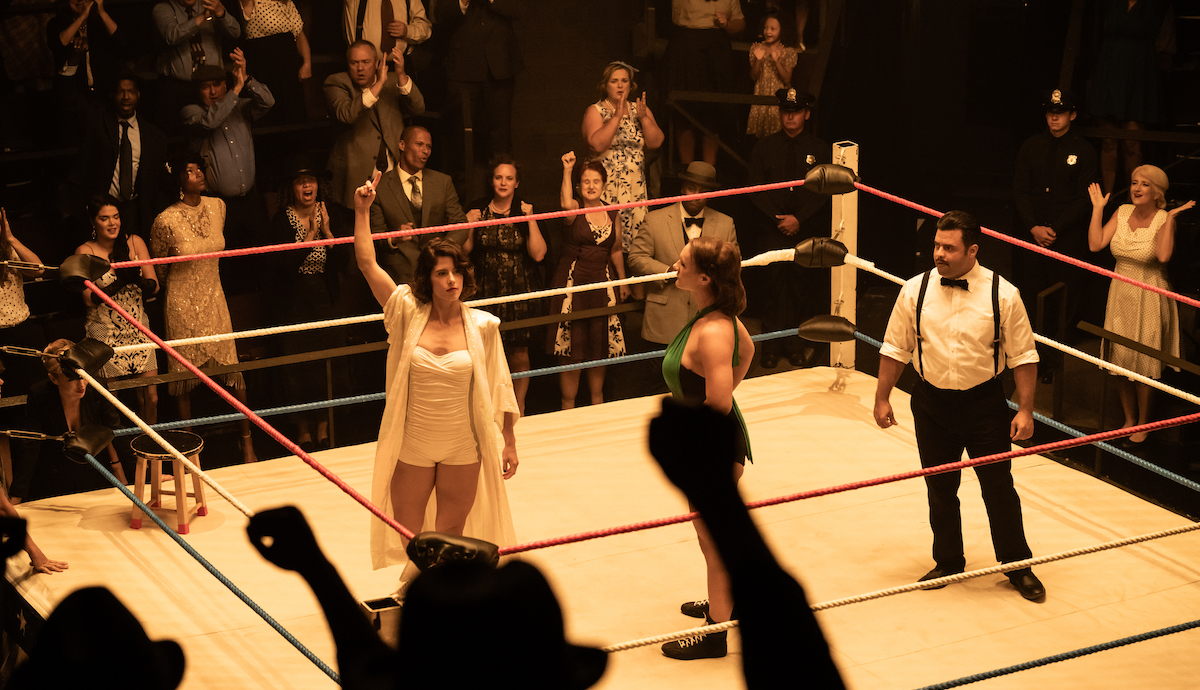
The action in the ring gets your heart pounding just as Netflix’s GLOW did, and the camaraderie among the women is there, but it isn’t the focus, contributing to the lessened impact of pivotal scenes. The character I wish I’d seen more of was Mae Young, played by Francesca Eastwood; the script presents Maw as a sidekick, but her presence on screen exceeds that of Emily Bett Rickards in several scenes. Mae Young’s true life story is also one of legend as a lesbian women’s pro-wrestler in a bigoted world, and Eastwood brought gumption and main character energy to this film that Rickards sometimes couldn’t.
Sadly, Queen of the Ring made a massive mistake casting Tyler Posey (Teen Wolf) as G.B. Wolfe, Billy Wolfe’s son. Tyler can be naive, but when his character has to turn, he doesn’t have the emotional stamina to bring such a complex character to life. I also felt Posey’s lack of talent dragged Josh Lucas’s abilities down. Lucas’s Billy Wolfe could have been equal to Tom Hanks’ Colonel Tom Parker from Elvis (2022), but his methods lacked conviction, which was disappointing—whether the pathetic nature of his character was intentional, it didn’t hold power in the storyline. Every time Walton Goggins walks in as Jack Pfefer, we see what could have been regarding on-screen presence and masculine dominance in this business.
Figuring out what is or isn’t meant to play emotionally onscreen is a complicated task with this film. However, Queen of the Ring still has sparkling moments when Emily Bett Rickards gives a crisp performance and when the stunts in the ring draw the audience in.
Queen of the Ring is an underdog story, a rags-to-riches story, a feminist story, and a film intended to inspire the masses. Despite its many flaws, I enjoyed watching Mildred Burke become an icon in women’s pro wrestling through this film, and I think others will, too.
Queen of the Ring will be released in cinemas on March 7.
Have a tip we should know? [email protected]
