


‘They get sent off to corporate‘: Texas woman interviews at Ojos Locos. Then the manager takes pictures of her

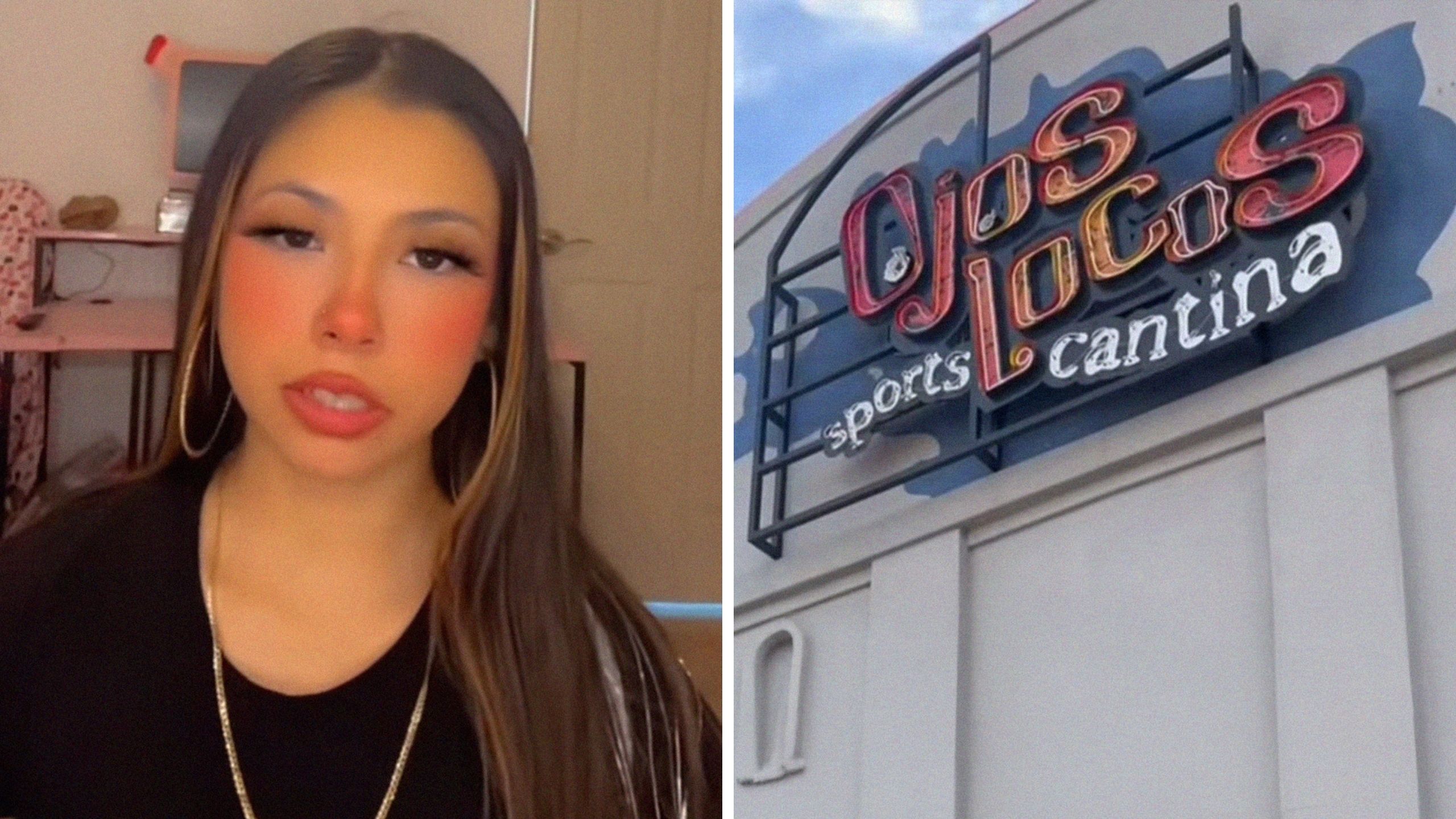
If you’ve ever wondered how Ojos Locos actually hires its staff, one new employee just laid out the whole process.
There’s a part that’s turning heads. People are questioning not only its legality but also the ethics and whether the workers are being taken advantage of.
Is Ojos Locos Hiring Unethical?
In a TikTok with more than 82,000 views, Dee (@lovelyy_dee23) walks viewers through the Ojos Locos hiring process. This is after getting a flood of requests from followers curious about how it works.
For anyone unfamiliar, Ojos Locos is a Texas-born sports bar chain and is part of the “breastaurant” category alongside chains like Hooters and Twin Peaks. Here, waitstaff wear revealing uniforms, and the concept is built around a combination of sports, food, and sex appeal.
The short version of the hiring process: it’s fast, it’s straightforward, and the local manager has almost nothing to do with whether you get the job.
Dee says she started by calling the restaurant to ask if they were hiring.
“She said they’re always looking for new girls to work, so just come in and ask for a manager so you can request an interview,” Dee explains.
How did it go?
She went in, got asked a few basic questions and was given a uniform to try on. Then came the part that’s gotten people talking. She was taken outside for three photos: a front-facing shot with hands at her sides, a slight turn, and a full side profile.
“They get sent off to corporate,” she says. “So the manager has nothing to do with whether you get hired or not. He or she takes your photos, sends them to corporate, and corporate is the one that decides whether or not you get hired.”
Both the applicant and the manager find out the decision at the same time. Dee didn’t have to wait long; she was still sitting in her car texting when her phone went off.
“I got a text message that I was hired,” she says. The manager called her back in for onboarding the same day. There, she filled out her application on her phone, signed digital paperwork, and completed her I-9. She was given a start date for training before she left.
The Rise Of The ‘Breastaurant’
Ojos Locos is part of a category that’s been quietly thriving for decades. According to Business Insider, it all started when six Midwestern men, none of them with restaurant experience, opened the first Hooters on April Fool’s Day in 1983 in Clearwater, Florida.
The concept was simple: sports, cold beer, and waitresses modeled after the Dallas Cowboys cheerleaders. It worked. Hooters eventually grew to hundreds of U.S. locations and $1 billion in annual sales.
The category exploded from there. Tilted Kilt, Twin Peaks, Bone Daddy’s House of Smoke, and Brick House Tavern + Tap all carved out their own variations on the formula. And while casual dining broadly took a hit during the recession (losing roughly 5,550 restaurants between 2009 and 2010) breastaurants kept opening.
Texas emerged as the category’s stronghold, both in terms of where these chains are concentrated and where they do their best business.
How Restaurants Get Away With Looks-Based Hiring
The photo-to-corporate pipeline Dee describes raises an obvious question: Is it legal for a company to screen job applicants based on appearance? In most of the United States, the answer is yes.
As Jezebel reported, Title VII of the 1964 Civil Rights Act protects against discrimination based on race, color, religion, sex, and national origin. However, it says nothing about appearance. There’s also a specific carve-out. It allows gender-based hiring when it qualifies as a “bona fide occupational qualification reasonably necessary to the normal operation” of a business. Courts have largely interpreted this on a case-by-case basis.
According to FindLaw, there is no such thing as appearance discrimination under federal law. Employers are generally free to hire based on looks. The catch is that appearance standards become legally problematic the moment they bleed into protected categories.
Applying weight or grooming requirements only to female employees and not male ones, for example, opens the door to a sex discrimination claim. Passing over older, disabled, or darker-skinned applicants because they don’t have the right “look” can trigger age, disability, or race discrimination suits — even if the employer never framed the decision that way.
Appearance-based discrimination is only explicitly illegal in a handful of jurisdictions—Washington D.C., San Francisco, and Michigan among them. Everywhere else, the line is thin and easy to cross.
Where it gets murkier is when appearance standards start functioning as a proxy for race. A 2014 study found that people of color earn 56% less than equally qualified white employees in the same restaurant roles. Grooming codes that require “natural hairstyles” have been used to prohibit styles common among Black women. This distinction courts have sometimes found discriminatory and sometimes not, depending on the specifics of the case.
@lovelyy_dee23 Your answer to ojos locos hiring process #ojoslocos #ojos #interview #xyzbca ♬ original sound – Lovelyy_dee23 ?
Commenters React
“The mugshots getting sent to corporate is kind of fishy,” a top comment read.
“I am glad you got hired. But I am wondering isn’t that discrimination they hella just hire based off looks,” a person said.
“Congratulations! Word of advice…do your job, get your check and go home….dont get too friendly not everyone is your friend. God bless you,” another wrote.
“That system stinks. You would think the manager would good judgment on how to hire the workers,” a commenter added.
The Mary Sue reached out to Dee via email and Instagram direct message. We also reached out to Ojos Locos for comment via email.
Have a tip we should know? [email protected]
