


Now Is Not the Time to Be Apolitical. The Berlin Film Festival Proves That

It is true that celebrities should not be expected to speak up on every political happening. Not everybody is educated, nor does everybody follow what is going on with politics. There was a time when it would make sense for politics to be left out of film festivals. That time, however, is not now.
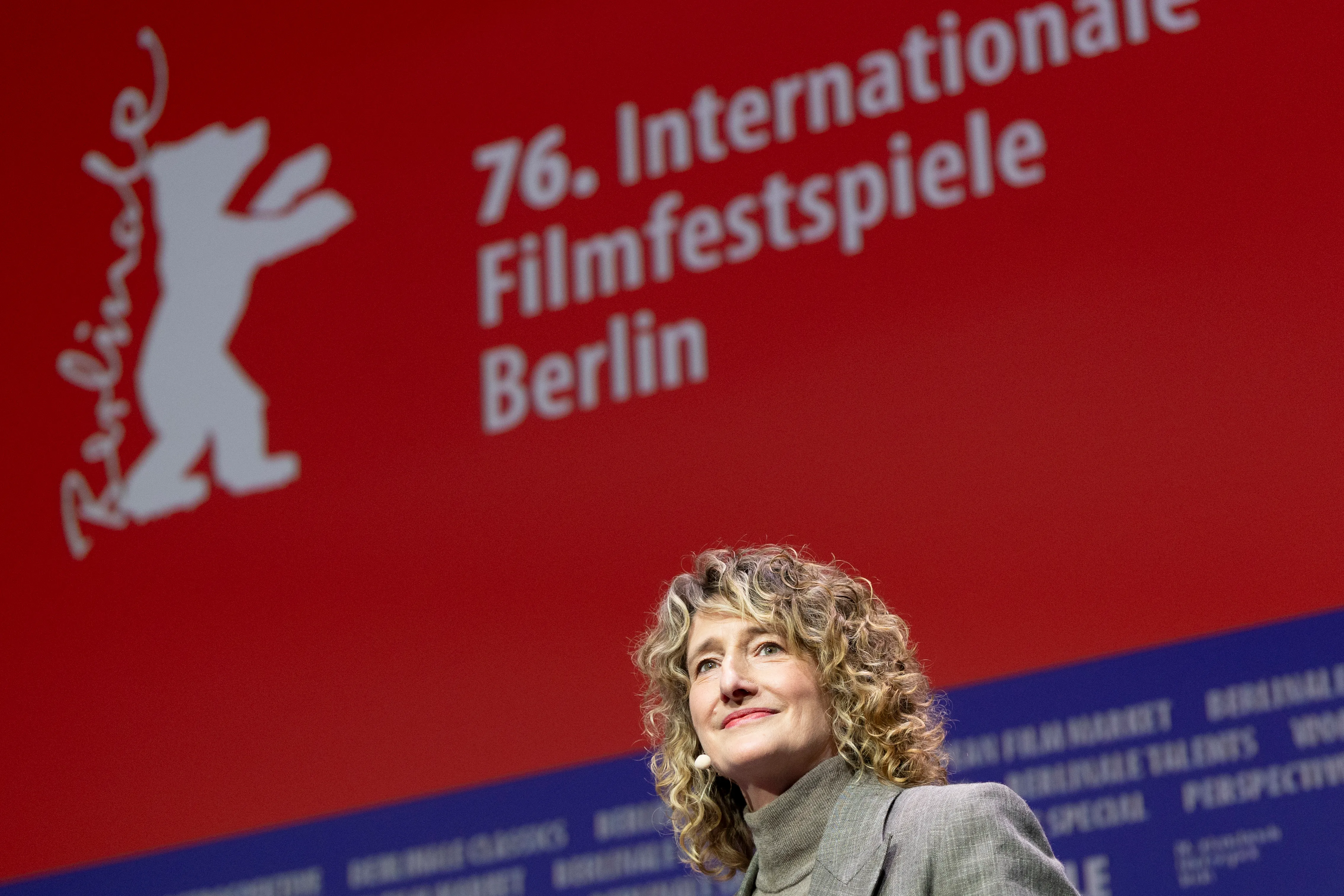
Recently, several actors have come under fire for declining to answer political questions at the Berlin Film Festival. This stems from the opening day press conference, where, faced with questions about the conflict in Gaza, jury head Wim Wenders said, “We have to stay out of politics because if we make movies that are dedicatedly political, we enter the field of politics.” This statement prompted immediate backlash on social media.
However, that statement is also at odds with the history of the festival. A user on X pointed out that the Berlin Film Festival’s website describes itself as “the most political of all the major film festivals.” With it being an intercultural festival dedicated to the diversity of film and the social issues expressed within, Wenders’s comment is even more troubling.
Silence can sometimes be worse
Following the backlash against, author Arundhati Roy pulled out of the festival. This seemed to be the match to the powder-keg, and from then on the political questions from the media only continued to snowball.
Michelle Yeoh and Neil Patrick Harris faced online criticism for their reaction to questions about politics and the rise of fascism. When asked how film could fight the rise of fascism, Harris stated, “I think we live in a in a strangely algorithmic and divided world right now. And so as artists, I’m always interested in doing things that are apolitical, because we’re all as humans wanting to connect in some way. That’s why we experience things together.”
In another press conference Yeoh said, when asked about about the current state of the U.S., “I don’t think I am in the position to really talk about the political situation in the U.S., and also I cannot…say I understand it, so it is best not to talk about something I don’t know about. But I think I want to concentrate on what is important for us, which is cinema.”
Rupert Grint was also asked about whether he’d speak out against far-right UK politics. He had the most straightforward response of the three, but still skirted a full answer. “Obviously, I’m against it,” he said. “But I choose my moments when to speak. But I think yeah, it’s obviously hugely relevant now. You’ll hear from me.”
Arguably, one of the biggest international film festivals known for its politics would be the place to speak. But he does get credit for at least speaking out against it rather than staying completely silent. In a time like this, when America’s democracy continues to be chipped away at, we should be speaking up.
Rage Against the Machine is, and always will be, political
Film and art are political. Storytelling is, inherently, political in the way that it challenges our worldview and beliefs. Harris’s comments about making film “apolitical” are incorrect, because even apolitical films have something to enforce. Politics is, simply put, etched into our very foundation as a society.
Rage Against the Machine guitarist Tom Morello, who is the co-director of the music documentary The Ballad of Judas Priest, had no qualms about speaking out against the current state of affairs in the U.S. and Europe.
“What a time to be alive, where you can both make a documentary about one of your favorite bands and fight fascism at the same time,” he said.
As 2026 marches on and our very rights continue to be threatened, celebrities could take a page from Morello’s book. If you are that afraid of the backlash to even say a simple statement like Grint’s, then you are enabling the problem. Nobody can afford to be silent right now.
In an incredibly reductive statement, director Tricia Tuttle said, “Free speech is happening at the Berlinale. But increasingly, filmmakers are expected to answer any question put to them…They are criticized if they answer, and we do not like what they say.”
If people don’t like what you have to say against fascism or the current political climate of the U.S., then those are opinions you shouldn’t listen to.
(featured image: Maja Hitij/Getty Images)
Have a tip we should know? [email protected]
