


How The Witcher Falls Into Fantasy’s Trope of Comparing Disability and Monstrousness

(Netflix)
I love a good monster, and Netflix’s The Witcher has lots of them. Something I also generally love is a blurred line between monster and human; it’s a narrative device than can lend itself to really interesting explorations of morality, identity, and what it means to be a person.
Unfortunately, throughout the comparatively short life of fantasy as a genre, it’s mostly been a less than productive trope, often exposing the biases of the writers more than anything. Disability is a common target for this kind of writing; a non-normative body is an easy one to portray as monstrous. There’s a very established set of tropes where disabled people are either evil (their disability is manifestation of their sin or punishment for some wrongdoing) or magically cured (they didn’t “deserve” to be disabled, so they get “fixed”).
With all that in mind, I want to talk about the ways The Witcher paints its disabled and magical characters as monstrous. The clearest example of this is in episode three—particularly Yennefer’s transformation, alongside Geralt’s fight with the Striga. For the sake of this article (and in my own general reading of the show), I consider the mutation that turns Geralt into a Witcher as allegorical for disability.
Episode three finds Geralt hunting down a monster that’s been terrorizing the kingdom of Temeria for years. Triss Merigold, the kingdom’s sorceress, enlists him to help her save it rather than kill it. It’s a rare Striga, and Strigas, as it turns out, are human girls born cursed to be monsters—in this case, cursed by a spurned lover of the Striga’s mother, the queen of Temeria.
While Geralt gathers information on the Striga, Yennefer—a disabled sorceress—prepares to complete her training and undergo an enchantment to become her “ideal self.” What we don’t know yet is that this enchantment will render her infertile, something she’ll spend the majority of the series trying to undo. I wrote previously about Yennefer’s relationship to motherhood and disability; it’s worth addressing here that Geralt was also forcibly sterilized as part of his transformation into a Witcher. Rather than it consuming his whole arc, we find out in one throwaway line, in which he tells Yennefer it would be a bad idea for either of them to have a child, because of their magical, fighting-heavy lifestyles.
(Netflix)
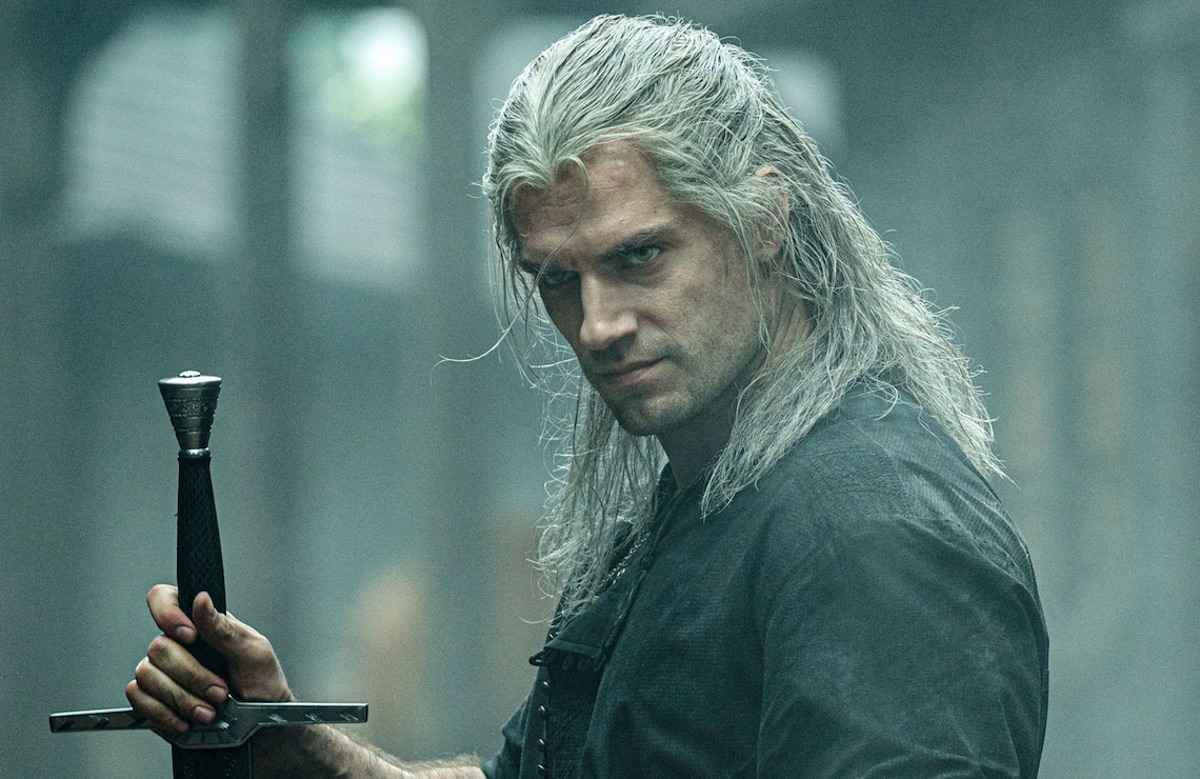
All does not go according to plan—after a series of events causes her to miss graduation, Yennefer bursts into the workshop of the sorcerer who performs the enchantments, demanding to be transformed. He says he’ll need time to make an anesthetic, but she says she doesn’t need it; I think we’re supposed to see this as a badass moment, but to me it just reads as an excuse to show Yennefer in pain. Meanwhile, Geralt gears up to fight the Striga. If Geralt can keep her out of her crypt until dawn, she’ll transform into a human—cured of her monstrosity.
The introduction to Geralt’s fight with the Striga is one of the most telling examples of how the show feels about disability: Foltest, King of Temeria and father of the Striga, asks Geralt if his daughter will be “normal” once Geralt lifts the curse. Geralt replies, “She’ll need special care … all she’s ever known is rage and hunger.” It’s a familiar description—just minutes earlier, Yennefer tells her lover, Istredd, that her world is cruel: “You enter, you survive, you die.”
Geralt then gives Foltest the smiley-face brooch that once belonged to Renfri (the girl he killed in the first episode) and lets Foltest know that this isn’t his first time “trying to save a princess who others see as a monster”—and that last time he definitely did fail and kill her instead.
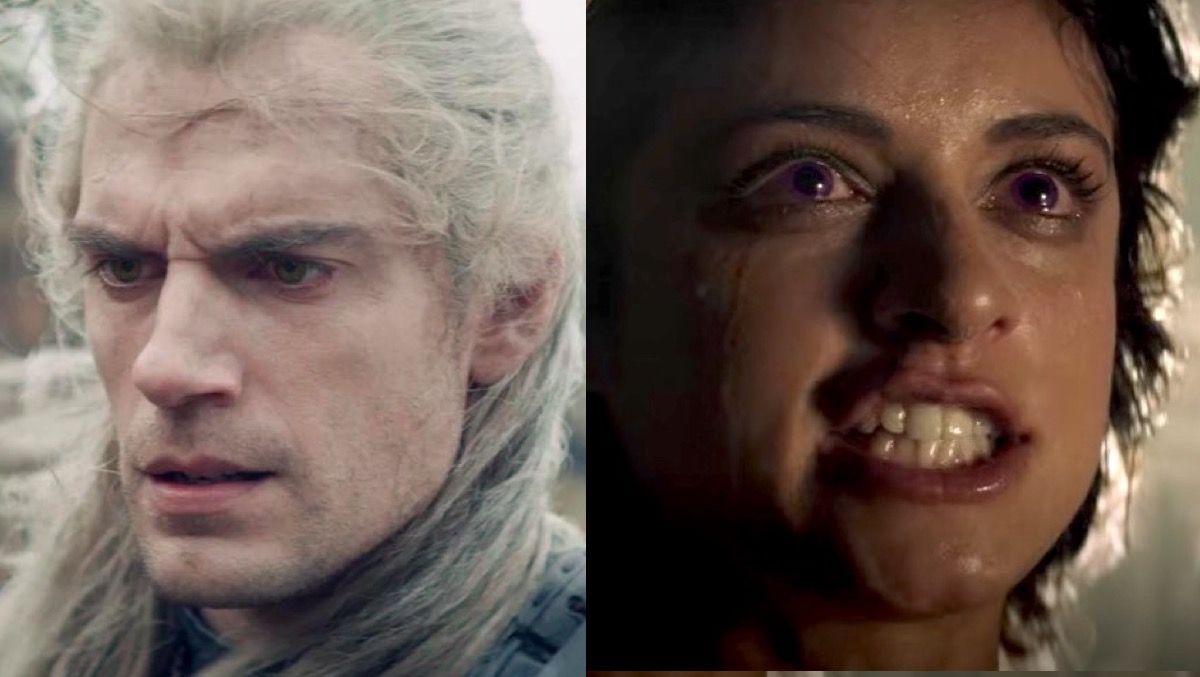
Two things happen at once: Geralt fights the Striga and wins, and Yennefer undergoes a transformation—one that will make her “normal” albeit infertile. The monster Geralt is fighting while Yennefer has her uterus removed is itself uterus-themed, complete with umbilical cord; Geralt refers to the Striga at one point as an “overgrown abortion.”
The timeline of the Striga’s birth and creation is a little unclear, but the actress (Jade Croot) who portrays her is 20—not much younger than Anya Chalotra, who plays Yennefer. This allows the show to present them as visually analogous, but even more so, it’s clear the sequence isn’t about the Striga; it’s about Yennefer becoming, as Foltest said, “normal,” and about Geralt trying to right a wrong he committed in the first episode.
Geralt’s actions are perhaps a bid to become less monstrous, as well. The humans around him always assume that, as a witcher, he can’t feel emotion—that he’s brutal and quick to violence—and he’s always trying to prove to himself that they’re wrong. In episode one, Renfri asks Geralt why he doesn’t kill the humans that attack him and call him a monster. His response is simple: “Because then I am what they say I am.”
As Yennefer closes her eyes, strapped into the chair awaiting the first cut, the Striga awakes. Geralt tries his first strategy: trapping her with a silver chain. She quickly breaks free and attacks him, and then we’re back with Yennefer as the sorcerer begins to cut her uterus out of her body. Her pained cry (framed so it looks like she’s breathing fire, which definitely doesn’t feel reminiscent of a certain other popular fantasy series at all …) blends into the Striga’s scream in the next shot as she tosses Geralt around like a ragdoll. He seems to be losing, with his sword just out of reach as the Striga pins him to the floor, and he uses magic to break through the stone and send them plummeting deeper into the castle, the fall knocking them both out.
The sorcerer pulls Yennefer’s uterus out and burns it to ash, then turns that ash into a paint, while Geralt realizes he has limited magic to get him through the night. As the Striga wakes and pounces on Geralt, Yennefer’s transformation begins in earnest. Again, their screams blend, and much like the Striga had just minutes before, Yennefer breaks free from her chains and has to be held down, lashing out against the sorcerer.

(Netflix)
As the sun begins to shine into the castle, Geralt races the Striga to her crypt and wins, fortifying himself inside. The camera focuses on the Striga’s monstrous head and spine, hunched over and beating on the lid of the crypt; immediately, we cut to Yennefer, hunched over on the floor, as her spine shifts and glows underneath her skin. The camera cuts away to a scenic view of the castle outside, and the next time we see the Striga, she’s human, curled in the fetal position and covered in mud. Yennefer, too, is curled up on the floor, covered in blood—reborn.
But despite the apparent success of our two main characters, very little changes for Geralt, and Yennefer seems to have traded one problem for another. Geralt gets no credit for curing the Striga, and Triss hands him back the brooch he gave to Foltest—a weight he’ll carry with him for the rest of the series. Yennefer, instead of searching for a way to change her form, spends her days searching for a way to restore her fertility.
It could almost be saying something interesting about the layers and complexities of disability, and how often a cure is not really a cure—but the handling is clumsy at the best of times, and leans heavily into the misconception that disabled people always want to be abled. I’m sure that’s true of some folks, but there are many disabled and differently abled people who take pride in their identities and would rather be accepted and celebrated for who they already are, rather than who they could be if they were “normal.”
I include myself solidly in this group.
So watch The Witcher, if you want, along with any number of other TV shows, films, and books that paint disability and monstrosity with the same brush. But I implore you to hear the words of disabled writers, artists, and advocates, to read and watch their work, and to not let a show with outdated ideas color your opinions of real people.
Want more stories like this? Become a subscriber and support the site!
—The Mary Sue has a strict comment policy that forbids, but is not limited to, personal insults toward anyone, hate speech, and trolling.—
Have a tip we should know? [email protected]
