


Miami ultrasound tech suspects pregnant patient took fertility drugs behind partner’s back. Now people are blaming him: ‘So SHE was trying not him’
Pregnancy has a way of bringing existing relationship issues to the surface. Things people manage to ignore, like money, sex, and family expectations, tend to show up once a future baby enters the picture.
Sometimes those red flags appear in private, and other times, they show up in public, with a witness.
One Miami ultrasound tech says she watched one of those moments unfold in real time during a routine appointment, and what she noticed sparked a discussion online about fertility, consent, and the way blame gets assigned when a pregnancy doesn’t look perfectly mutual.
The Red Flag She Says She Noticed
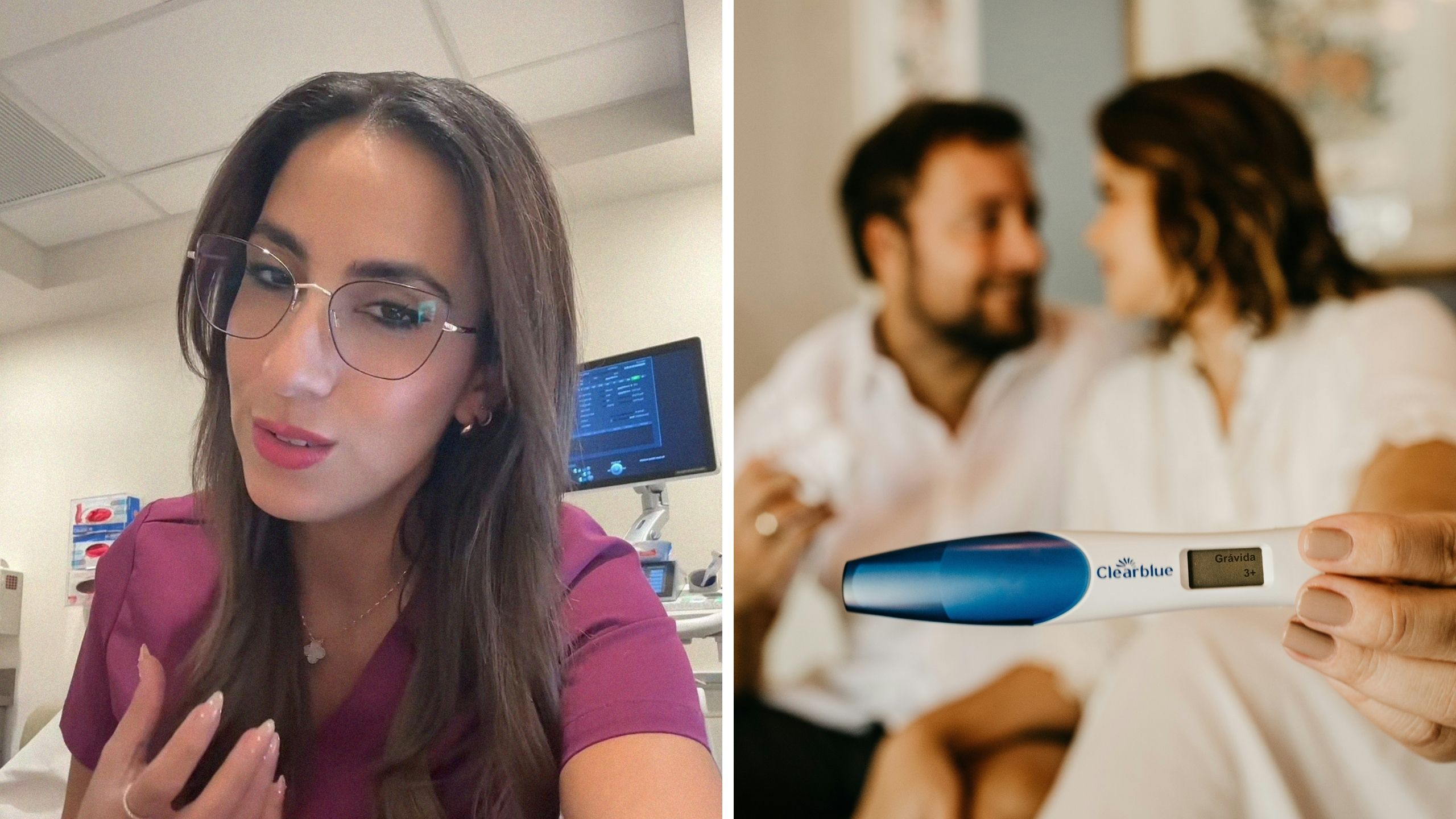
TikTok creator Natalie @natalieavni shared the story in a video that’s since pulled in more than 1.6 million views. In the clip, she explains she was scanning a patient who had just found out she was pregnant.
“I’m scanning a patient, and she’s newly pregnant,” Natalie says. As she looks at the ultrasound, she notices something unusual. “I see that her ovaries are very plump with follicles,” she explains, adding that it looked “kind of like as if she took medicine to ovulate.”
Because the patient was new, Natalie says she didn’t have much background information to work with. So she asked a straightforward question. “By any chance, did you take any medicine to ovulate?” she recalls asking.
The patient responded quickly. “No, this happened on our own. We were barely trying,” Natalie says the woman told her. Natalie remembers responding with a polite reaction. “Oh my god, how exciting.”
That’s when she says the tone in the room shifted.
According to Natalie, the woman’s partner repeated the phrase back in a sarcastic tone. “OK, yeah, how exciting,” he said. Natalie says the moment didn’t feel playful or joking. She points to the patient’s reaction as the reason. “Her face turned, like, literally red,” she says.
Natalie explains that she adjusted how she spoke next, making her congratulations very specific. “I am so happy for you,” she says she told the patient, emphasizing the word “you.”
“The biggest [red flag] and wish I could say so much more bc she doesn’t deserve that,” she added in the caption.
Commenters Focus on Something Else Entirely
While some viewers agreed with Natalie’s reading of the situation, others took the story in a very different direction. In the comments, several people questioned whether the woman had taken fertility medication without her partner’s knowledge.
“Hmmm is it possible she did take the medicine to trap him?” one commenter asked.
Another wrote, “So SHE was trying not him.”
Others pushed back hard on that framing. “People saying she ‘trapped’ him… as a person whose dad decided fatherhood wasn’t for him—I guess the ‘trap’ doesn’t work?? HELLO?” one commenter wrote. “It’s the woman who is responsible for the entire pregnancy.”
As the discussion grew, people began sharing their own moments where a partner’s reaction to pregnancy felt telling.
One person recalled, “Going into my C-section, the nurse told my husband to give me a kiss before the surgery. He said, ‘I’m good.’ I started the divorce process two weeks postpartum.”
Another shared a quieter but equally stark memory. “My coworker offered that his wife was pregnant…I responded ‘congrats, are you excited.’ He said ‘no.’ I literally didn’t know what to say after that.”
@natalieavni The biggest ? and wish I could say so much more bc she doesn’t deserve that ? #ultrasoundtech #pregnant #babydaddy #obgynlife #ultrasound ♬ original sound – Natalie | That Ultrasound Tech
Is ‘Baby Trapping’ Actually a Thing?
The phrase “baby trapping” was mentioned repeatedly in the comments, with some users treating it as a genuine and common concern. On Reddit, people have shared stories where partners admitted to lying about contraception.
For example, one user wrote that his wife of 15 years later confessed she had stopped taking birth control before an unplanned pregnancy. “The reason she gave was that she was afraid that nobody else would love her or support her like I did,” he wrote. “I honestly don’t know how to wrap my head around it.”
But focusing only on those anecdotes leaves out a much larger and more documented issue.
Research shows that reproductive coercion often goes in the opposite direction. An article published in the William & Mary Journal of Race, Gender, and Social Justice found that a quarter of women who called a domestic violence hotline reported having a partner who pressured them to become pregnant, told them not to use contraception, or forced them to have unprotected sex. Sixteen percent also reported that their partner removed condoms during sex.
Those behaviors directly impact reproductive autonomy and are widely recognized as a form of abuse.
The Mary Sue has reached out to Natalie via email for additional comment.
Have a tip we should know? [email protected]
Follow The Mary Sue:
