


‘Memento’ can get confusing. Let us help you out

Christopher Nolan’s work isn’t always the easiest to grasp on a first watch. Often, you need to revisit it a couple times to capture all the layers he puts into his films. One has let fans perplexed for the last 25 years.
Memento is the 2000 Christopher Nolan film that helped put Nolan on the map. While his film, Following cemented Nolan’s unique love of film and storytelling, it was Memento that had everyone keeping their eyes on the Oscar award winning director and writer. But what makes the movie both brilliant and on the confusing side is the fact that it is told backwards and forwards in a non-linear storytelling move.
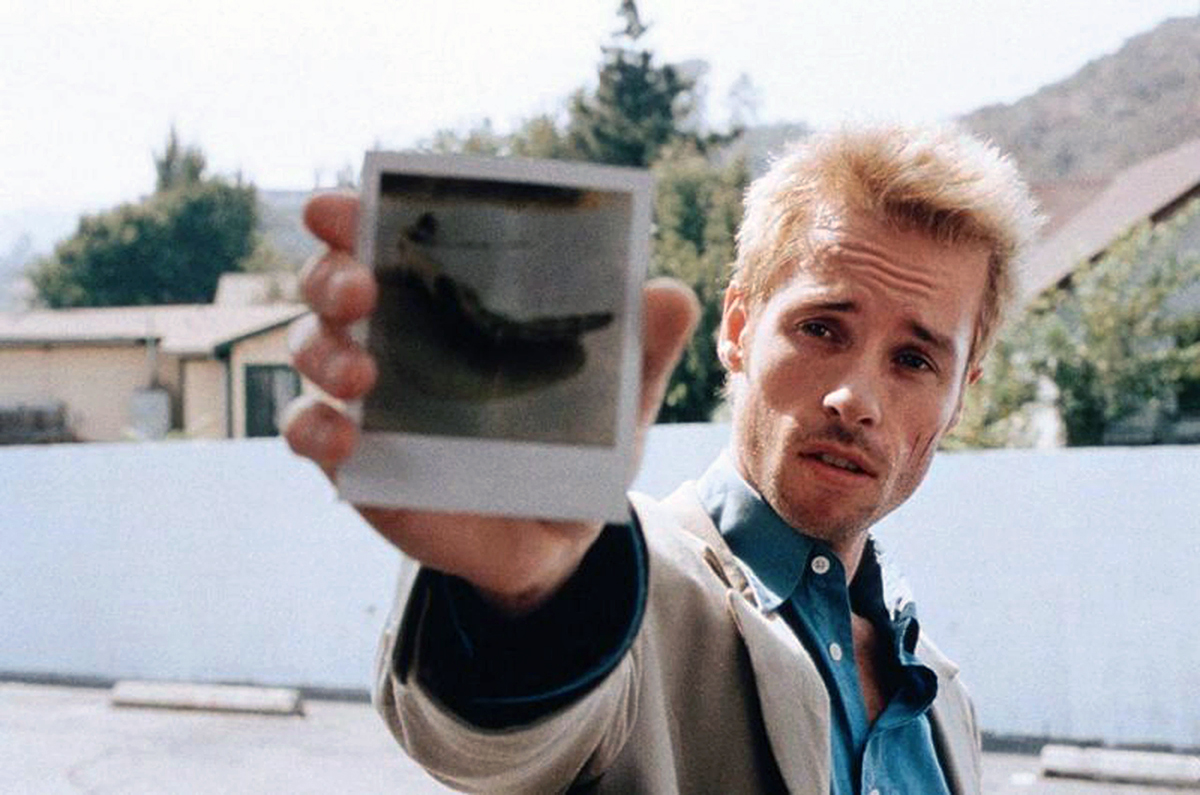
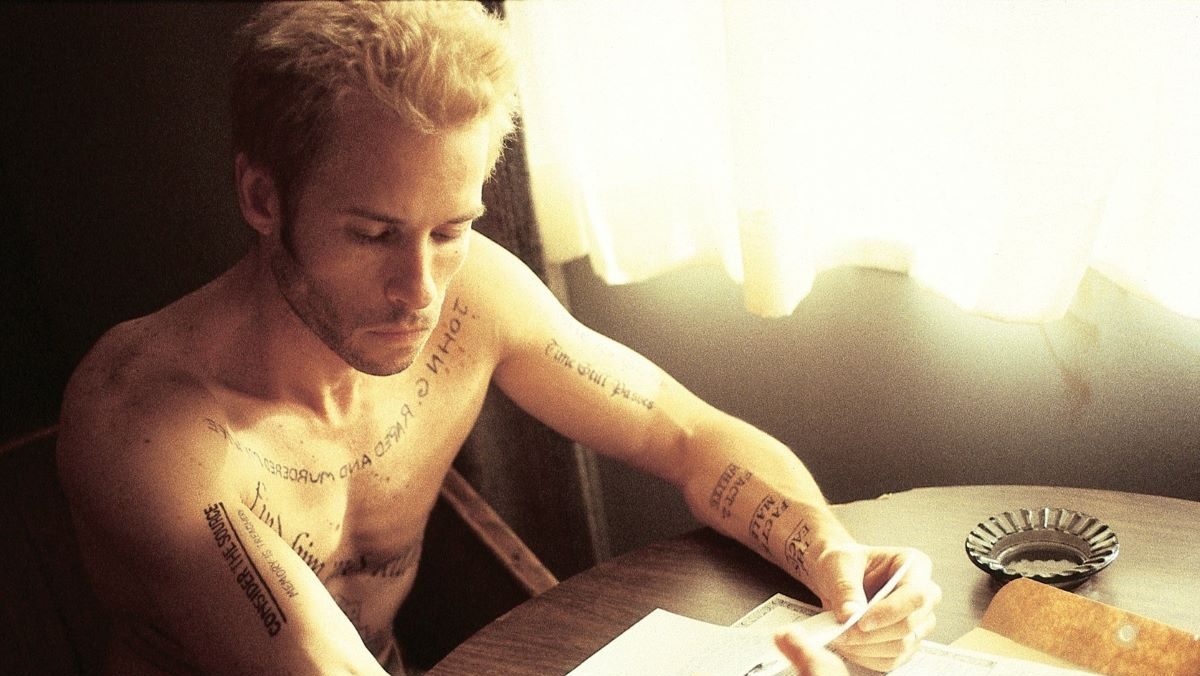
The noir film takes us through the life of Leonard Shelby (Guy Pearce) as he is trying to piece together a mystery. Leonard has short term memory loss and takes pictures of people and writes himself notes on their images to try to help him on his journey. He also has tattoos to help. He is investigating the death of his wife and trying to find the people who did this and hurt him, causing his memory-loss.
Natalie (Carrie-Anne Moss) and Teddy (Joe Pantoliano) are Leonard’s allies but also use his memory loss to their advantage. Nolan uses color to help us understand what is happening when. Black and white details scenes from a factual standpoint. These moments help show us what actually takes place and the color scenes are based in Leonard’s thoughts and feelings.
The use of color vs. black and white would later go on to paint Nolan’s Oscar winning film, Oppenheimer. But where things get confusing for the audience is understanding what happened and what didn’t. We are just as confused as Leonard is and that is kind of the point.
Putting the pieces together
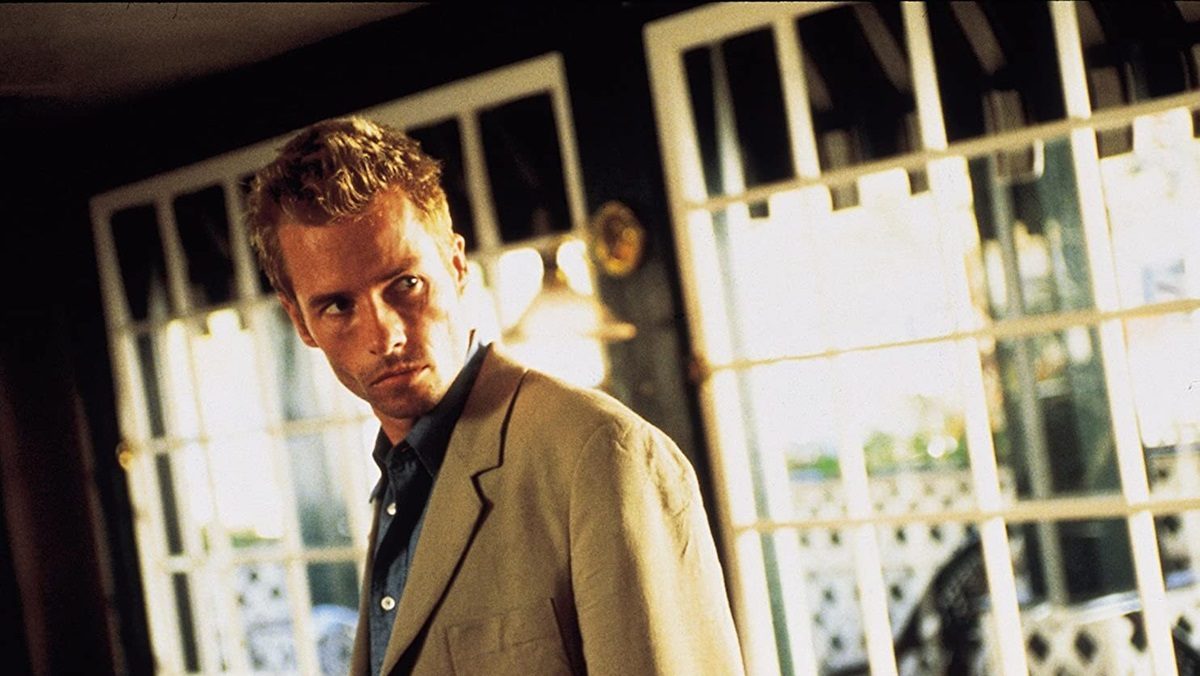
The facts that Leonard (and the audience) know are limited. He knows his wife Catherine was strangled and raped and that a second attacker hit him, causing his memory loss. Before that, Leonard worked in insurance. Police don’t believe Leonard that he was attacked by a second man and so he has to investigate the case on his own.
The use of color through the investigation is showing what Leonard discovers backwards. While we’re given the facts in the black and white moments, the color is showing us the result of the case and working backwards. Leonard’s tattoo serve as a reminder of the facts that he knows about the men who attacked his wife, who he labels as “John G.”
Memento uses both Natalie and Teddy to provide a conflicting story for Leonard but also for us as the audience. Leonard is given Teddy’s name after Natalie runs a license plate from the attack but Teddy also tells Leonard to not trust Natalie. His own notes on the polaroids are painting a different picture as well. So if you are confused while watching Memento, that’s kind of the point.
An ending for the ages
The end of Memento sets us up for a dark future for Leonard. It is revealed after Leonard kills “John G” that Teddy was using Leonard to do his bidding. Teddy says that he helped Leonard kill the actual man who attacked him and his wife a year ago but has used Leonard’s condition to help kill people he wanted gone.
He knows that Leonard won’t remember this and uses that to his advantage. He reveals that a man named Sammy Jenkins, who Leonard thought he denied insurance to, was actually himself and it all results in Leonard seeking revenge on Teddy. By the end of the film, Leonardo gets a tattoo of Teddy’s license plate so the next version of this story will end with Teddy as the dead man in his polaroid.
When you breakdown Memento as a black and white story (pun intended) it is a man seeking revenge and being used by those who is trying to “trust.” What we know is that the dead man at the beginning of the movie is Teddy and so Leonard does eventually succeed but we watched the story of how he figured out Teddy was behind his quest for revenge all along.
Have a tip we should know? [email protected]
