


How to watch ‘Code Geass’ in order

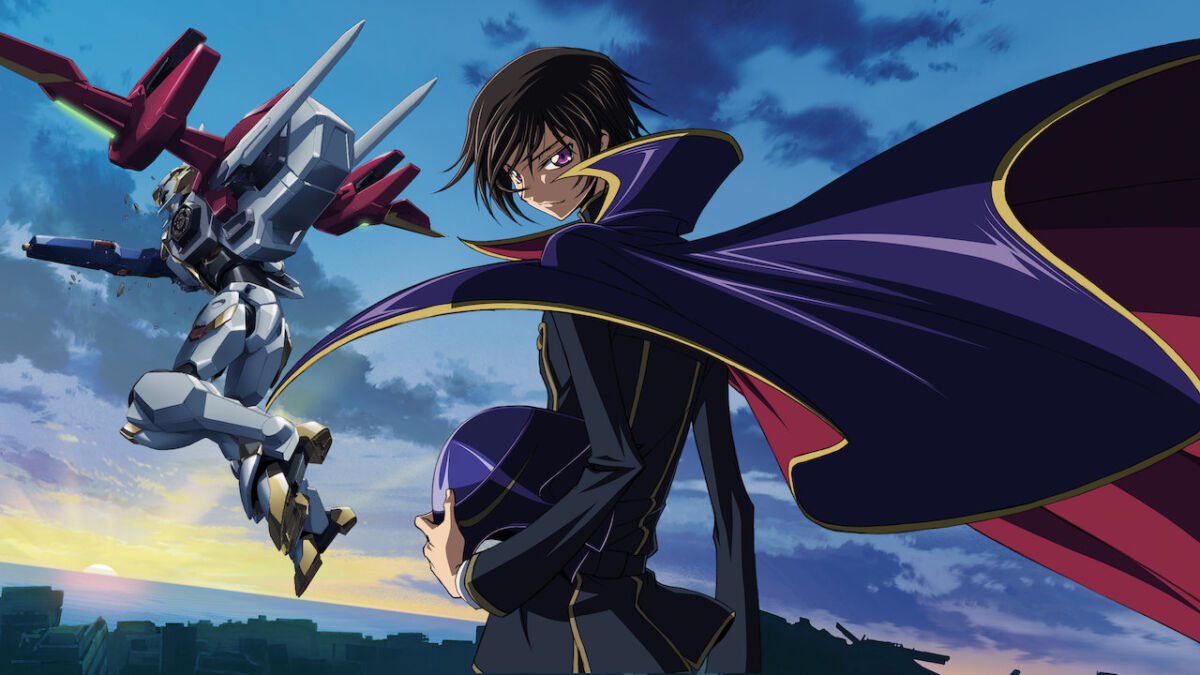
There are some anime where, when you search their title, you inexplicably get a bunch of different results with a bunch of different subtitles. And none of which are polite enough to just say “season 2.” Code Geass is unfortunately one such anime. But Code Geass is also one of those anime everyone tells you watch—for good reason.
Confounding titling should never keep you from watching one of the best series an entire medium has to offer (comical levels of fan service aside). We’re here to help.
Okay, seriously, how do you watch Code Geass?
Code Geass‘s watch order is so confusing because the series pulled an Evangelion. In other words, after the initial, classic, excellent series wrapped up, Studio Sunrise rebooted a version of Code Geass which takes place in an alternate timeline. Major story beats still happen, but other ones are altered just enough that the ultimate outcome is radically different from the original.
If you just type Code Geass into Crunchyroll, for example, the service places both the original series and the movies under one umbrella called “Code Geass.” You can see the logic, but it’s can be confusing to know what you’re watching.
The original series was two seasons long. Season 1 is Code Geass: Lelouch of the Rebellion, and season 2 is Code Geass: Lelouch of the Rebellion R2. These two seasons, which aired in 2007 and 2008 respectively, are one complete story. You can have a deeply fulfilling Code Geass experience with these two seasons alone.
If you want a little more, there’s Code Geass: Akito the Exiled, a five-episode OVA series which was made after Code Geass‘s original run but takes place between the two original seasons. So a watch order chronological to the events within the world would be Lelouch of the Rebellion, Akito the Exiled, and R2. Despite huge gaps between each episodes, which made the release calendar span from 2012 to 2016, Akito is solid. I’d recommend watching it, except Akito isn’t legally streaming anywhere. Fortunately, you don’t need it to understand Lelouch of the Rebellion or R2. But it’s a nice addition to the world.
Now things get even more confusing, because the series reboots itself. In 2017, Sunrise released a trio of “compilation” films which “retell” the original story from the beginning. This trio of films is called Code Geass Lelouch of the Rebellion—officially styled without the colon, because Sunrise is mean. The order to watch these films is: Initiation, Transgression, and Glorification.
Significant enough changes are added that these films create an alternate timeline, beyond which there is more story to tell. Therefore, a fourth film, Code Geass: Lelouch of the Re;surrection, was released in 2019 and covers entirely new ground. Having re-written their trademark franchise into a fertile meadow of new possibilities, Sunrise released a new TV series, Code Geass: Rozé of the Recapture, in 2024. Rozé takes place some time after Re;surrection—and, annoyingly, is a Hulu Original.
In other words, you, the aspiring Code Geass watch, have options. You could watch the original series (plus Akito) or the movies (plus Rozé). Common ground is tread in both paths. My recommendation is prioritize the original series, and then dive into films if you find yourself obsessed. Which is a distinct possibility.
Have a tip we should know? [email protected]
