



‘Hamlet’ Review: A Smart Adaptation That Sparks but Doesn’t Catch
3.5/5 Hamlets

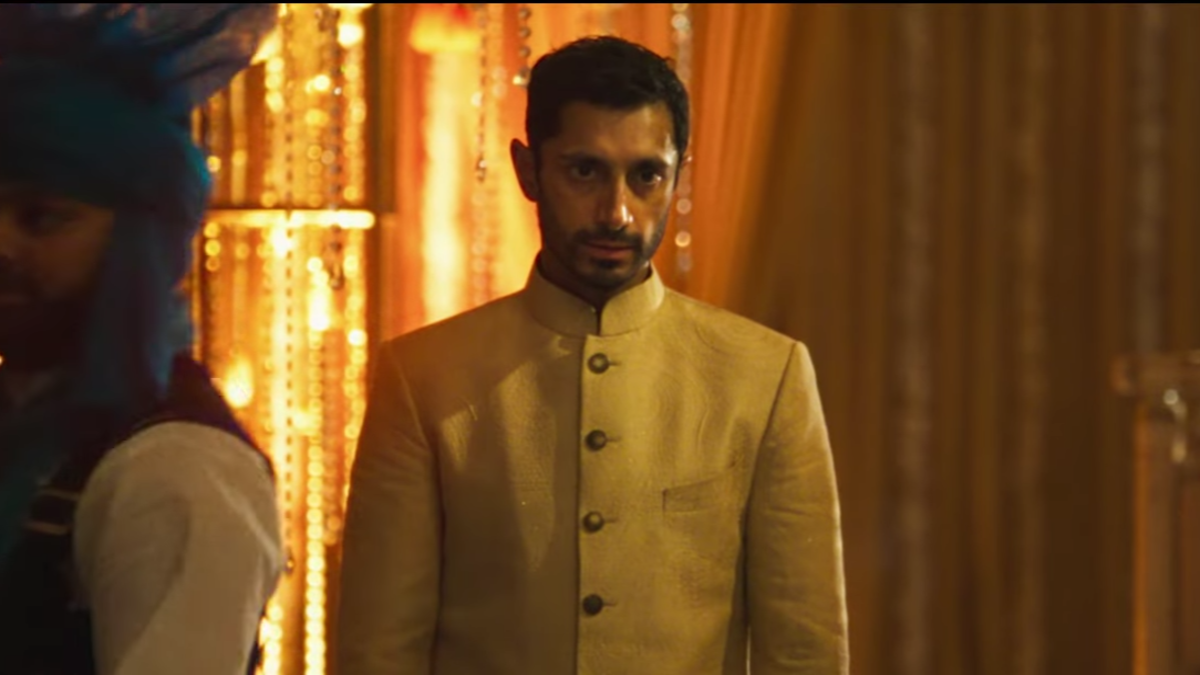
South Asians love adding a bit of subcontinental flavor to everything. It’s mostly food and drink we do this to, like mixing baked beans with diced onions and cumin seeds, or spicing tea with cinnamon and fennel and cardamom. But now Academy Award winner Riz Ahmed has injected some spice into a Shakespeare classic: Hamlet.
Director Aneil Karia reunites with Ahmed for this reimagination of one of the bard’s most iconic works, which sees the prince of Denmark transformed into the Hindu heir of a vast London property empire. It’s immediately clear we’re in for a visual feast, with stunning dialogue-free shots of Hamlet’s father’s funeral dominating the film’s opening. This also sets the tone, confirming the South Asian cultural elements will be front and centre of this adaptation.
From there the movie mostly follows the broad plot points of the famous play, although there are key changes. Some are to streamline the story, like the ghost only appearing once (and speaking in Hindi), and Rosencrantz and Guildenstern being rolled into Laertes. Others are baked in by the modern, anglo-indian interpretation, such as the lack of Norwegian soldiers at the door, and the increased importance of the wedding of Gertrude and Claudius. In Shakespeare’s original the nuptials take place before the play even starts, but here the event is an emotional powder keg that explodes in a kaleidoscope of colour, mirroring the over-the-top subcontinental attitude towards weddings.
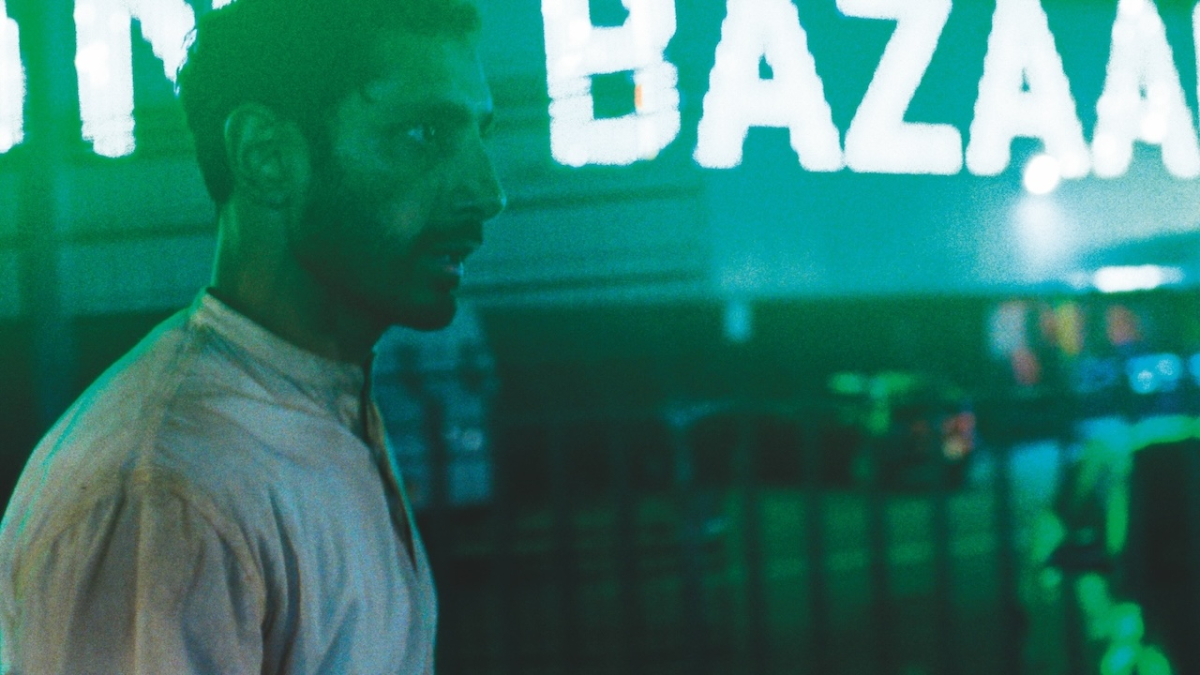
The wedding sequence is a necessary burst into life, because until then the movie is an aesthetic marvel but lacks gravity. Karai and Ahmed have chosen to go the Baz Luhrmann route and lifted dialogue verbatim from the play, and in the early stages of the film the Shakespearean language chafes against the ultra-modern London setting. Occasionally, the famously meaning-dense script gets lost in the noise, and the viewer is drawn out of the movie.
While the visuals and the scoring remain perfect throughout, this is a story that lives and dies on its dialogue. Hamlet is rife with soliloquies, many of which contain some of Shakespeare’s most famous lines, and these uninterrupted bursts of dialogue provide a critical emotional backbone to the stage play. Outside of the charged atmosphere of a live performance they can lose their potency, and while Ahmed is beyond capable, even he can’t make them all sing from behind the screen. Importantly, though, the monologues where he delivers “What a piece of work is man” and “To be, or not to be” are fantastic, the latter in an arrestingly tense scene that shows off why he is so highly rated.
Interrogating immigration and integration is a key thread throughout Ahmed’s oeuvre, so it’s no surprise that he and Karia have followed up their Oscar winning short The Long Goodbye with a project that touches upon this topic. Hamlet doesn’t just weave South Asian culture into this British cultural touchstone, though, with the plot having space for direct critiques of classism and gentrification, two topics that are deeply tied to an ever-evolving London. With that said, the melding of the ritualism of subcontinental cultures and the royalism of the original’s story is what makes this such a unique work, even if it doesn’t drive the film – after all, the joy of Shakespeare is his universality.
Hamlet sparkles with great performances and even better cinematography and music. But, like our deeply fractured multicultural societies, while the effort is there, something is missing to turn it into a truly cohesive piece.
(featured image: BBC Film)
Have a tip we should know? [email protected]
