


Massie Unveils a Bill That Could Cut Off Federal Funding for Any City Caught Using License Plate or Facial Recognition Cameras
Taking on the surveillance state.
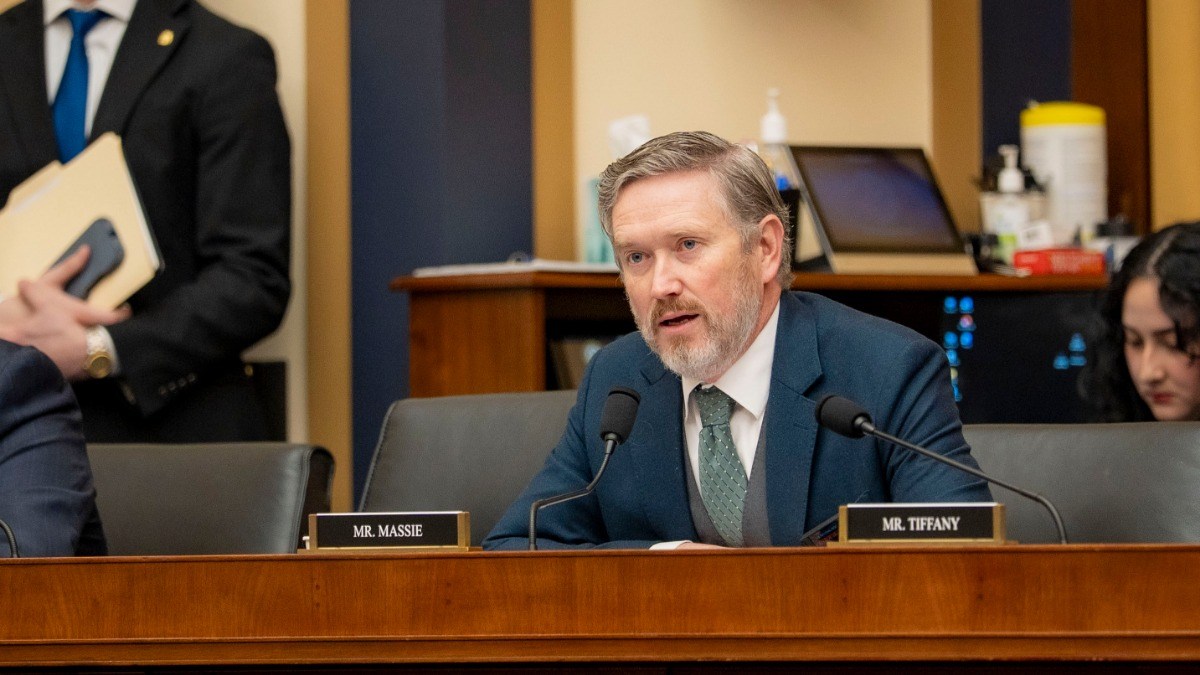
Rep. Thomas Massie has officially unveiled the Flock-Off Act, a piece of legislation that seeks to fundamentally reshape how local law enforcement agencies across the country utilize surveillance technology. According to The Hill, this bill is designed to block any city or municipality from using federal funds to purchase, install, maintain, operate, or upgrade automated license plate reader cameras (ALPRs) as well as biometric surveillance cameras.
It is a bold move that highlights a growing tension between modern security tools and the digital privacy of residents. If this legislation moves forward, it could force a massive shift in how departments handle their tech budgets and surveillance strategies. The legislation is quite comprehensive. It goes beyond the purchase of new hardware, extending to any contract, subscription, license, memorandum of understanding, data-sharing agreement, or cooperative arrangement involving these systems.
Essentially, if cities want to keep using these cameras, they will have to find a way to fund them entirely through local tax dollars rather than relying on federal grants. The bill also includes a strict enforcement mechanism. If a recipient is found to be in violation of these rules, the federal government would withhold further funding until the city reimburses the Treasury of the United States for the full amount of federal money that was previously obligated.
Massie has been very vocal about his motivations
Massie, who introduced the bill alongside Rep. Eric Burlison, argued that federal taxpayers should not be forced to fund a surveillance state. In a press release, he stated, “The Flock-Off Act withholds federal money from municipalities and police departments that deploy Flock cameras to surveil law-abiding citizens. Federal taxpayers should not be forced to fund the surveillance state.”
He further emphasized his position by saying, “The federal government shouldn’t provide ‘security’ grants to cities and police departments that have gone beyond the pale and turned their communities into a version of 1984.” While the name of the act references Flock, a prominent company in the ALPR space, the scope of the legislation is much broader.
It covers any system that automatically captures and processes images of vehicles or license plates, converting that information into computer-readable data for storage, analysis, or sharing. It also explicitly targets systems that extract biometric information, which the bill defines to include facial images, voiceprints, fingerprints, iris or retinal scans, and even gait patterns.
Companies like Axon, which produces car-mounted cameras, describe their systems as AI-driven recording setups that create a unique vehicle signature by recording license plate numbers and specific details about a car. This type of high-level data collection is exactly what this new bill aims to stop.
There are, however, some specific exceptions
The legislation allows for the continued use of federal funds for cameras that are installed within one mile of the northern or southern border, provided they are used for the detection and interdiction of unlawful entry, human trafficking, and drug smuggling. Additionally, federal transportation funds can still be used for cameras that have the sole purpose of administering, collecting, or enforcing tolls, as long as the data is used strictly for those tasks.
The impact of such a bill would be immediate for many jurisdictions. Federally funded camera systems would have to be removed or shut down within 180 days of the act becoming law. This would put a significant strain on departments that have integrated these tools into their daily operations.
According to Police1, proponents of the bill, including original cosponsors like Reps. Lauren Boebert, Paul Gosar, Ro Khanna, Chip Roy, and Victoria Spartz, argue that these measures are necessary to protect Fourth Amendment rights and prevent the overreach of surveillance technologies. Rep. Burlison specifically noted that the legislation is intended to address concerns that these rapid advancements in surveillance could infringe upon the privacy rights.
Not everyone is on board with the proposal
Flock has pushed back, noting that the technology is a vital tool for public safety. The company said, “Withholding federal funding from the thousands of police departments that rely on license plate reader technology would have real consequences for public safety.” It also argued that Congress should focus on clear safeguards and accountability rather than an outright ban.
According to the company, Flock’s systems supported more than 1 million investigations in 2025 and were instrumental in locating more than 10,000 missing people. “We do not have to choose between protecting privacy and giving law enforcement the tools it needs to keep communities safe. We can – and should – do both,” the company added.
The conversation surrounding this technology is already quite heated. According to the antisurveillance organization DeFlock, more than 150 cities have already taken steps to cancel or reject contracts with camera companies due to concerns over privacy and widespread misuse. It is clear that the debate over where we draw the line between necessary security and invasive monitoring is far from over.
As this bill makes its way through the legislative process, it will be interesting to see how local governments respond to the prospect of losing their federal funding for these specific surveillance tools. It is a major development that could change the technological landscape for law enforcement in the near future.
(Featured image: DHSgov)
Have a tip we should know? [email protected]
Follow The Mary Sue:
