


Man Orders Unlimited Salad Bowl From Olive Garden. Then He Discovers—and Exposes—Their Trick to Getting Around ‘Unlimited’
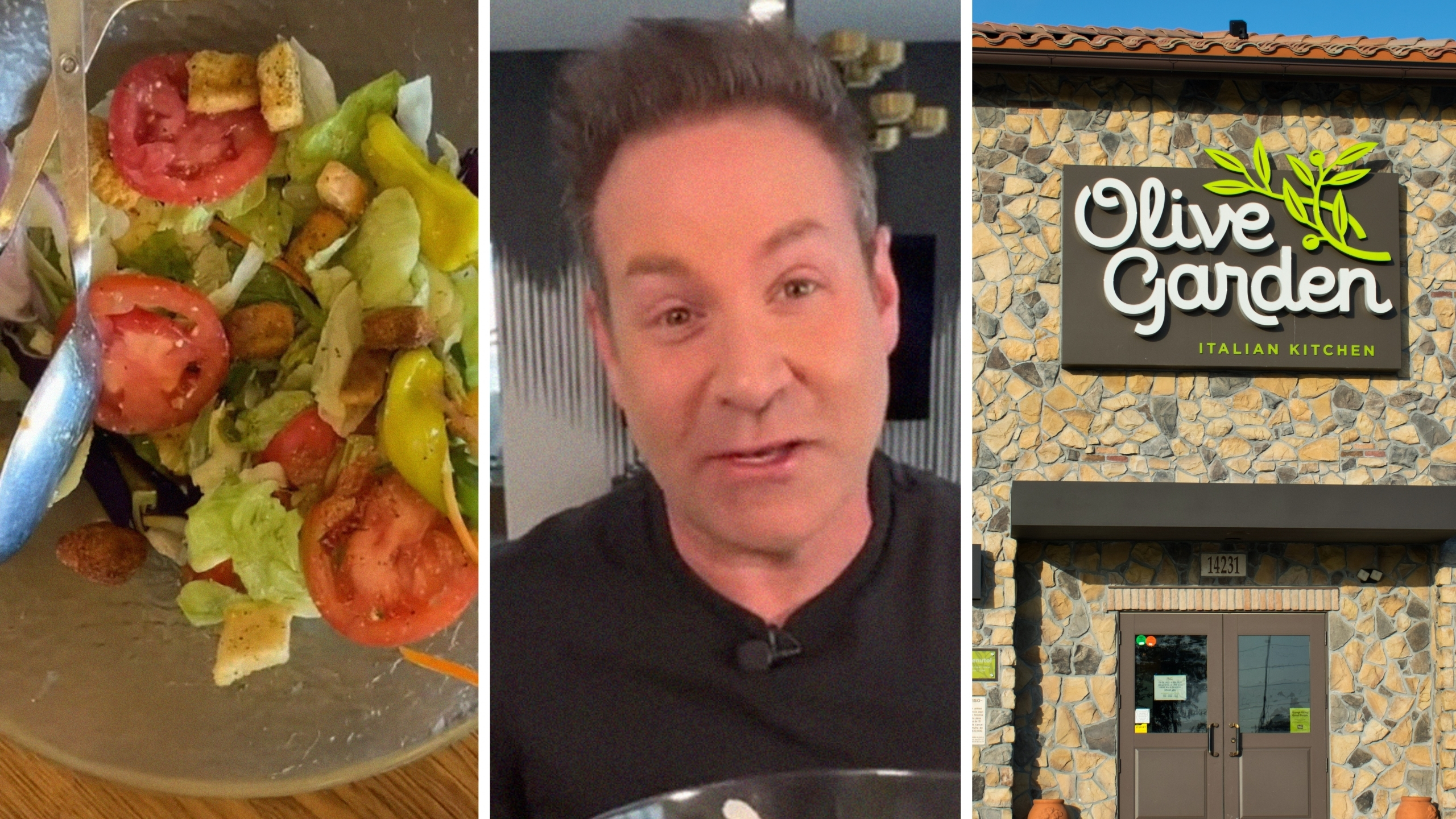
A TikToker known for exposing restaurant industry secrets has sparked debate after sharing some of Olive Garden’s menu hacks. He claimed the famous unlimited soup, salad, and breadsticks deal uses cost-cutting tactics.
In a recently deleted video, TikToker @zuner99 breaks down restaurant business strategies. He shared a viral clip with over 162,300 views. The creator argued that Olive Garden carefully structures everything from its salad bowls to its menu layout to increase profit.
Some viewers criticized the practices as another example of “shrinkflation.” Many argued that the restaurant is simply making smart business decisions, especially when you can order unlimited refills.
What’s Up With Olive Garden’s ‘Unlimited’ Offerings?
According to ZuNer, Olive Garden discovered that unlimited salad costs significantly more than unlimited breadsticks.
He claims each breadstick costs the company roughly 15 cents, while each bowl of salad costs between 75 cents and $1 because of the fresh ingredients and labor cost.
To offset that expense, he says the chain shifted its emphasis toward breadsticks. Rather than serving large portions of toppings such as pepperoncinis, tomatoes, and olives, employees reportedly fill bowls mostly with lettuce while using fewer of the costlier ingredients.
ZuNer also pointed to Olive Garden’s soup service.
Using a standard soup bowl at home, he poured in a restaurant serving and showed that the soup didn’t even reach halfway up the bowl. He argued that Olive Garden intentionally uses wide, shallow bowls that make servings appear larger than they actually are.
How Does Olive Garden’s Menu Encourage Customers To Spend More?
The creator also argued that the menu itself acts as a marketing tool.
According to ZuNer, Olive Garden highlights certain dishes with photos because those items generate higher profits. He also claimed labels such as “OG” make ordinary menu items feel exclusive or signature offerings.
Price placement also plays a role, he said.
By placing the most expensive dishes near the top of sections, the restaurant creates an anchor price that makes lower-priced entrees seem like better deals by comparison. Behavioral economists often refer to this strategy as price anchoring, a pricing tactic commonly used across the restaurant industry.
Did Viewers Care About the Alleged Tricks?
Surprisingly, many commenters said they weren’t bothered.
Several argued that unlimited refills remain unlimited regardless of portion size, meaning customers can simply ask for more.
“It’s all you can eat, they bring it out as often as you ask. Who cares if they want their servers to make more trips. That sounds like a them problem to me,” said @Johnnyvonjohnnydude.
Others shared their own money-saving strategies for eating at Olive Garden.
“Secret: Order the Kids Alfredo. They don’t require you to be a kid. You can get it with broccoli on the side and a drink. The portion is pretty big but costs way less,” suggested one viewer.
Another commenter claimed soup sizes aren’t always what they seem.
“Always order soup by the cup never order it by the bowl. The bowl and the cup are the same size but you pay more for the bowl. This is true for every restaurant,” claimed another user.
Not everyone appreciated the alleged tactics, however.
Some viewers argued the video reflected a broader trend of businesses prioritizing profits while reducing quality.
“It’s called shrink inflation no quality any more when there counting each leaf of lettuce it’s everywhere no restaurant takes pride in giving a good meal just out for profit,” stated another viewer.
Why Did the Video Strike a Nerve?
The video struck a chord because many diners already feel they’re paying more and getting less. USDA data shows food prices have risen steadily in recent years, while restaurants continue looking for ways to manage rising ingredient and labor costs. That has made consumers more aware of portion sizes and overall value.
That tension helps explain why the video resonated. Even viewers who accepted Olive Garden’s business logic still enjoyed learning how restaurants influence customer behavior behind the scenes. Whether they saw the tactics as clever marketing or another example of cost-cutting, the video offered a glimpse into the psychology and economics behind one of the chain’s most recognizable promotions.
The Mary Sue reached out to Olive Garden via email.
Have a tip we should know? [email protected]
Follow The Mary Sue:
