


10 best fantasy book series of all time, ranked
Fantasy bangers only.
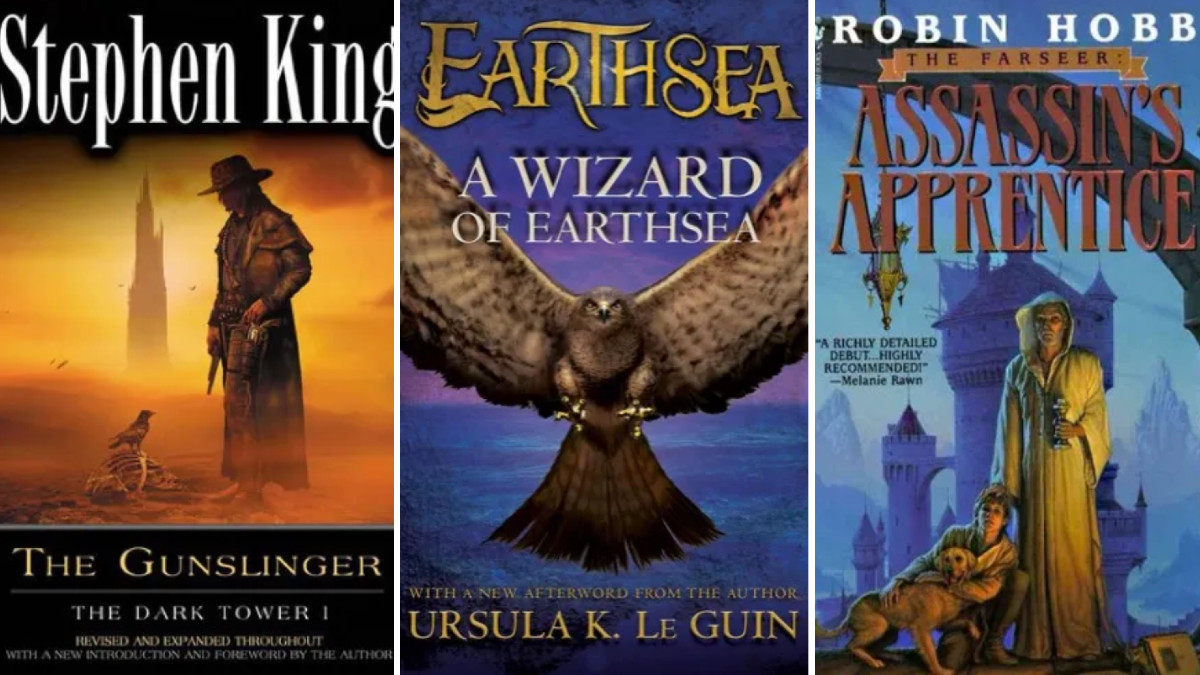
What are the 10 best fantasy book series of all time, you ask? *Unintelligible wizard mumbling* I must consult the orb.
Indeed, many before you have come to ask this query. It is an ancient question, as old as “Where do dragon babies come from?” and “How do I grow my beard as long and luxurious as yours?” Yeah, I know the answers to all such matters of eldritch import, but to discover them, I must get absolutely geeked off of Longleaf and ponder a mysterious orb—awaiting the truth to reveal itself.
This list is what the orb hath proclaimed. Here are the 10 best fantasy book series of all time, ranked. (You may disagree with the orb, but there’s not much we can do about that).
10. The Poppy War trilogy by R.F. Kuang

Inspired by the bloody days of 20th century China, R.F. Kuang’s The Poppy War trilogy is the tale of Rin, a young peasant girl from a backwater part of the nation, who, through grit and tenacity, is accepted into the most prestigious war college in the country. Her classmates are anything but chummy, and the most aristocratic of the bunch see young Rin as nothing more than a lower-class upstart who needs to be reminded of her place with a dagger between the shoulder blades. To compete with the rigors of academia, Rin turns to every student’s favorite pastime: hallucinogens. Through a combination of hard training and hard drugs, Rin develops her latent magical abilities to serve as the best cog she can be in the empire’s war machine while trying not to get mashed up in the gears.
9. Riddle–Master by Patricia A. McKillip
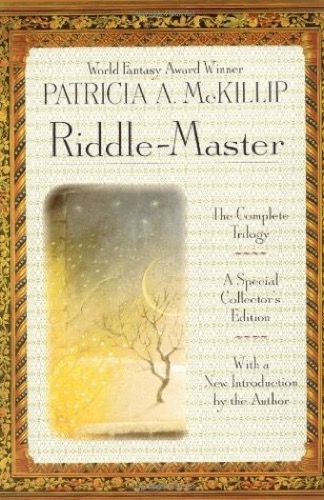
For those who revel in riddles (the national sport of hobbits everywhere) Patricia A. McKillip’s Riddle-Master is the mystery meets high fantasy series for you. Beginning with The Riddle-Master of Hed, our story centers around a titular young prince who discovers he is bound to a mysterious destiny after winning a riddle game against a ghost king (as one does). The prince’s forehead is marked with three star-shaped birthmarks, which brand him as some fancy-dancy child of destiny, one who will bring magic back to a world where it was lost. As a Chosen One, the young prince attracts a fair share of haters, who in this case are a mysterious group of shapeshifters that want to shape him into a fresh corpse, and he has to find out why.
8. The Dark Tower by Stephen King

While Stephen King is known primarily for his titanic contributions to the horror genre, the King of Horror began his literary career as a fantasy writer. King wrote the foundations of his seven-part epic The Dark Tower while still a teenager and the mammoth mega tome serves as a central spoke around which his multiverse revolves. Inspired by the Robert Browning poem Childe Roland to the Dark Tower Came, the first novel The Gunslinger introduces us to the pistol-packing knight errant known as Roland Deschain. The ruthlessly pragmatic Roland seeks the Tower as part of his capital “r” Romantic quest to protect the multiverse against the machinations of the Crimson King, who will use the dark architecture to plunge reality into chaos.
7. The Broken Earth trilogy by N.K. Jemisin

Set on a storm-ravaged supercontinent with the inaccurately calm name The Stillness, N.K. Jemisin’s Broken Earth trilogy is an epic parable about the social consequences of climate catastrophe. The society of The Stillness is divided into a strict caste system, with the supernaturally gifted orogenes sitting at the bottom. Hated and feared for their ability to manipulate energy, the orogenes are social pariahs. Fed up with their low status, a particularly powerful oregene decides to strike back against the world by using their abilities to bring about a once-a-century cataclysm known as The Fifth Season, which cracks the continent down the middle. The story then shifts to the POV of three orogene women struggling to deal with the fallout and overcoming the worsening stigma they face.
6. The Farseer trilogy Robin Hobb
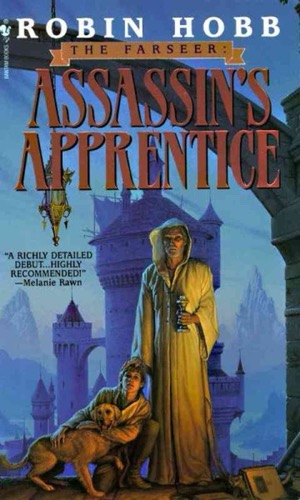
Beginning with Assassin’s Apprentice, Robin Hobb’s The Farseer trilogy centers around the life and times of a young killer in training (assuming the title didn’t clue you in). FitzChivalry Farseer is a bastard, not because he committed his life to murder for hire, but because he’s literally a bastard. He’s the illegitimate son of a prince who would rather he didn’t exist, and so he serves his royally estranged family from the shadows as a courtly assassin. Navigating political plots, dangerous rivals, and a host of daddy issues, FitzChivarly must strike out on his own to find his way in the world, which often involves striking an unsuspecting target between the eyes with the business end of his tools of the trade.
5. His Dark Materials by Philip Pullman

While marketed as a work of children’s fantasy, Philip Pullman’s His Dark Materials is a retelling of John Milton’s lofty Paradise Lost and was written with no target audience in mind. While it may not have intended readers, it tends to attract those with a rebellious streak, particularly against moral authority. Set in a parallel universe version of Edwardian England, the story revolves around a 12-year-old girl named Lyra Belacqua, who inadvertently discovers a secret of the universe that a world-controlling church has deemed heretical. With a metaphorical middle finger held high, Lyra leaps between parallel universes on a quest to discover the true nature of existence and potentially kill God in the process. The story subverts the Christian concept of Original Sin, the idea that humans are born fundamentally flawed, and reasons that our inevitable loss of innocence is not the source of our damnation but rather our divinity.
4. A Song of Ice and Fire by George R.R. Martin

Before it was a multi-million dollar HBO joint, George R.R. Martin’s A Song of Ice and Fire was a notorious tome-like fantasy series with new novels released about as frequently as good things happen to its protagonists—which is to say, not often. Set in a medieval land where the ruthless rule, the story centers around a cast of outcasts attempting to find their way in a world that would rather see their heads mounted on spikes. As if the endless war wasn’t bad enough, the world is also under threat from an undead force from the frozen north that threatens to turn humanity into millions of cold corpses. But hey, the newly hatched dragon babies of a deposed princess should be able to help with that!
3. The Wheel of Time by Robert Jordan

Robert Jordan’s The Wheel of Time series revolves (no pun intended) around a young man who discovers (like many fantasy protagonists do) that he is a child of destiny. Jordan’s universe is governed by the turning of a great metaphysical wheel, which causes history to repeat itself endlessly across the ages. After a chance (or destined) encounter with a wandering sorceress from an ancient order, a young farm boy learns that he is the Dragon Reborn, a mythical hero reincarnated to do battle against the Dark One for all time. It’s a classic work of fantasy that gives a nod to the idea that it is simply a retelling of ancient human myths that came before. How meta!
2. The Earthsea Cycle by Ursula K. Le Guin

Ursula K. Le Guin’s Earthsea books solidified the author’s legacy as a genre-straddling master of both fantasy and science fiction. The story is set in a world-spanning archipelago called Earthsea, where a young boy named Ged sets out on a quest to become the greatest mage the water world has ever known. The series subverts the traditional fantasy narrative by telling a story where the ultimate achievement is not to become the most powerful but to live in perfect harmony with the natural world. Wizards are called to uphold the cosmic balance of existence—an equilibrium that the young and foolish Ged throws off in his initial quest for power. It’s a lyrical, meditative series that teaches deeper lessons than its simple prose implies.
1. The Lord of the Rings by J.R.R. Tolkien
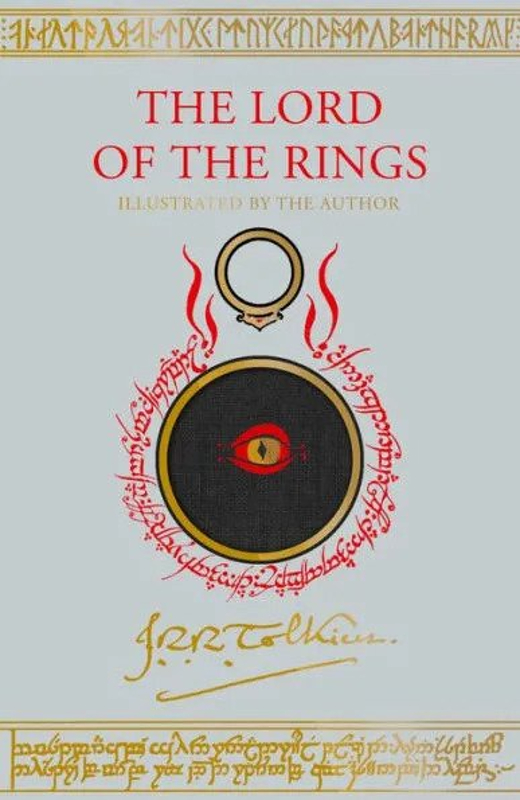
When you stare into the orb, the orb stares back. And in this case, my pondering of said magical artifact subjected me to uncomfortable eye contact with the Dark Lord himself. J.R.R. Tolkien’s modern mythology hinges on the Dark Lord Sauron’s return to the once-peaceful realm of Middle-earth, and his ruinous machinations can only be thwarted by a weed-smoking wizard, a bickering eld/dwarf duo, a sweaty king fleeing his birthright, and the homoerotic relationship between a hobbit and his gardener. You know the story—throw the ring into the volcano and save the world. But perhaps what you don’t know is all the details that Peter Jackson’s famous film adaption left out (Tom Bombadil would like a word with the scriptwriters). Without this seminal series, the other fantasy works on this list simply wouldn’t exist.
Have a tip we should know? [email protected]
Follow The Mary Sue:
