
comScore
  1. Mediaite
  2. Gossip Cop
  3. Geekosystem
  4. Styleite
  5. SportsGrid
  6. The Mary Sue
  7. The Jane Dough
  8. The Braiser

Consider the Following

Japanese Government Workers Being Forced to Admit Having Tattoos


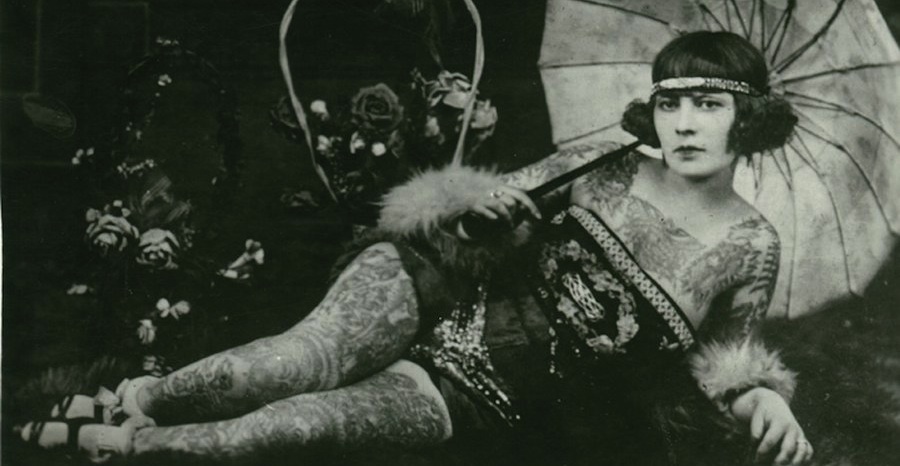
While it’s not exactly nationwide, and, therefore, not yet what could be considered a “growing trend” in Japan, the mayor of Osaka recently mandated that all city employees — officials, teachers, etc. — admit to having tattoos, whether they are visible or not, as well as how long they’ve had them. Why? Because of the children. Uhhhh… What’s this now?

Following the dastardly revelation that a welfare worker had a tattoo on his shoulder when he wore a short-sleeved shirt to work one day, Mayor Toru Hashimoto required all of Osaka’s public employees to take a mandatory survey and disclose any ink they might be sporting and when they got it. That aforementioned employee apparently made his co-workers “uncomfortable” because he works with so many families and children. And I guess those co-workers believe that either the children will catch some sort of contagious ink and break out in dragons, or they’re assuming that some tattooed employees are members of the yakuza.

ABC News reports that 32,000 city employees were surveyed, and 113 admitted to having tattoos. That survey included 17,000 teachers, 10 of which admitted to having tattoos, including — o! my stars and garters — an elementary school teacher.

So, what is to become of these tattooed civil servants? They might be up for a demotion. Or, they will have to stop working with the public if their tattoos are visible. And the teachers with visible tattoos? Oh, they’ve been asked to have their tattoos removed.

By the local government.

“[The teachers] plan to remove the tattoos, so they don’t embarrass themselves further in front of their students,” Hashimoto said. “I hope they can refocus on teaching.”

Right, because I don’t know about you other tattooed persons, but I can’t help but stare at my own tattoos all day long. It’s really distracting for myself and others.

Uh, maybe they don’t realize that tattoo removal doesn’t involve a little bit of nail polish remover and a loofah. It’s a very expensive and painful process, and laser removal doesn’t even guarantee that the ink will fully disappear. While it’s understandable for the city to ask its employees to cover their ink (it’s an employer’s prerogative to present themselves as they please, and asking employees to appear a certain way is definitely nothing new; many jobs don’t allow visible tattoos), asking them to remove them is, to say the least, a lot to ask. That’s a medical procedure. Cosmetic, of course, but you can’t take off tattoos at home.

Then again, Mayor Hashimoto isn’t known for being sympathetic. A “conservative populist,” he has faced a lot of criticism for how he has approached governing Japan’s third-largest city. Maybe because a lot of people are comparing him to our own country’s Tea Party activists:

The telegenic Osaka mayor wants wholesale changes to Japan’s sleepy status quo. He would like to transfer power from Tokyo to a collection of new regional fiefdoms, bigger than the existing prefectures, that would collect taxes and make streamlined decisions. …

“It will be a creative destruction,” Hashimoto said, describing his vision for reform in a television appearance this year. “Dismantle everything and start from scratch.”

“Dismantle everything and start from scratch” — including his own employees.

(ABC News via Jezebel)

Are you following The Mary Sue on Twitter, Facebook, Tumblr, Pinterest, & Google +?

TAGS: | |


  • Anonymous

    I read about this a while ago and learned that people with visible tattoos aren’t welcome in public bath houses.  It makes me kind of sad since I have a full back tattoo and I’ve always wanted to visit Japan.  Guess I’ll have to skip the bath house experience and keep my tattoos covered if I don’t want to be thought of as a criminal.  :( 

  • http://www.facebook.com/Travis.K.Fischer Travis Kyle Fischer

    “or they’re assuming that some tattooed employees are members of the yakuza”

    That’s actually probably it.

    Tattoo culture in Japan is quite different than here. Here they’re more considered as part of the passage into adulthood (and the mistakes you make along the way).
    In Japan, very few people have tattoos. If those ABC numbers are accurate, we’re talking about 0.3% of city employees.
    They are not looked highly upon and were outlawed completely for half a century, making them more popular among criminals. People generally still associate tattoos with criminal activity.

    So before you ramp your snark machine up, when they say that they may be a distraction, they don’t mean the kids are going to be fascinated by the image on their skin. They mean the kids are going to be more focused on wondering how many crimes their teacher may have committed than their studies.

    I’m not saying it’s a good policy, but it’s not like this stuff comes from out of nowhere.

  • http://pulse.yahoo.com/_IGRK4BKTKC5RGO56RXTUEVFJSM ainok

    Well tattoos *have* traditionally been associated with yakuza. There’s a much more negative stigma attached in Japan (like the bathhouse thing). I met a Japanese girl when I was over there whose arms were covered in tattoos, and complimented her on them, but she clearly had mixed feelings about them. The thing about Japan is that while it may adopt surface qualities of other cultures and societies, under that thin surface it’s very definitely Japan, and things are done the way people there want to do things. It makes for a complicated cross-cultural experience. You really can’t expect people to conform to the rules and mores of other cultures, but it’s hard to remember that sometimes when so many of the readily-observable characteristics of a society seem so familiar.

  • Bryan Gillis

    …or they’re assuming that some tattooed employees are members of the yakuza.

    That would be it. Many in Japan (particular older people and those of a conservative bent) equate tattoos with Yakuza tribal markers (which they were used as for a long time). They see anyone with tattoos as either Yakuza, ex-Yakuza, or wannabe-Yakuza. As we see here, the mayor also believes that everyone else will interpret tattoos the same way he does, and so all those schoolchildren must therefore be distracted by the fact that their teacher has a connection to the Yakuza. And the teacher must be so worried about this assumption that they can’t focus on teaching over the chorus of “I hope they don’t think I’m Yakuza” coursing through their mind.

    Though of course, this is a big case of the Affirming the Consequent fallacy. Just because all Yakuza have tattoos doesn’t mean that everyone with a tattoo is Yakuza. It hasn’t meant that for a long time, if it ever has.

    But that’s real logic. Here’s the logic being used:

    Yakuza = bad
    Yakuza = tattoo
    tattoo = bad
    person with tattoo = bad

    The moral notion of purity is tainted by the indirect connection with the Yakuza, and moral decisions tend to override the logic centers of the brain.

  • Lucas Picador

    While I’m hesitant to defend this kind of mindless, dehumanizing bureaucracy, which is a serious problem in Japan, I also think that the author is being a bit insensitive to culturally specific implications of certain symbols and practices.

    I can’t tell if the comment about the yakuza is intended to be a joke, but it’s really no laughing matter in Japan. Organized crime is a big problem there, and tattoos have a long history of being explicitly associated with violence, drugs, prostitution, and racketeering. I wouldn’t go so far as to compare a tattoo in Japan with a swastika tattoo in Europe, but the fact is that a tattoo isn’t always just some culturally neutral body adornment which is always appropriate for display by public servants in every field. Here, it’s the content of a tattoo that can be problematic; in Japan, any tattoo is problematic. I think the author needs to be a little less cocksure about his or her own cultural assumptions being applicable to the Japanese context.

  • Anonymous

    Yeah, gotta side with the “It’s a Japanese thing” camp.  Tattoos are far less socially accepted in Japan. They’re still very much associated to the Yakuza (as are, unless I miss my guess, dark sunglasses) and at the very least, as seen as Something Nice People Don’t Do.

    Here in the US, tattoos are so accepted, they don’t shock the average parents any more. So The Kids Today have to resort to more extreme body art like multiple piercings and the truly-incomprehensible-to-me Gauging, getting progressively larger things inserted into one’s earlobes and such.

    There’s any number of jobs here that have no tattoo policies, and require they at least be covered up. most of them are in service indistries, and are aimed more to keep from “spooking the straights”, as i like to call it.

  • Adam R. Charpentier

    There’s plenty of acknowledgement below, so I won’t be too repetitious here, but it is plain and simple a cultural thing. It’s also considered vulgar to blow your nose in public. Last year, my wife and I were selected as the American entrants for a Japanese-run goodwill project and though we didn’t win, we were invited along with all of the other preselects to a very posh onsen. However, the “winners” were unable to attend since one of them had assorted tattoos spread around his body. 

  • Anonymous

    As you can see, I’m not shy about my own tattoos, but I struggle to be upset about this. If it were in another country, particularly the US, I would be, but the Japanese have a reason to be wary about tattoos. Over time, the stigma against them may change, but it will take a while. 

    Think of tattoos in Japan as tattoos in America in the 50s. Time and popular culture will likely wear away at the assumption that all tattooed people have ties to the Yakuza, but it will take a few more decades, in all likelihood. 

  • Arielle Sorkinator

    I totally understand the cultural stigma and yakuza association surrounding tattoos in Japan, but the totalitarian way of dealing with them still rubs me the wrong way. Like the author says, employers can enforce a rule that requires tattoos to be out of sight, but requiring the disclosure of whether employees HAVE tattoos or not and requiring their removal feels like a gross violation of privacy.

    People who get tattoos have to deal with the social ramifications of what they’re doing, whether they’re seen as punks or criminals, whether they scare people or are stigmatized. They must realize that people will treat them differently, and you can’t force society to be accepting. But to insist that people can’t even make these decisions for themselves? That seems like overstepping some boundaries.

  • http://www.facebook.com/people/Elijah-Greenleaf/100001787220723 Elijah Greenleaf

    Do not cut your bodies for the dead, and do not mark your skin with tattoos. I am the LORD.  Leviticus 19:28, The Holy Bible.  
    Tattoos are on the people who didn’t get the word of the Lord.

  • http://www.wordflow.webs.com/ Invisible_Jester89

     Wow. O.o I knew about the Yakuza tattoo thing in Japan, but I didn’t realize that it would actually freak a Japanese person out to find out a foreigner had a tattoo. Looks like if I ever end up on a trip to the Land of the Rising Sun, I’ll have to hide my dragon tatt.

  • http://www.wordflow.webs.com/ Invisible_Jester89

     Same here, but mine’s a full-color dragon across my left shoulder blade, not a whole back tatt. No bathing suits for this one apparently, which is a shame, because I have always thought Tokyo would be a neat place to visit someday.

  • Adam R. Charpentier

    Unfortunately, that wouldn’t be a terrible idea…it’s strange to me that it doesn’t matter whether you’re a westerner or not. I’m clearly not Japanese and wouldn’t be welcomed into any Japanese crime families, but a tattoo on my arm would be looked at with the same mistrust.

X