


Le Creuset vs. Staub: What’s the Real Difference?

So you’re a home cook looking to capitalize on your skills. You want to get in braising, or roasting. Maybe even baking. But you’re one of those people who wants one good thing that can get the job done, rather than several good things. That’s where Dutch ovens come in.
Dutch ovens are one of those cooking accessories that sometimes require more contemplation and forethought than purchasing a car. A good Dutch oven will last you the better part of a lifetime. For home cooks, that’s quite an investment. And you want a piece of cookware that you know you can rely on, and with a brand that treats its customers properly. Versatility, also, is key. Dutch ovens can bake, roast, braise, fry, sauté, and more.
If you’re looking for one of these, then you’re probably looking at Le Creuset or Staub. Both are French brands. Le Creuset is the older cookware brand, having been founded in 1925. Staub cookware was founded in Alsace, France, in 1974 and is now owned by the German cutlery brand Zwilling J. A. Henckels.
So what’s the real difference between these brands? Let’s break it down.
Which one should I get?
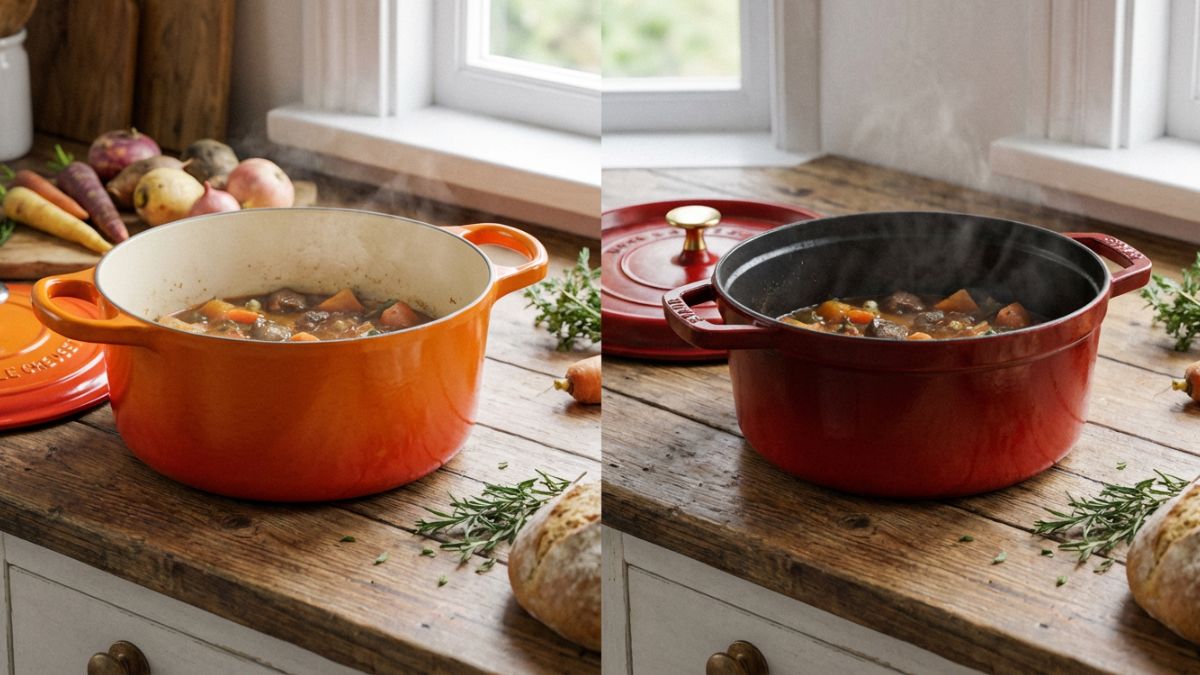
Le Creuset Dutch ovens have wide handles that are easy to grip with oven mitts. They are also lighter than most enameled cast-iron Dutch ovens, with the 5.5-quart weighing in at a little over 11 pounds. Le Creuset is also known for their lighter-colored enamel interior, making it easier to monitor food as it cooks. This is especially advantageous for newer cooks who may not be knowledgable yet about cook times or temperatures.
Staub Dutch ovens (or cocottes, as the brand calls them) are slightly heavier. The 5.5-quart Staub weighs in at about 12 pounds, so a pound more than the Le Creuset. However, they are still lighter than most Dutch ovens on the market.
Unlike the Le Creuset, Staub Dutch Ovens have a black interior. While this will hide the eventual residue pots and pans receive through constant use over time, it also makes cooking things a bit more difficult for beginners. But despite these differences, both brands have a high-quality enamel that will resist chipping and withstand the limited lifetime warranties both brands offer.
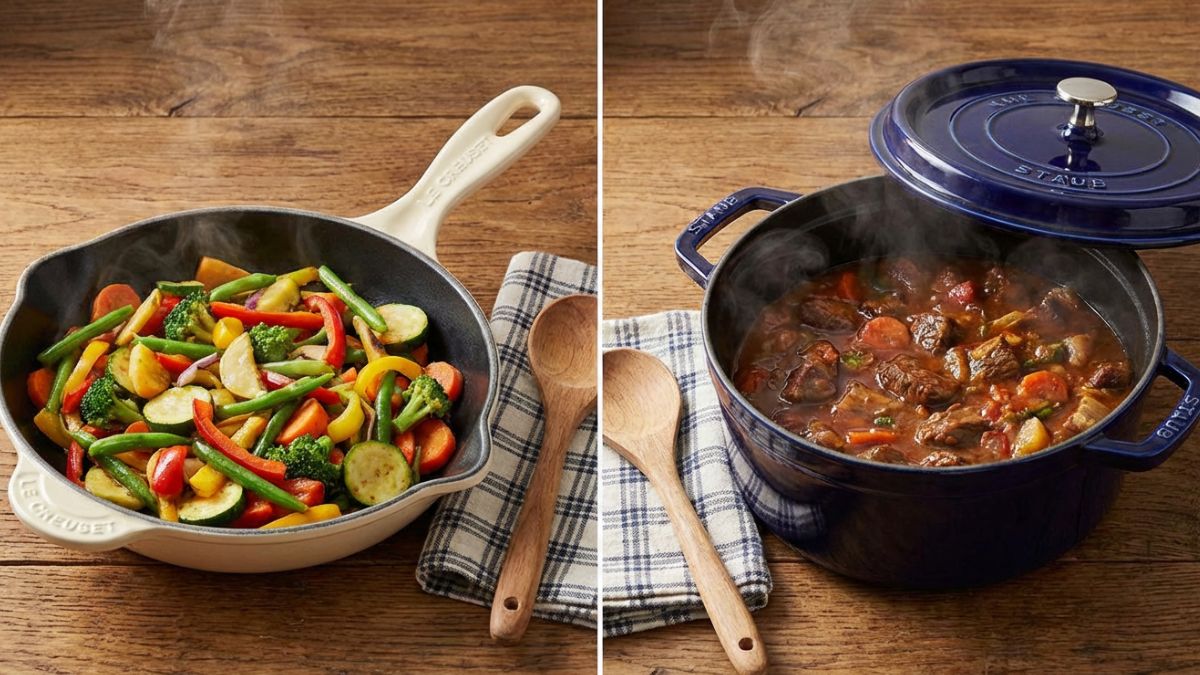
The other major difference between Staub and Le Creuset is their lids. A Le Creuset lid has a simple sloping curve to allow condensation to circulate down the inside edges of the pot. Newer Le Creuset lids have metal knobs that can withstand temperatures up to 500°, a major difference from the older ones with a phenolic resin knob, which is only oven-safe up to 390°.
Staub lids have a metal knob and a distinctive, hubcap-like shape. According to Staub, this unique design has a functional purpose: The shape of the lid, along with several “self-basting” bumps on the underside, redistributes moisture, keeping food moist and enhancing the flavor by not allowing liquid to escape.
What you get is ultimately up to you. Both Dutch ovens have their own benefits, and both are top-rated among competitors. The differences come down to minute details, and it is up to your personal preference which one you would like to have.
Have a tip we should know? [email protected]
